The piece of land nobody wanted
Where Beaujolais ends: Bérengère and Antoine’s bet
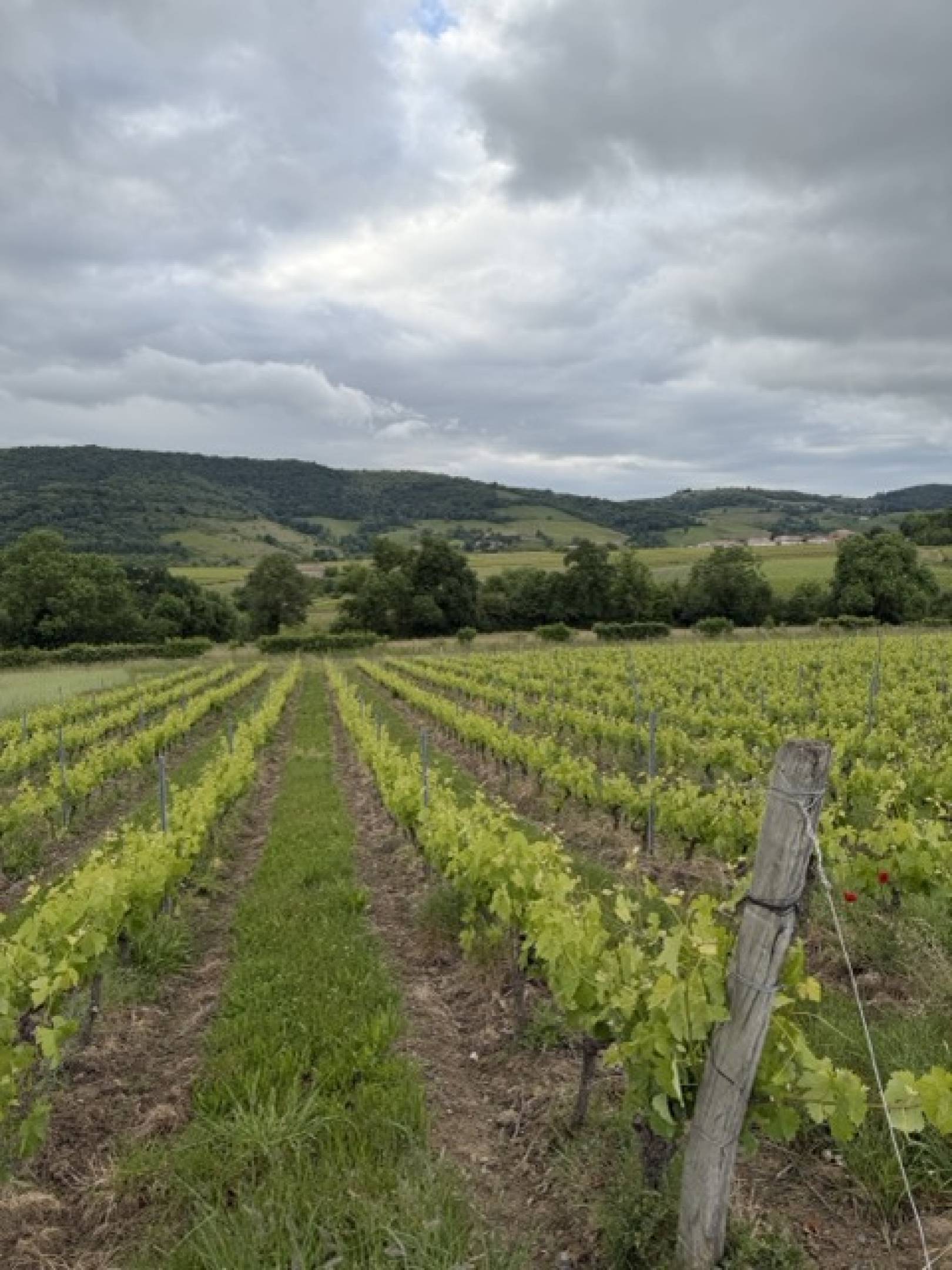
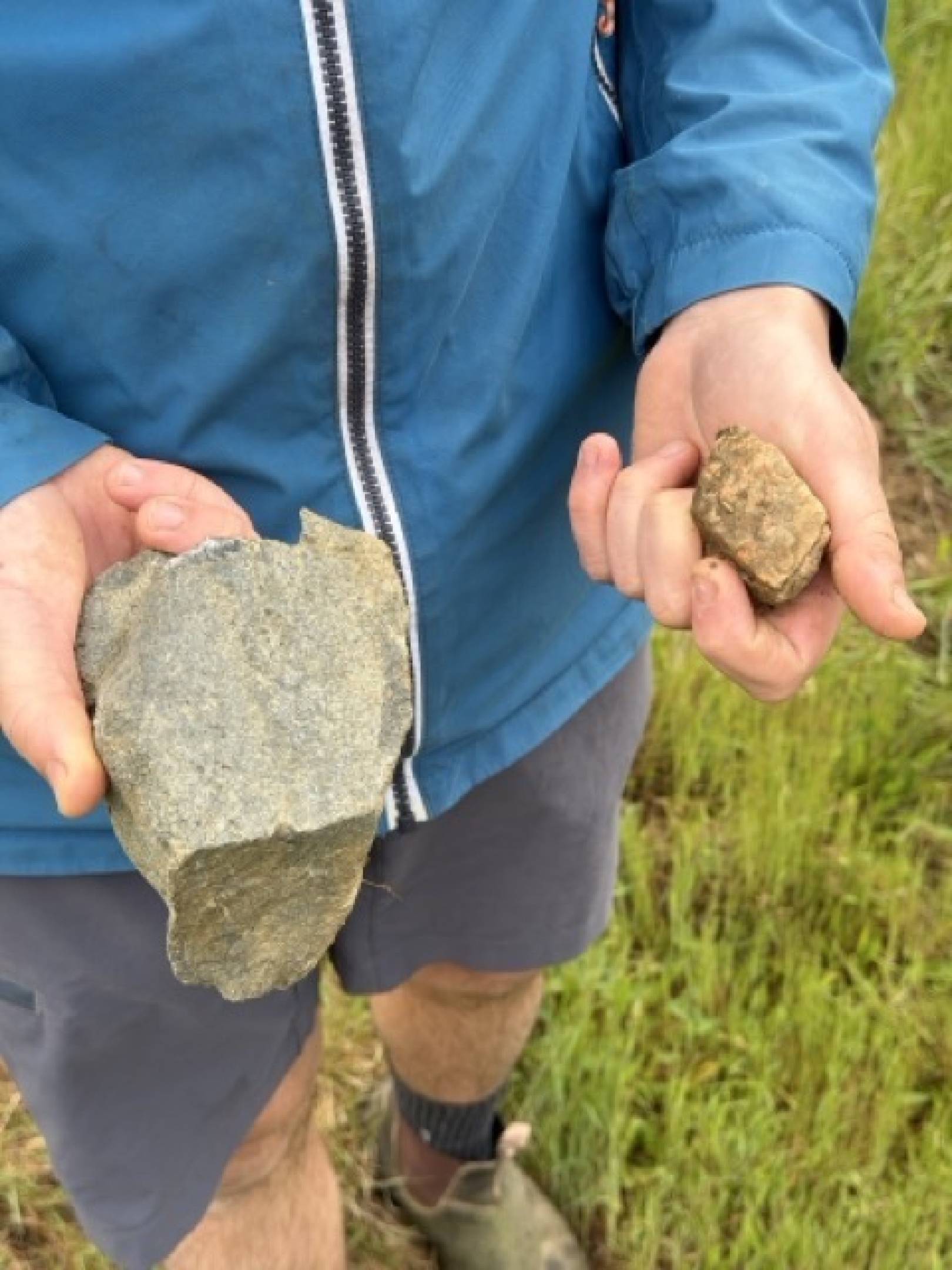
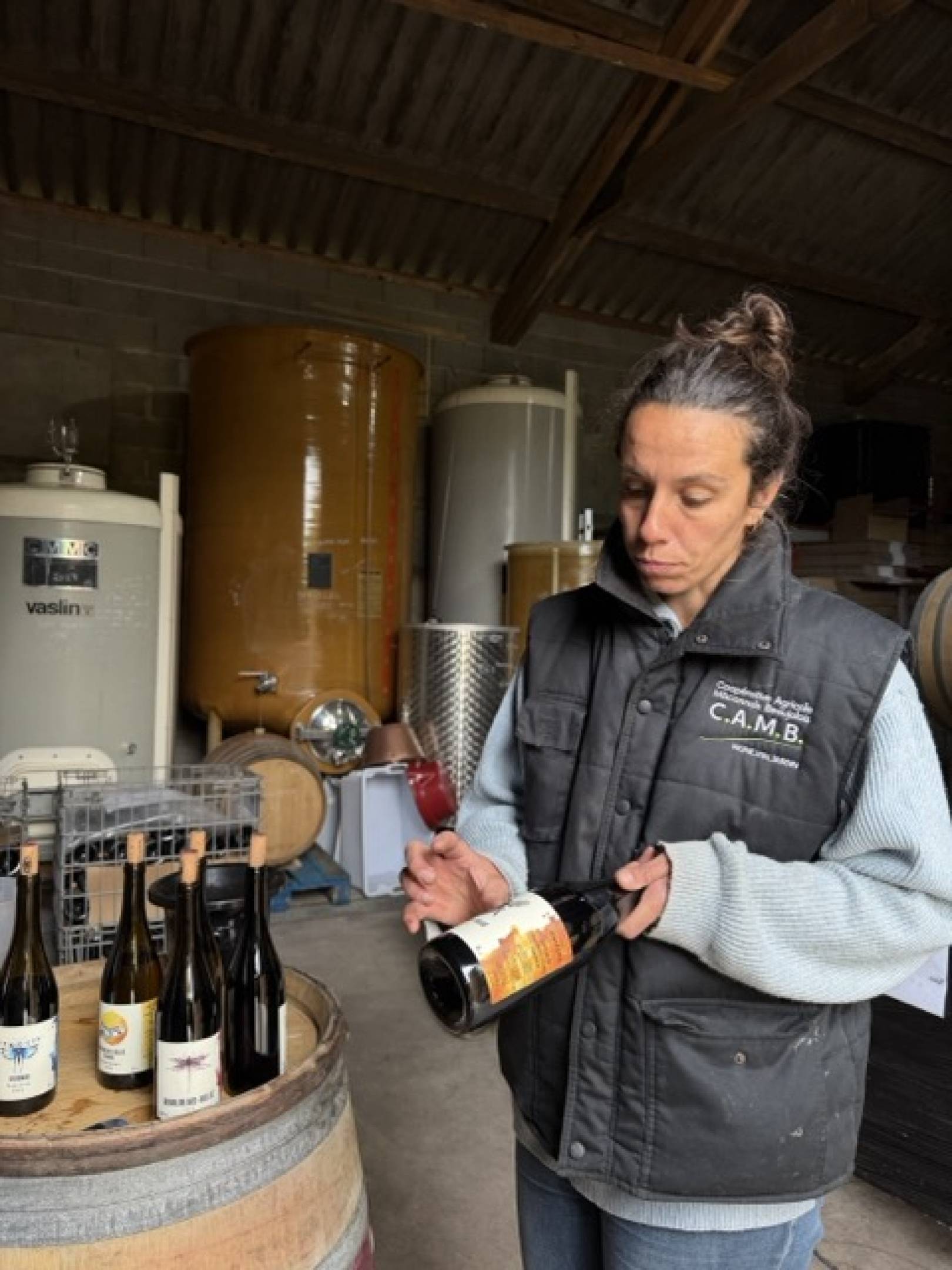
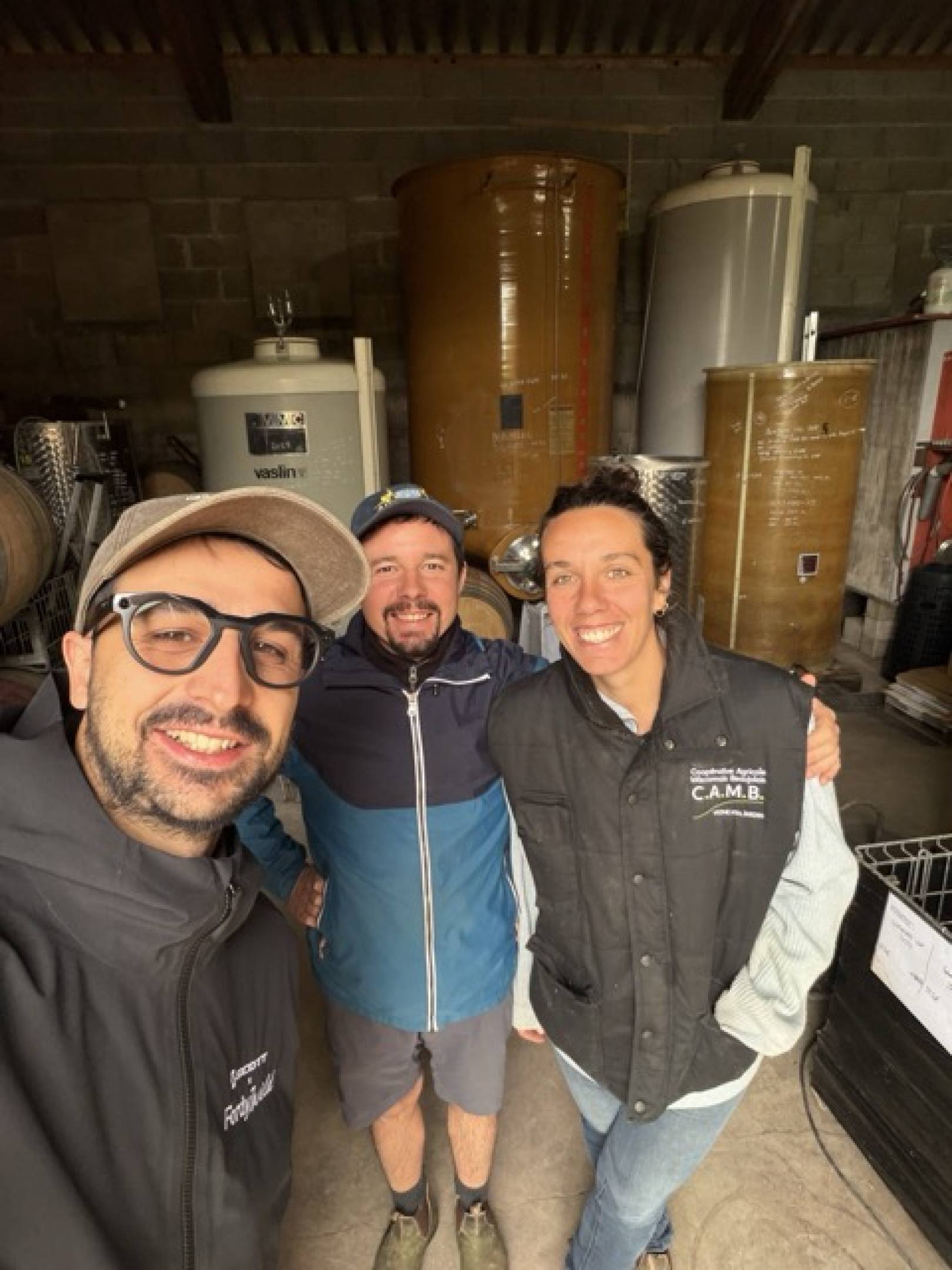
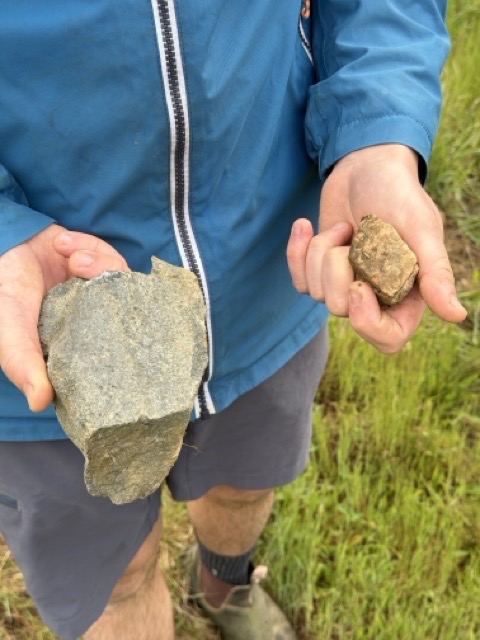
In 2022, when everyone was looking at Fleurie and Morgon, Bérengère and Antoine went the other way. They climbed to the northernmost village, above Juliénas, onto steep hills of flaking granite and pierres bleues. These blue stones decide the character of the wine here. They chose the part of Beaujolais that nobody wanted, and they stayed.
Today Oedipoda makes around 30,000 bottles a year. That is not many, and each one carries the name of a vineyard or a road.
Anyone who lives in the mountains recognises this choice at once. You pick the hard slope, where the work is heaviest and fashion never reaches. Then you stay long enough to know every stone.
Living vines, wine left in peace: the Oedipoda method
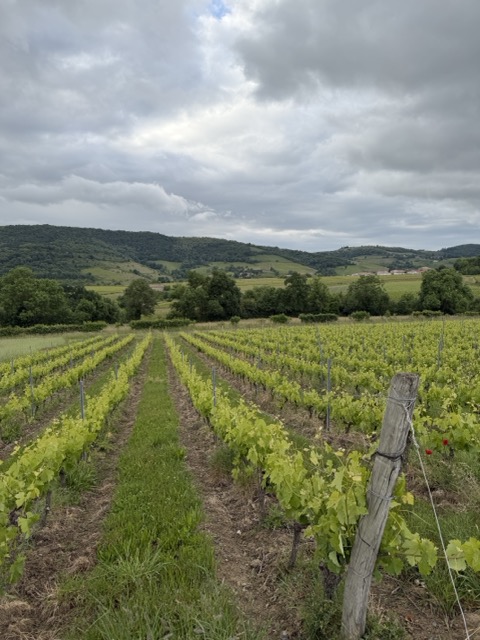
The house has one rule, and it shows in every decision. In the vineyard, the estate has been certified organic since 2024. The soil under the rows is ploughed and grass is sown between them, so the ground stays alive and can breathe.
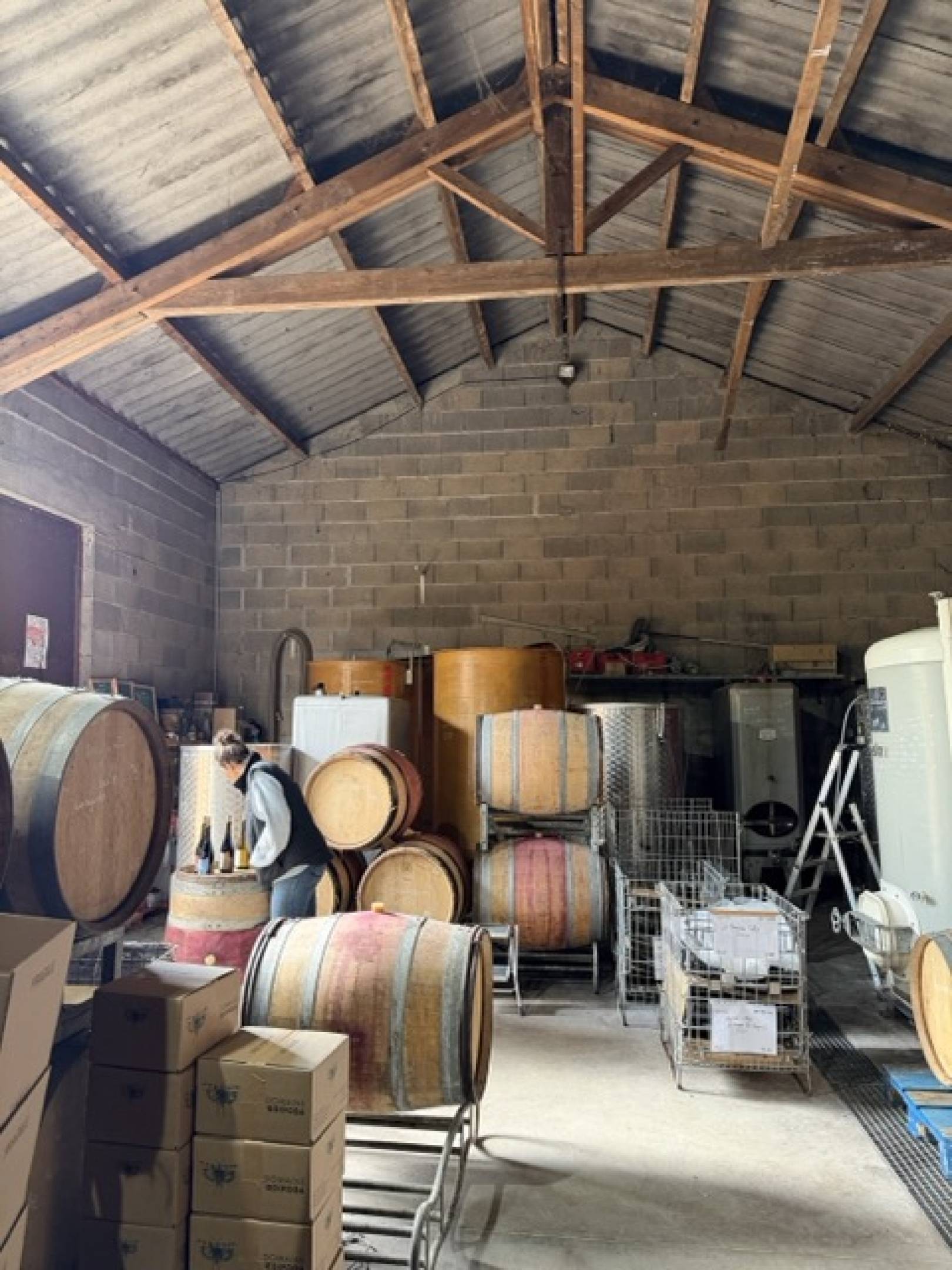
In the cellar, the work is done by taking away:
- native yeasts;
- short macerations;
- long months on the lees in steel;
- no filtration.
There are three grapes: Gamay, Chardonnay and Viognier. Alcohol stays low, between 11 and 13 degrees. The result is wine that asks to be drunk rather than decoded, right to the bottom of the bottle.
Beneath the vines lies a mosaic of soils. There is flaking granite, blue stone, clay and silt, and sand. In one corner there is lava and tuff, a memory of the time when there were volcanoes here. Each cuvée comes from one of these fragments, and it tells that fragment’s story.
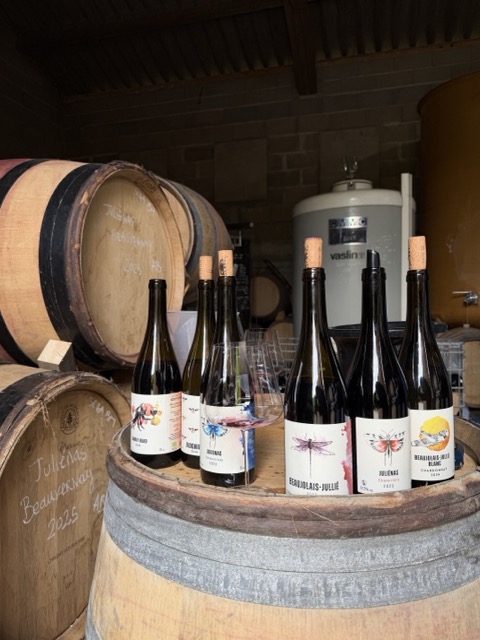
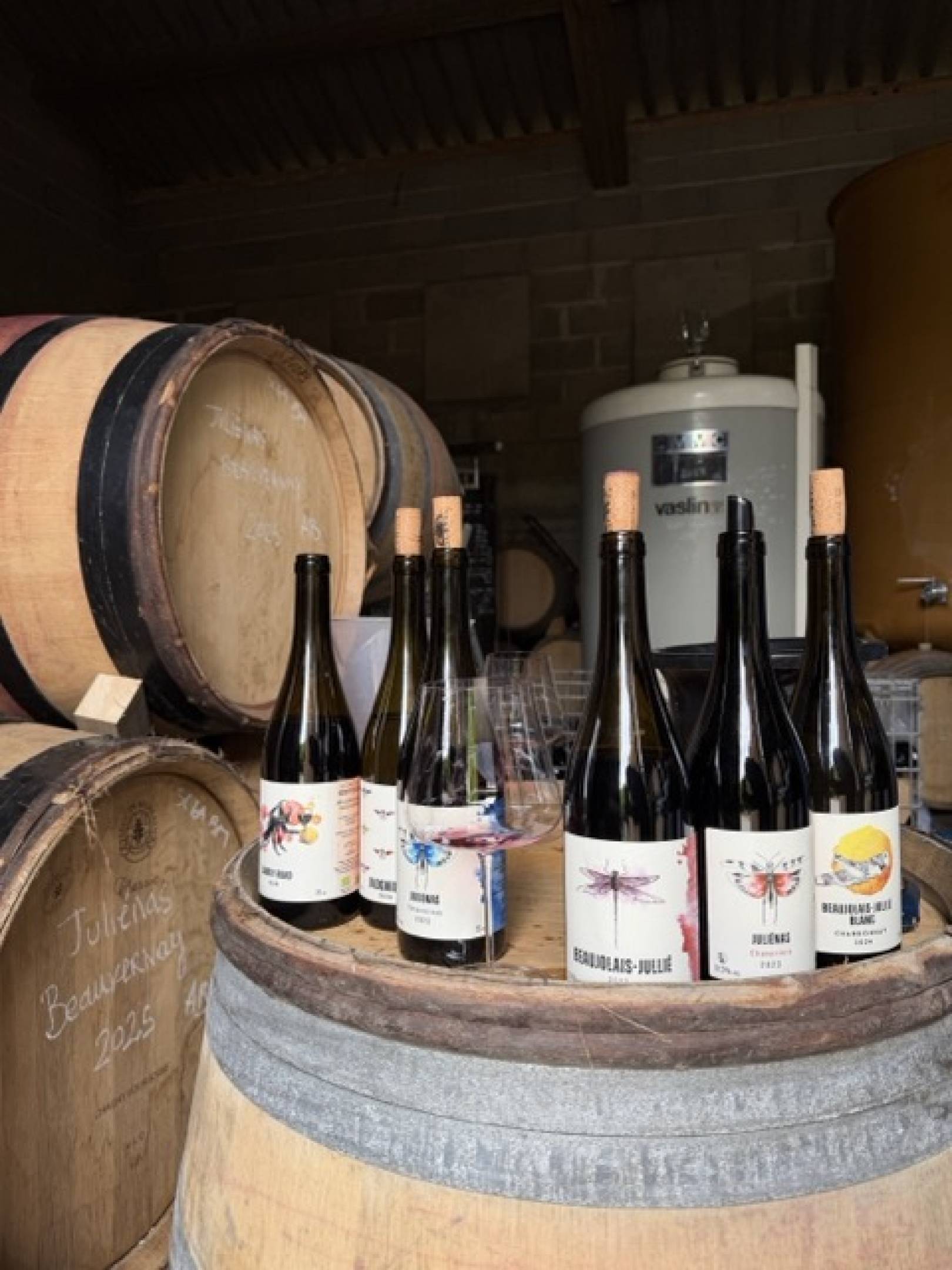
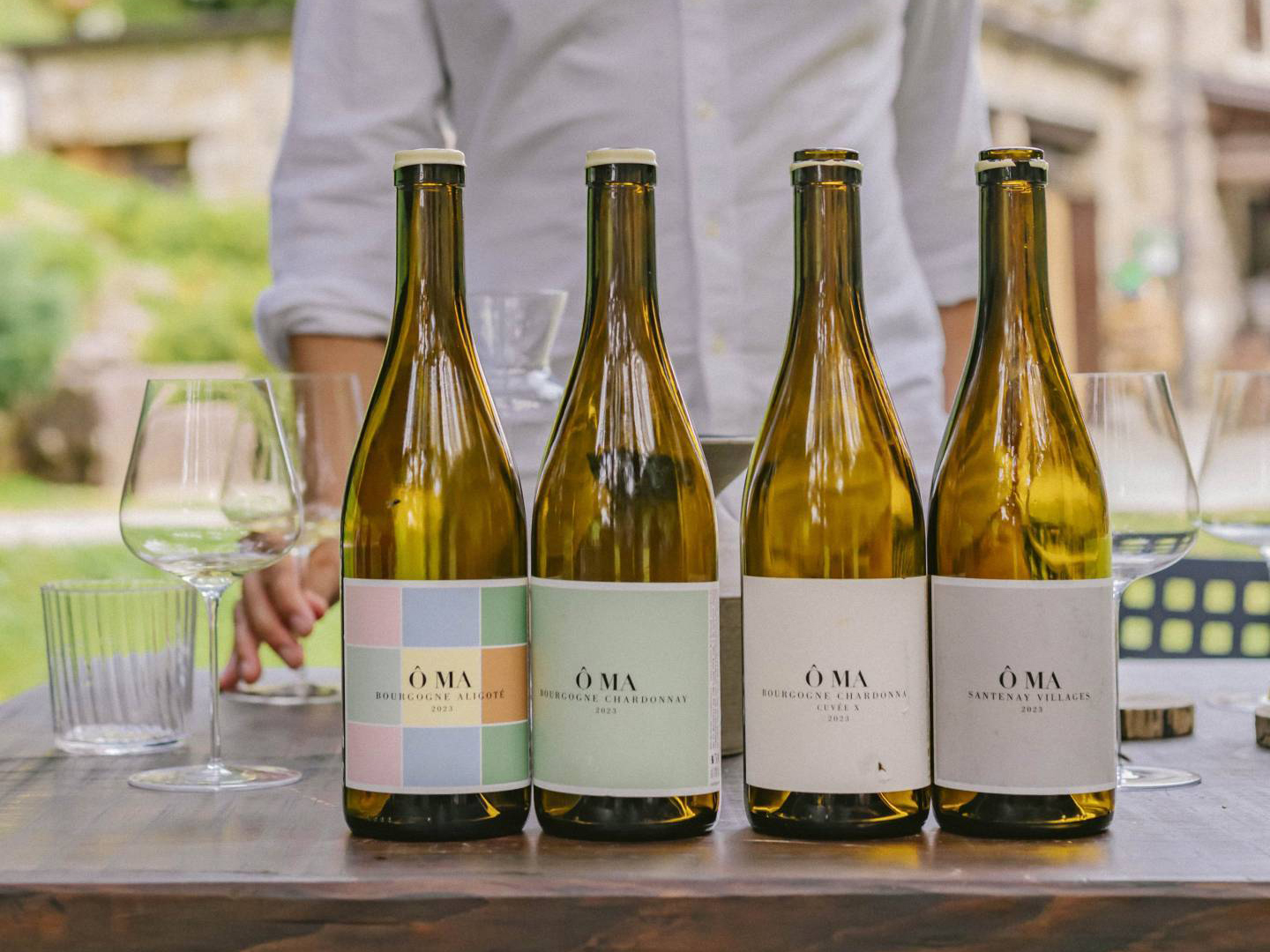
Five wines, one rule: the Wild Vigneron selection
Gamay Road, 2024, 11% vol.
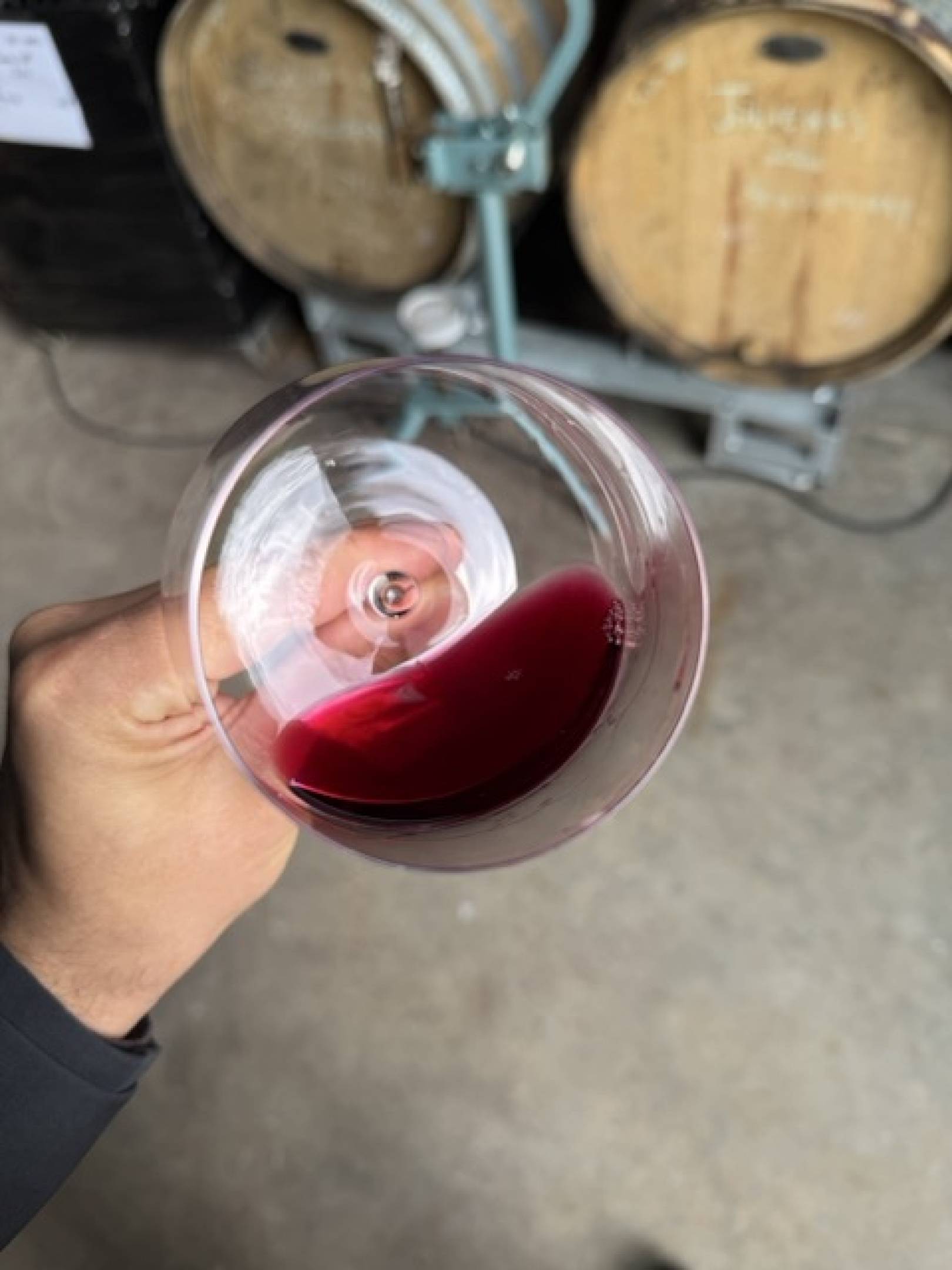
This is the wine of the road that runs through the village. It comes from three parcels on three different soils: flaking granite, blue-stone deposits and a volcanic corner. The parcels are picked in two passes in September and blended after five days of semi-carbonic maceration, just long enough to capture the fruit and stop. The wine spends a year on the lees in steel, unfined and unfiltered, with sulphites below 30 mg/l. In the glass it shows crunchy red fruit, juiciness and lightness. It is the red that people in Jullié pour without reading the label. A little sediment is normal.
Beaujolais Villages Blanc, 2024, 12% vol.
In Beaujolais, white wine is almost a heresy: 97% of the vineyards are Gamay. Bérengère and Antoine kept a fifteen-year-old Chardonnay parcel, densely planted on blue stone, clay and silt. They picked it early, on 10 September 2024, while the grapes were still taut. It was pressed directly, fermented spontaneously at low temperature and left seven months on the lees, with no filtration. The nose shows white peach and apricot. The palate is slender, glides away and asks at once for a second sip. This Chardonnay has no wish to imitate Burgundy, and that is exactly why it works.
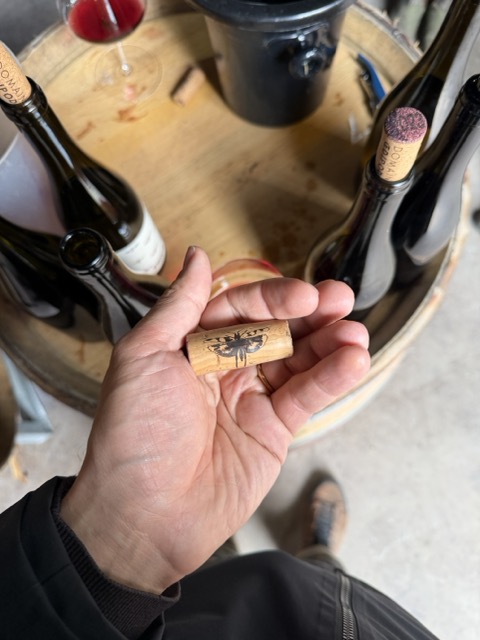
A Tire d’Aile, 2025, 13% vol.
À tire d’aile means “at full wing”, like a bird darting off. Here, two grapes take flight together.
- Chardonnay from the blue stones, picked ripe on 24 August 2025.
- Viognier from flaking granite and sand, picked a week later but deliberately held back. It brings acidity where the Chardonnay brings flesh.
Viognier should not even be in Beaujolais, but they planted it anyway. The wine is pressed directly, fermented spontaneously and aged ten months on the lees, with no filtration and sulphites below 40 mg/l. The nose shows yellow peach and spice. The palate is soft and juicy, with a backbone that keeps it upright. It is the most moreish white in the cellar.
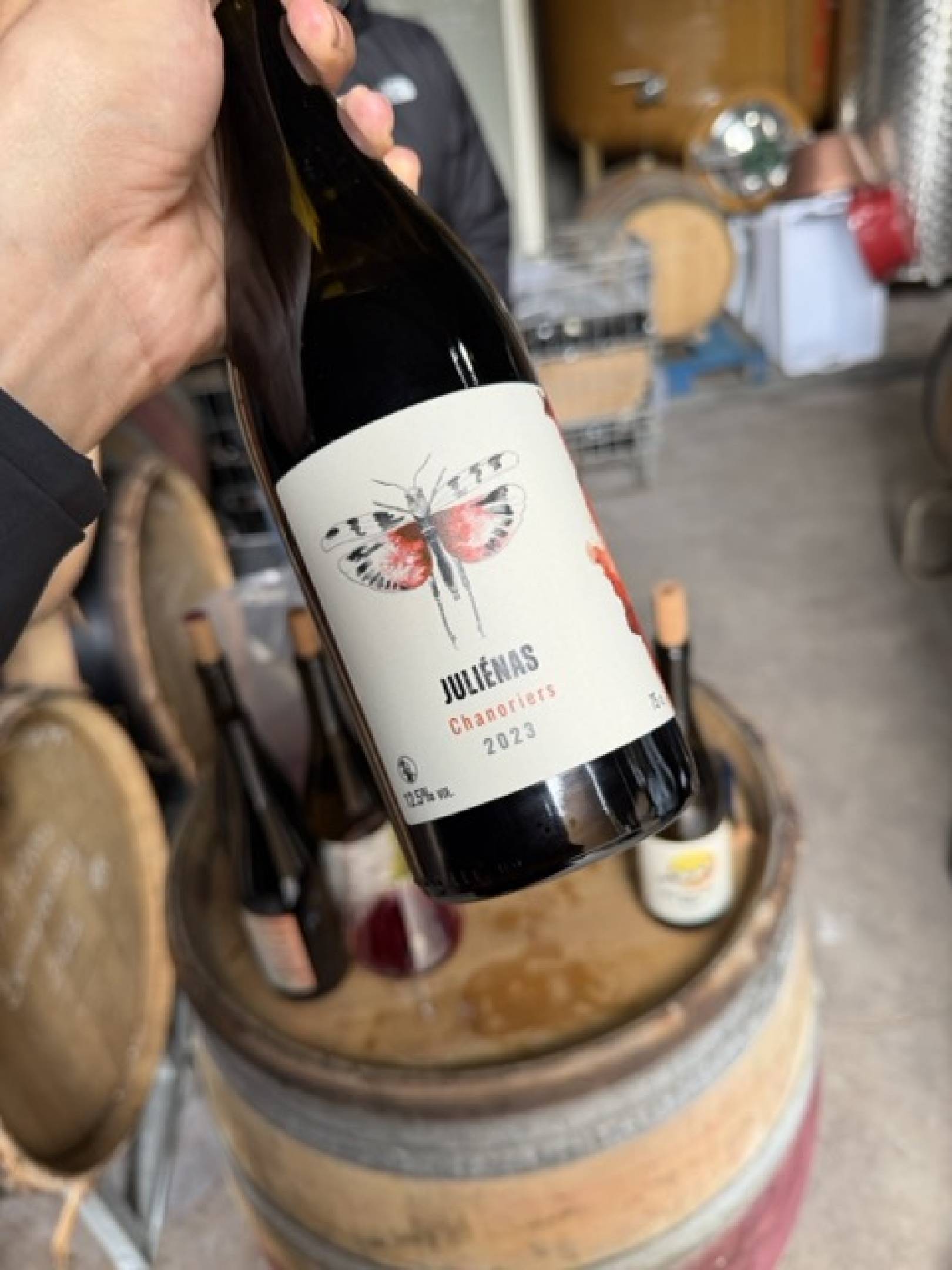
Juliénas Chanories, 2023, 12.5% vol.
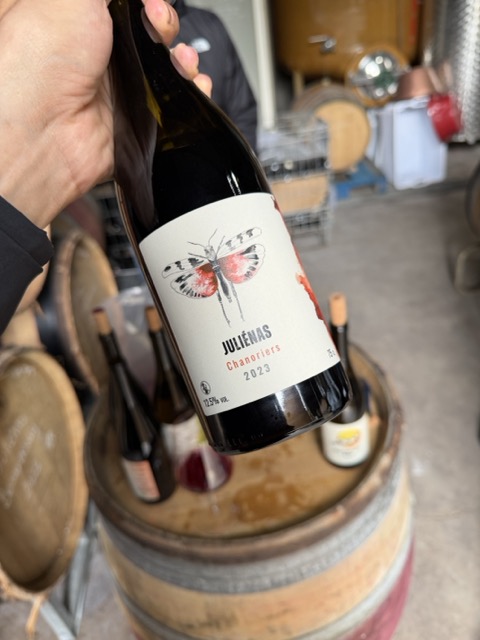 This is the dark side of Juliénas. The vineyard faces south on a 30% slope, where no tractor can climb and all the work is done by hand. Underneath lies pure blue stone, cut through by a breccia of granite that gives the wine its dark note. It gets thirteen days of semi-carbonic maceration with minimal intervention, then spontaneous fermentation and a year on the lees in steel. There is no filtration or fining, and sulphites stay below 25 mg/l. The colour is deep and the fruit full and still young. A fresh, natural tannin lifts the palate and lengthens it. This is the cru as they wanted it: terroir, structure, freshness.
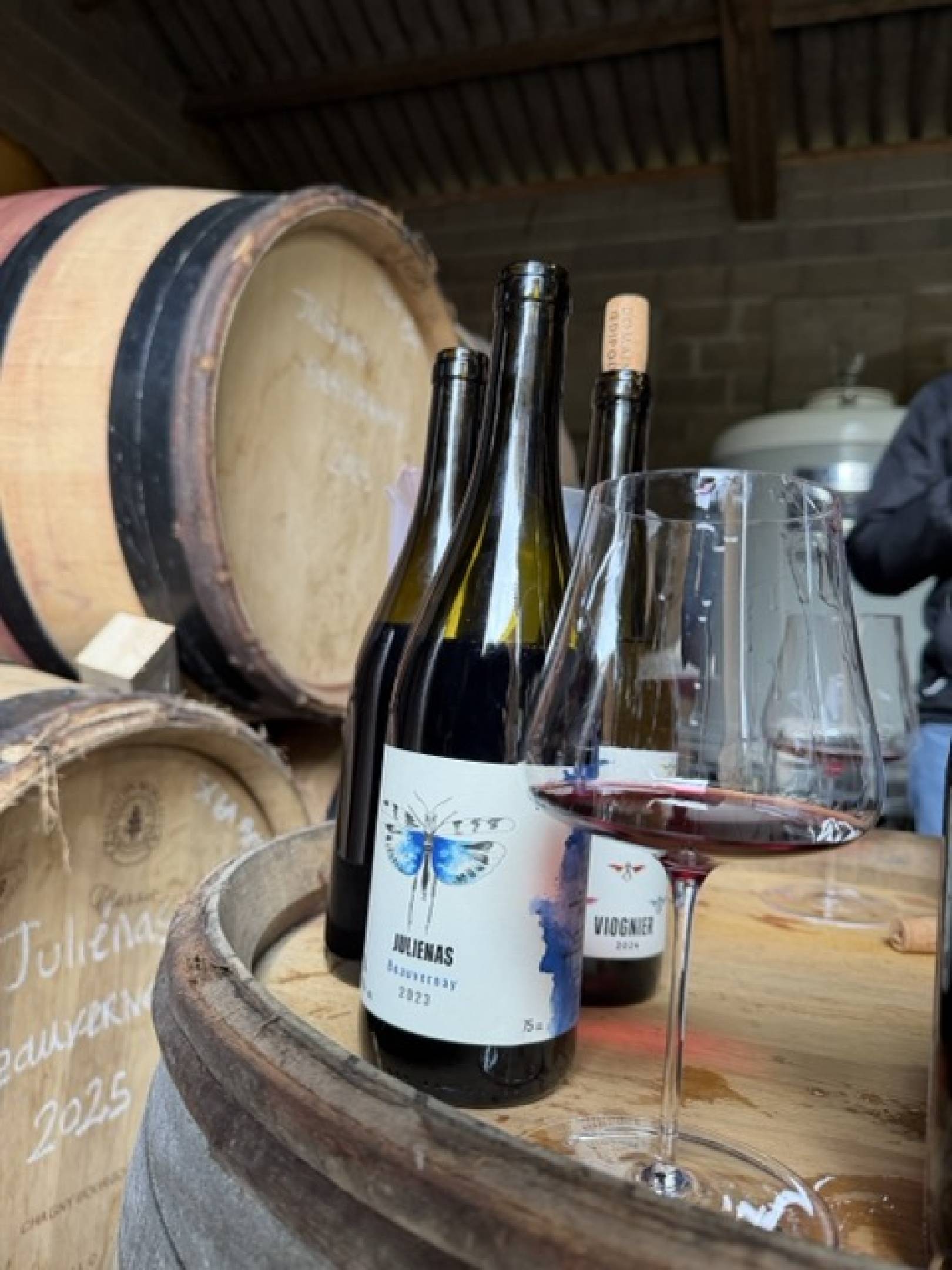
Juliénas Beauvernay, 2023, 13% vol.
If Chanories is the dark side, Beauvernay is the vertical one. It is the most celebrated hill in the appellation, above 400 metres, with a steep slope facing south and south-east. Here the blue stone is the soil itself: schist and diorite of volcanic origin that warm the grapes by day and cool them by night. It gets a long semi-carbonic maceration, spontaneous fermentation and a year on the lees in steel, with no filtration or fining. The fruit is bright, the acidity cuts and a mineral thread lingers in the mouth. This is the most concentrated Gamay in the cellar, and the one that ages best.