Red stone, white veil
Six centuries on the red slope: the story of the Schätzel family
The Schätzel story on the Rhine is measured in centuries. The modern estate was founded in 1850 by Jakob Schlamp. In 1874 his son Heinrich bought the “General von Zastrow” property, which is still the estate’s home today. Kai Schätzel and Juliane Eichblatt now run it.
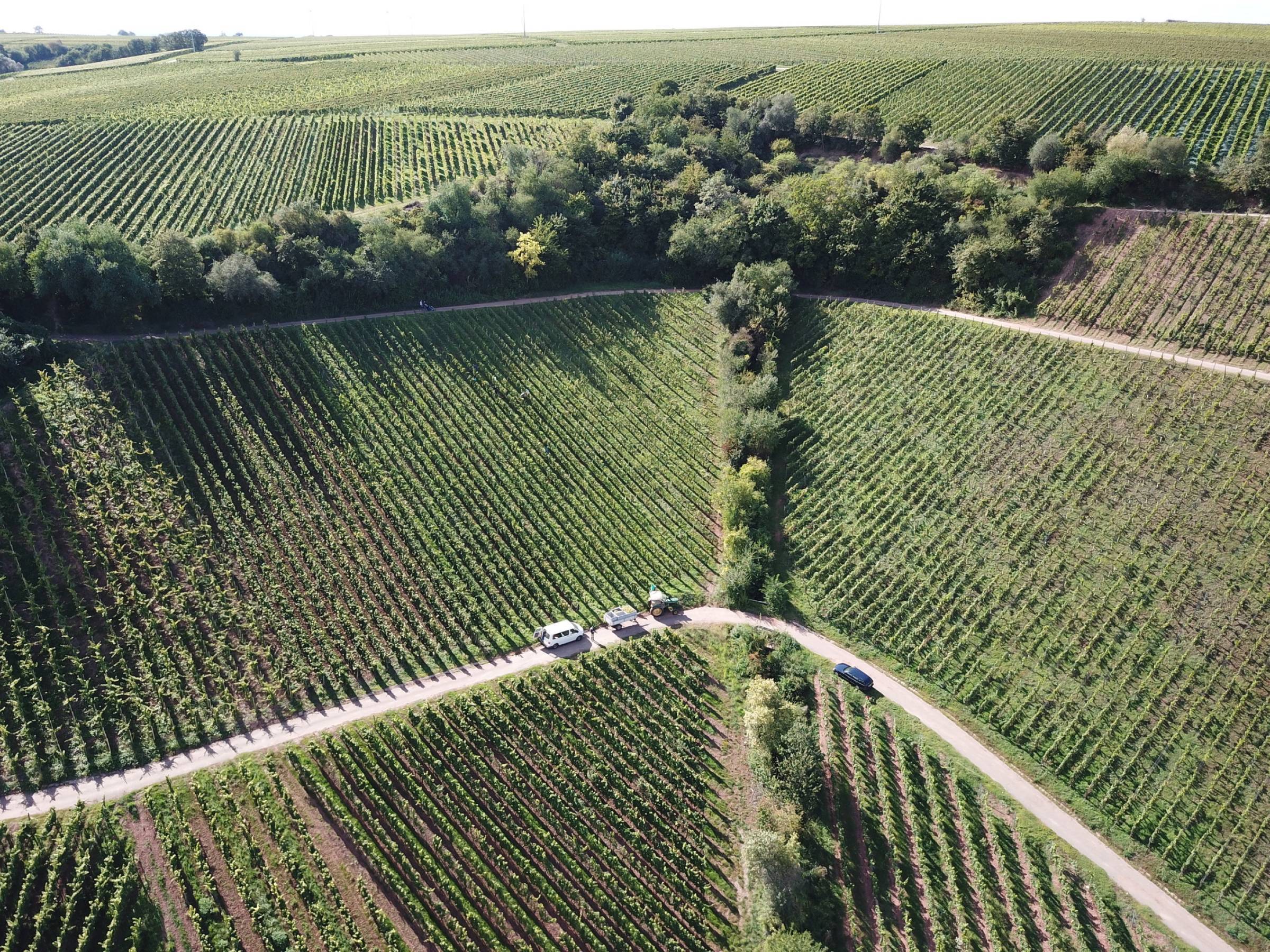
The vineyards lie on the Roter Hang of Nierstein, in Rheinhessen. They cover 9.5 hectares of very steep slopes of red Rotliegend slate and sandstone, spread across historic crus such as Hipping, Ölberg, Pettenthal and Rothenberg. Riesling makes up 80% of the plantings. The rest is Silvaner, including a clone that belongs to the family alone. Around 60,000 bottles leave the cellar each year.
.JPG)
Anyone who lives among the Orobic Alps knows this kind of landscape. There is the slope that forgives nothing, the rock that decides everything, and the work done on foot because machines cannot reach it.
Vines set free: sheep, trees and the “golden cut”
The vineyards are certified biodynamic by Demeter, but for Kai and Juliane the certification is only the starting point. They believe that modern farming can truly heal the world.
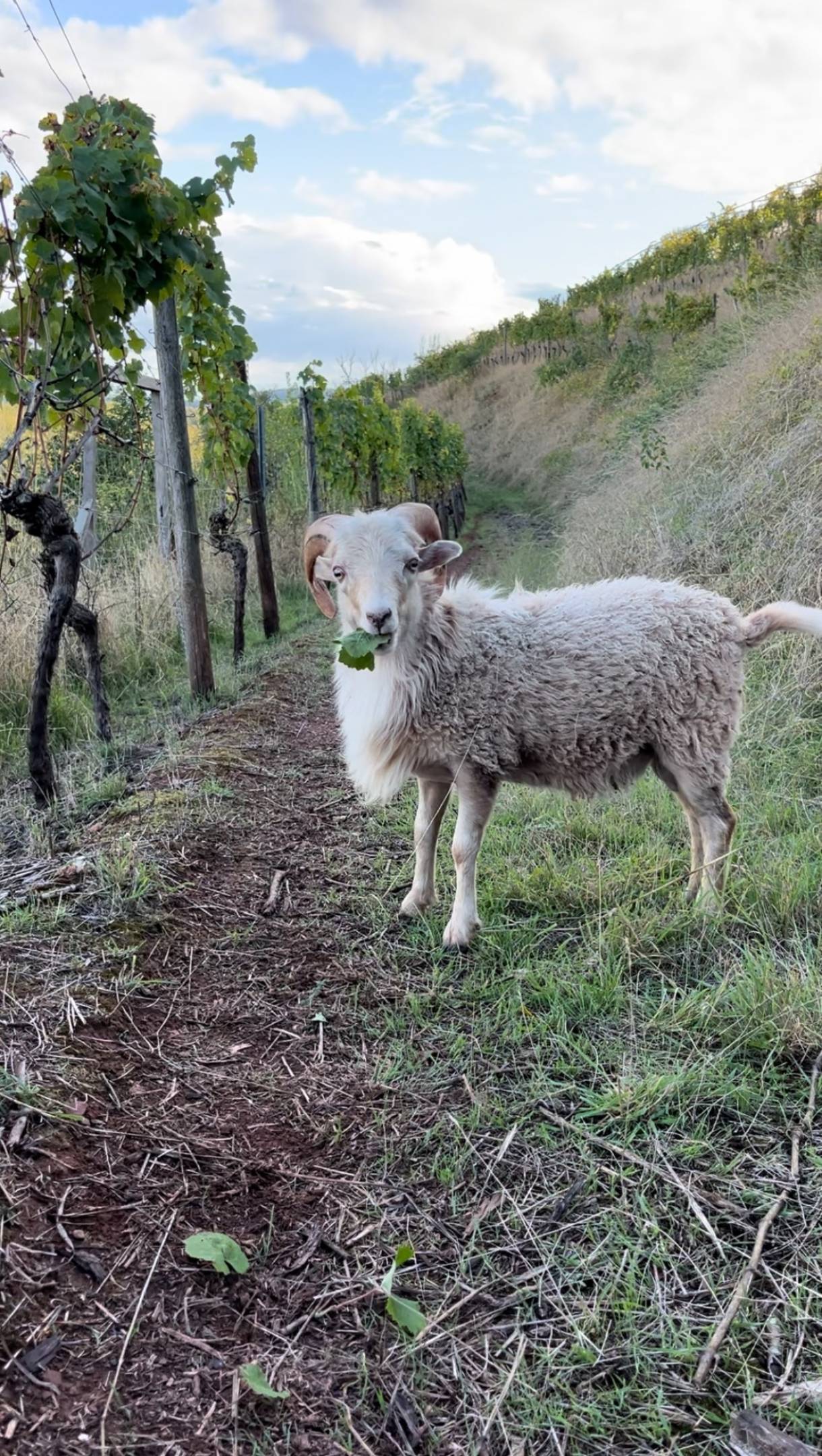
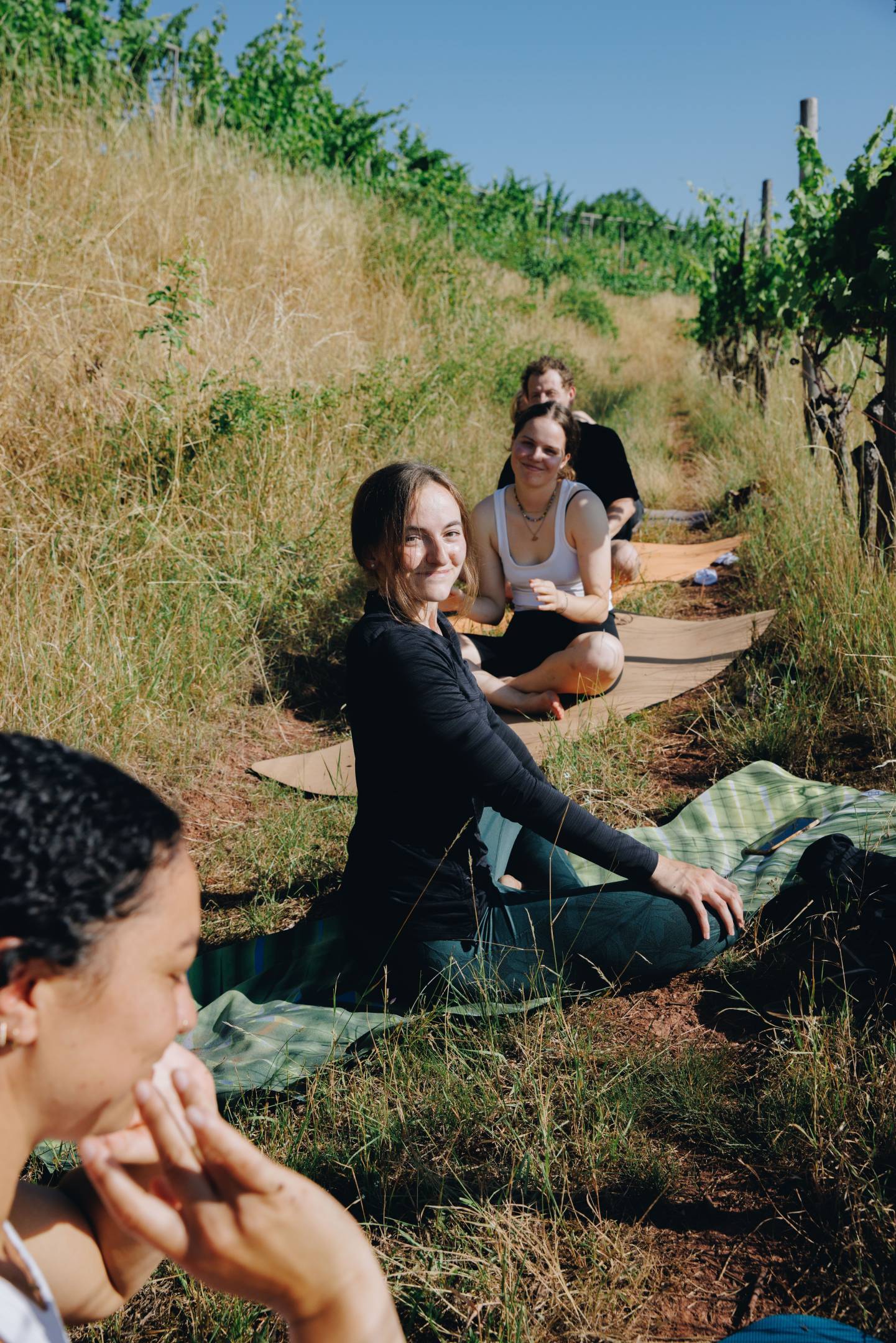
A flock of Ouessant sheep grazes between the rows. The sheep bring biodiversity, and with them come back microbes, insects and birds. Fewer heavy machines are needed and less energy is wasted. The soils are less compacted, so they stay alive and can breathe.
.jpg)
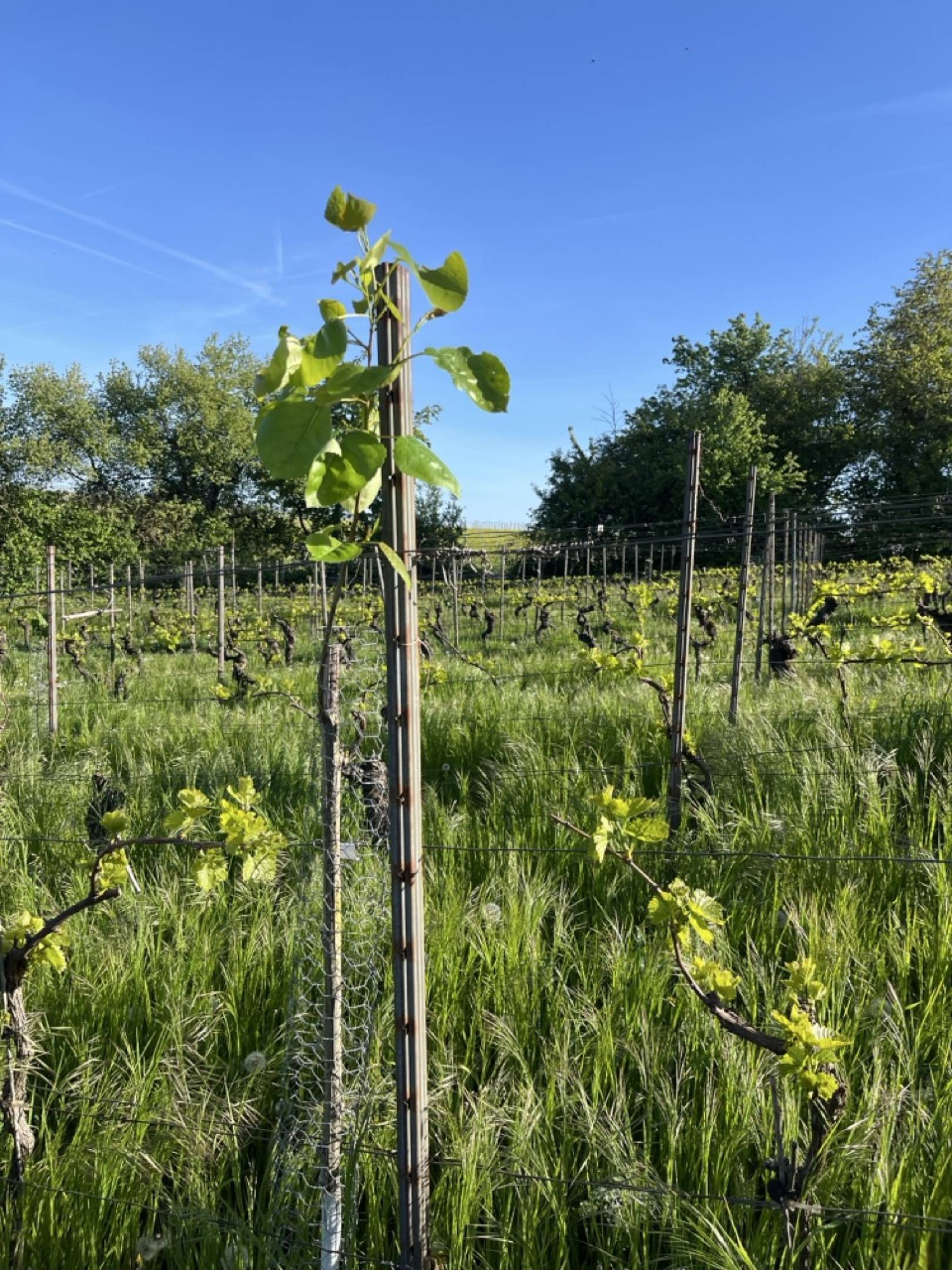
Then there is the break with monoculture. Trees are planted among the vines to give shade and hold water, and herbs and vegetables grow between the rows. Biodynamic preparations are sprayed by drone, so heavy machinery no longer compacts the ground. The result is a syntropic system that can store large amounts of CO2 in the soil.
The vine itself is set free too. By nature, the plant protects its fruit from the sun, casting shade and cooling itself down. So in hot, dry summers the Schätzels let it grow like a pergola until it finds its own balance.
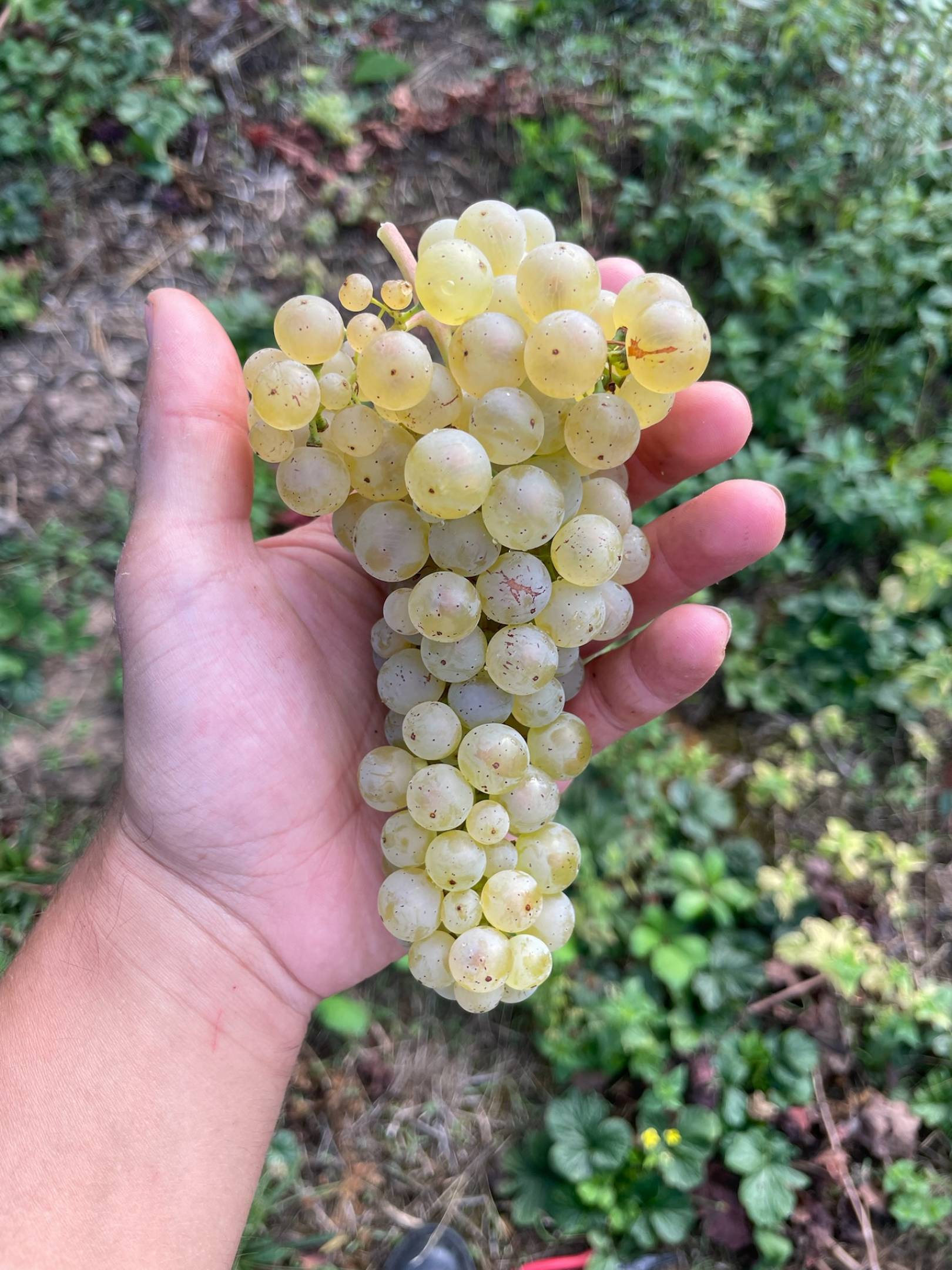
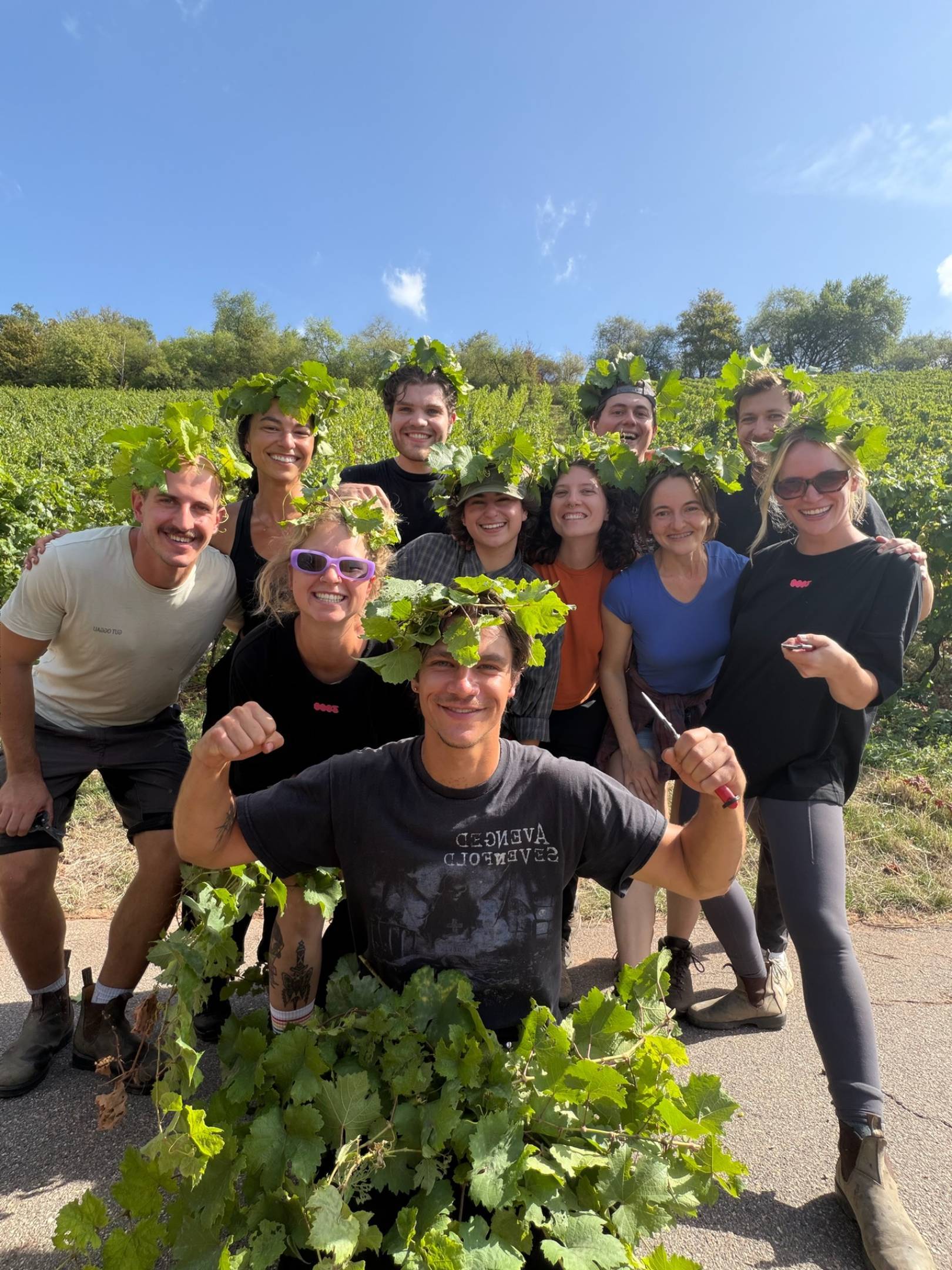
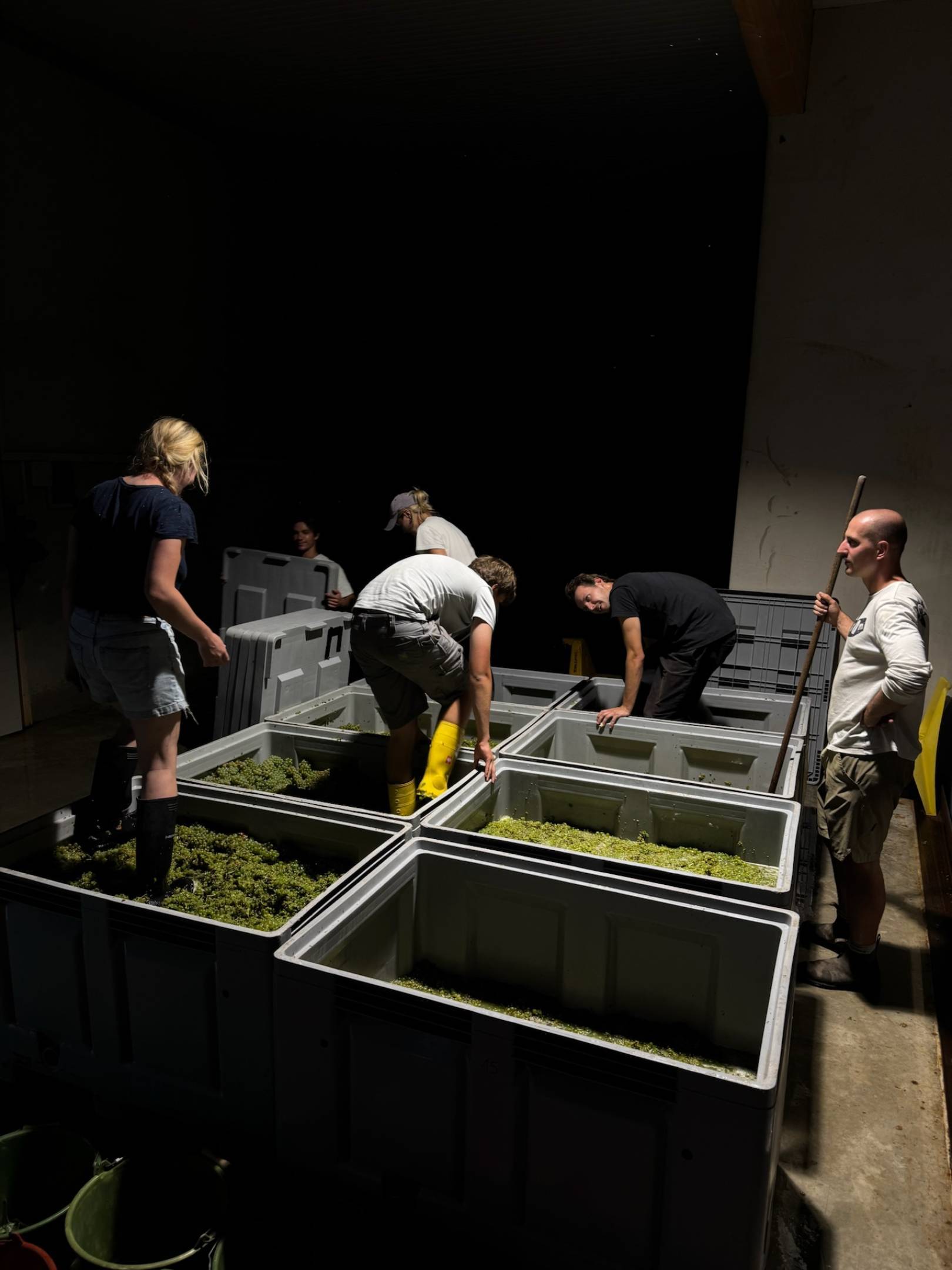
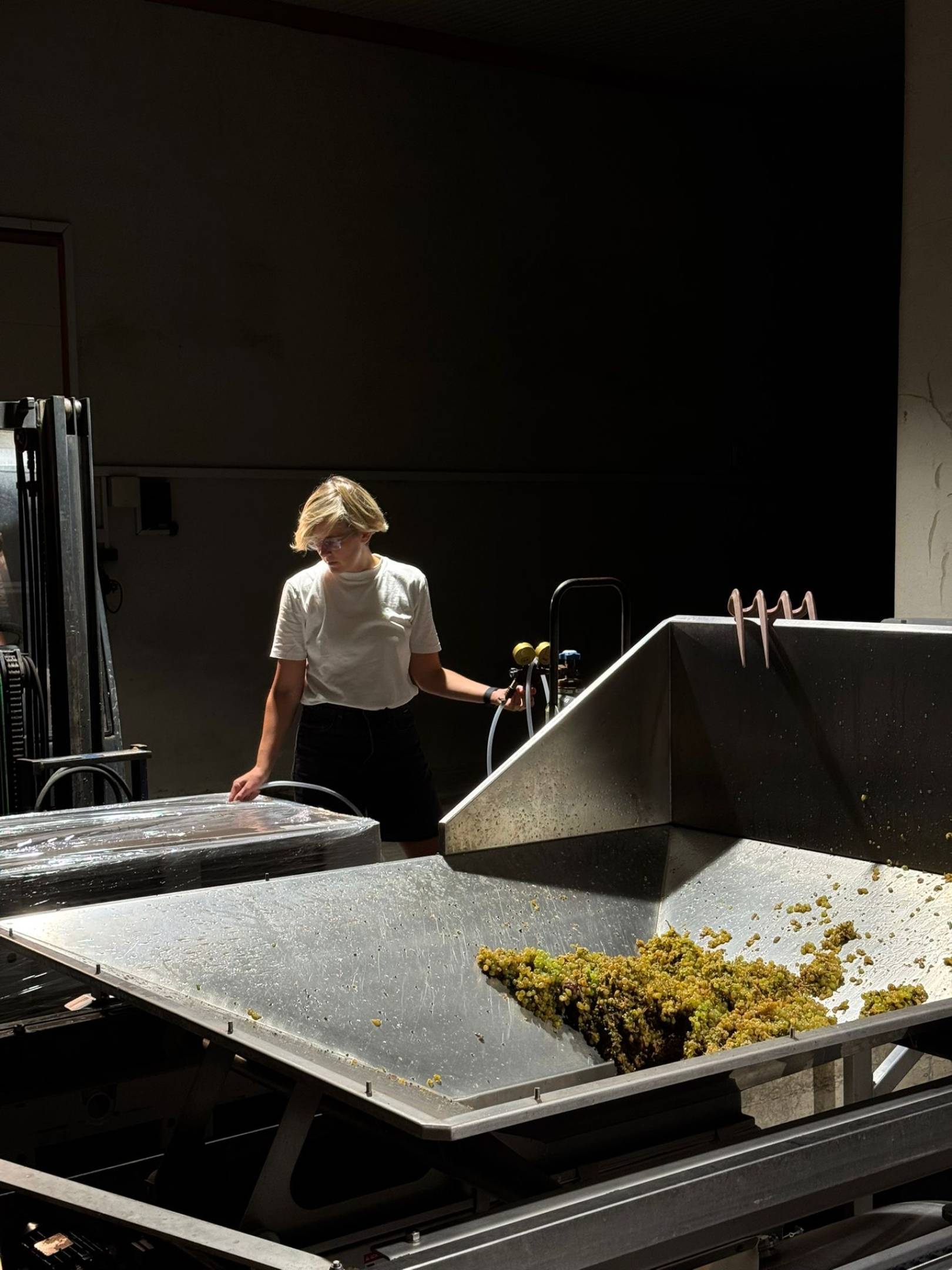
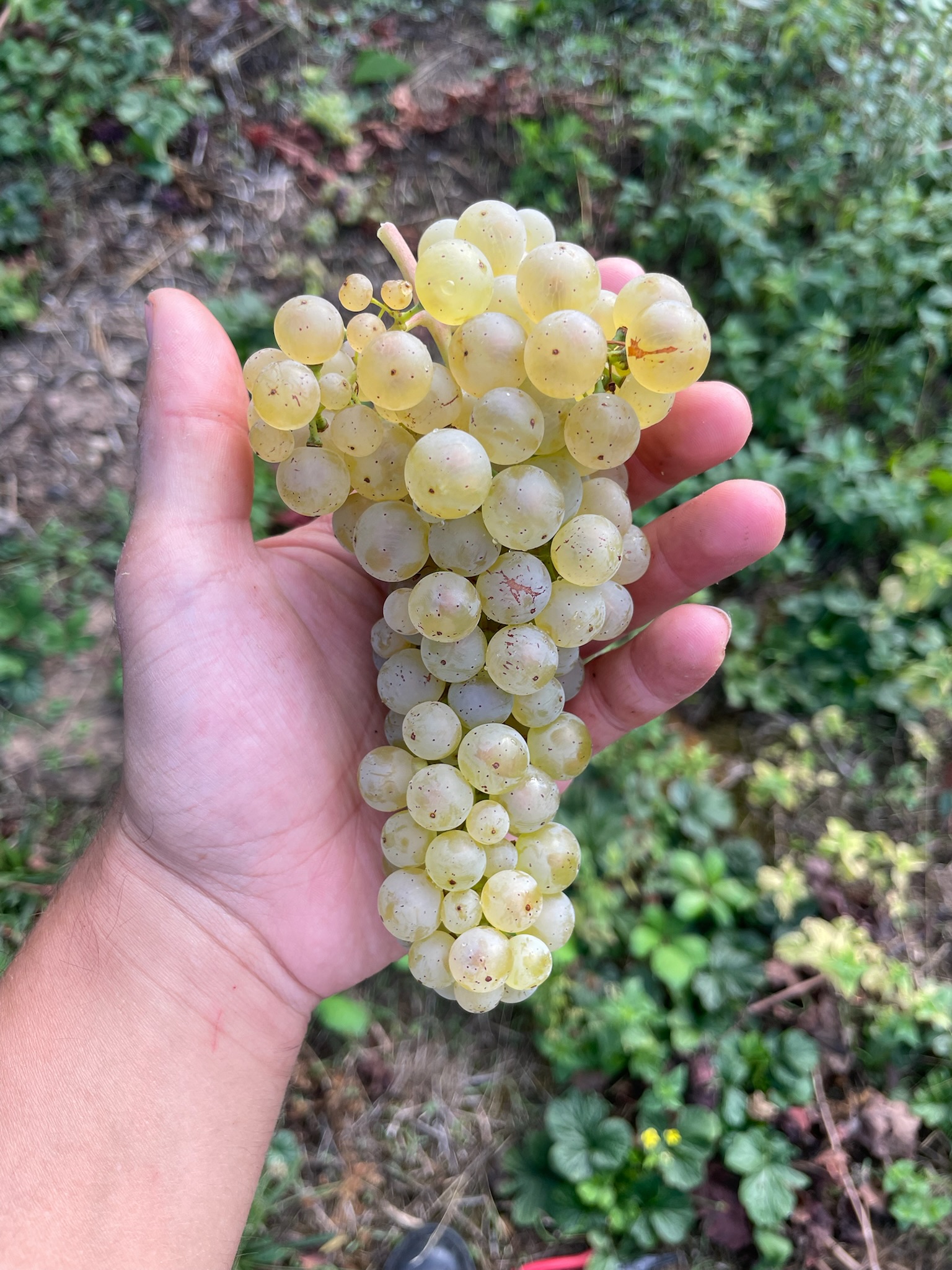
Then comes the harvest, which the estate calls the Golden Cut. The idea is simple: they love healthy grapes, and they pick them at exactly the right moment. During harvest they walk through the vineyards week after week, up to six passes per vineyard. Each time they pick by hand only the perfect fruit, the fruit that is still crisp. The grapes are crushed by foot to draw as much energy as possible from the skins. This is the basis of the wines’ natural stability, and it all begins in the vineyard, before the cellar.
Beneath the veil: modern wines, flor and patience
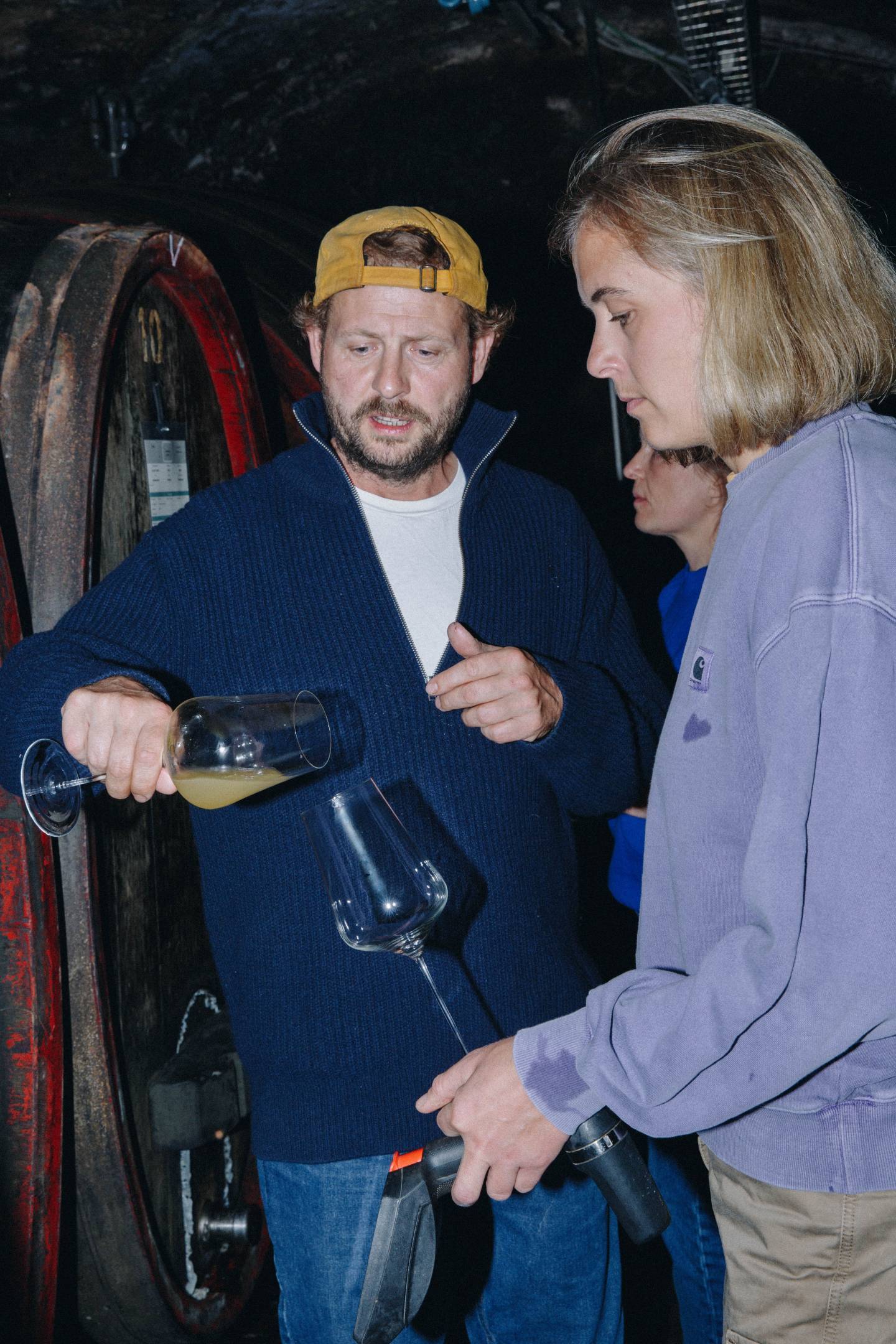
The Schätzels call their wines modern wines. For them, they are the bridge between natural wine and great terroirs, combining natural processes with sensitive craftsmanship. They contain no additives and are not filtered. They stabilise on their own, by nature, and are ready to drink now.
In the cellar the rule is to take away. Fermentations are spontaneous, with indigenous yeasts, and the wines spend a long time on their lees. No sulfites are added.
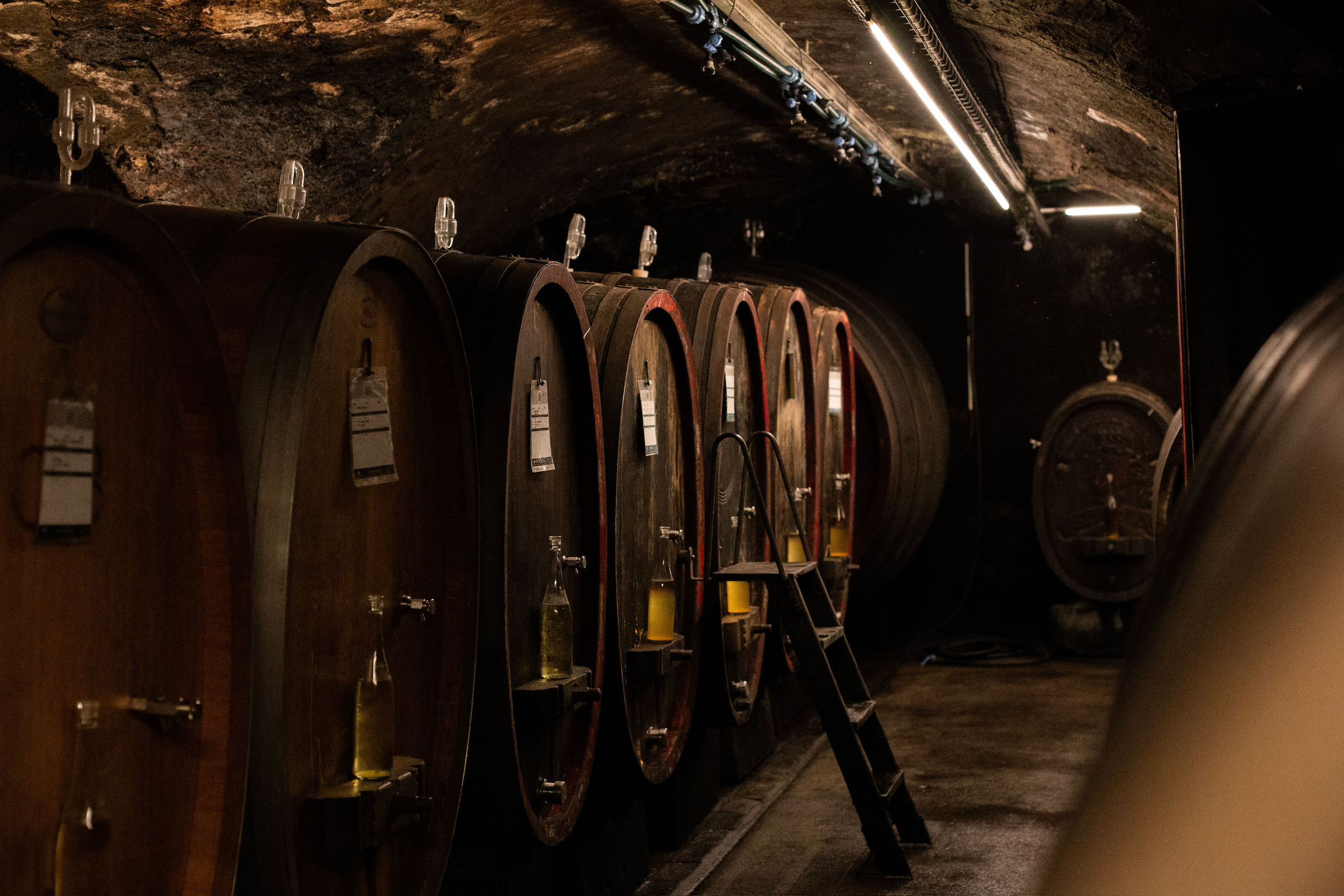
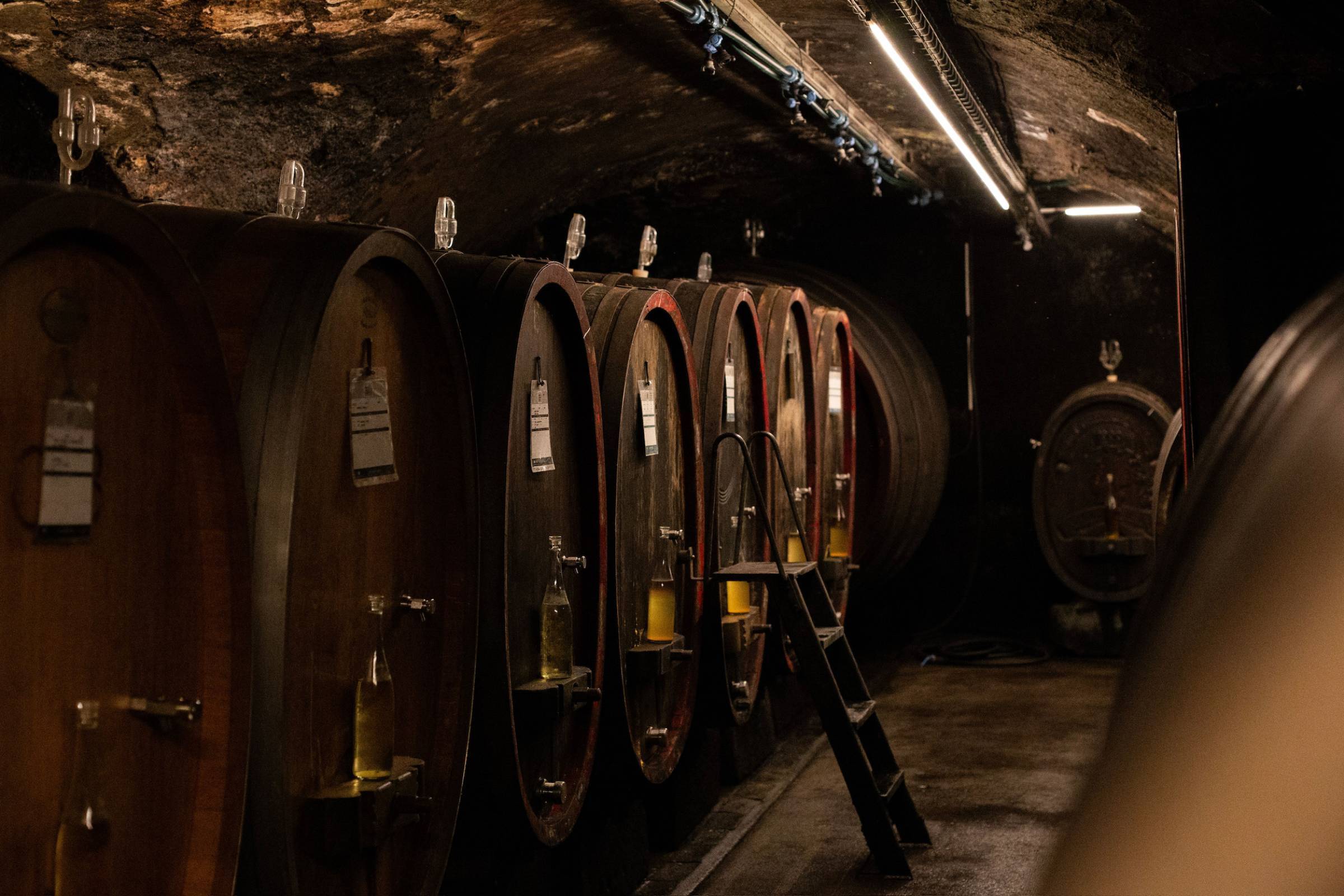
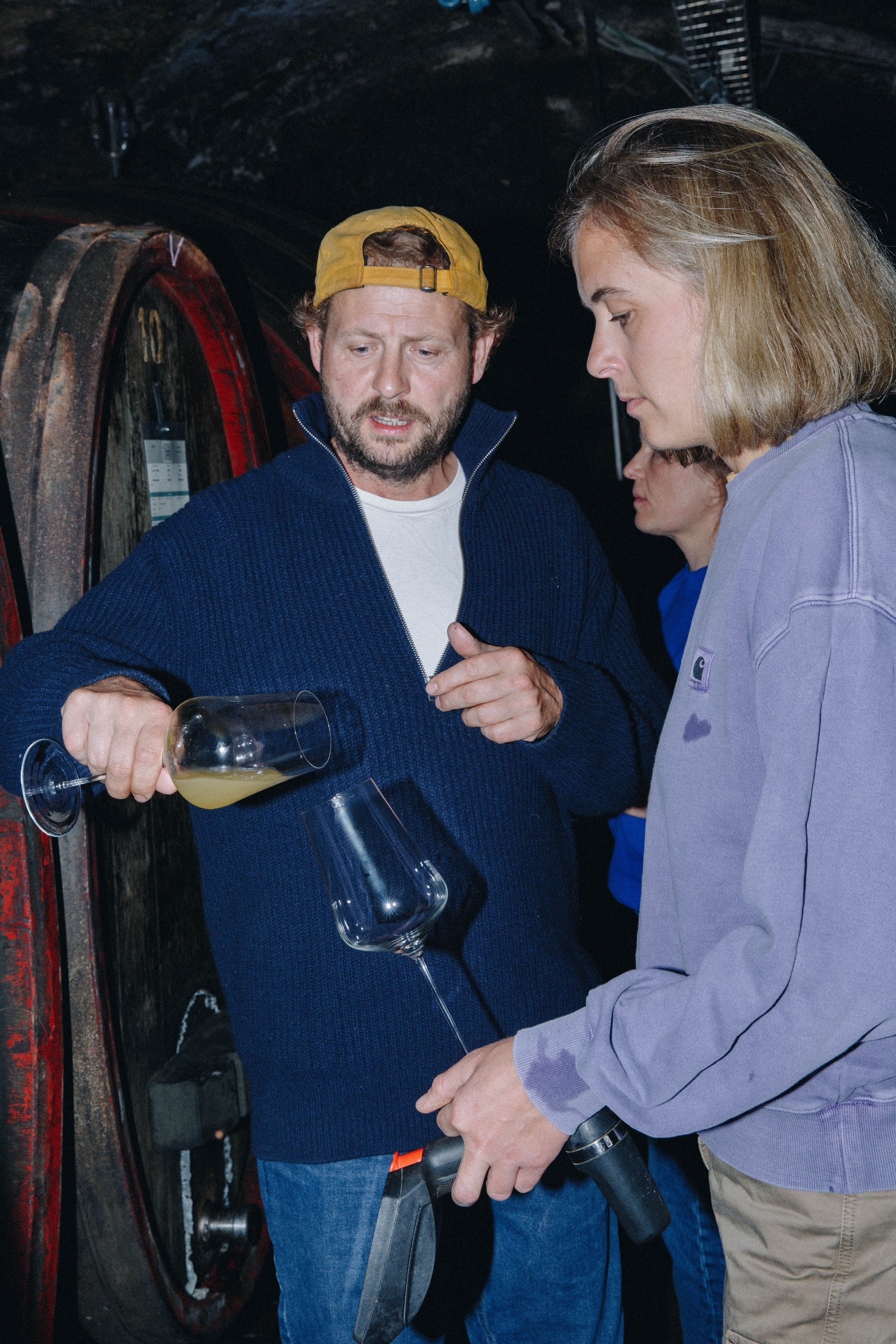
Stabilising naturally takes time, though. Several fermentations work together, and the wine rests in old oak barrels until it finds its balance. There, on the surface of the wine, the flor grows. It is a rare natural yeast that forms a veil and protects the wine from oxidation. In the Nierstein cellar, some wines stay beneath this veil for up to eight years.
Anyone who knows the ageing cellars of our valleys will understand the principle right away. A living layer protects, transforms and asks for patience. The result is wines with a light profile and moderate alcohol, but with a depth that keeps unfolding in the glass.
Six bottles from the Roter Hang: the Wild Vigneron selection
Riesling 3000, 2023, 11.5% vol.
This is Kai’s freshest, juiciest Riesling. It grows on red slate, among the rows where the Ouessant sheep graze. It ferments spontaneously and is not filtered. Every bottle funds a regenerative farming project chosen by the person who drinks it: agroforestry, biodiversity or education. On the palate it is citrusy, crisp and immediate.
Kabinett Riesling VDP Gutswein, 2025, 7% vol.
The estate’s entry-level wine, matured in stainless steel and large casks. The nose is bright, with yellow fruit, flowers and herbs. The palate is fresh and taut, with fine acidity and a long, savoury finish. A modern, light Kabinett for everyday drinking.
Hipping Kabinett VDF Grosse Lage, 2025, 7% vol.
From the Hipping cru, on red Permian sandstone. It is made in a reductive style, built to age. The nose shows flint, gunpowder, yellow apple, lime and plum. The palate is elegant and light, with lively bitter notes and remarkable mineral length.
Steiner Silvaner Solera, vintages 2020-2024, 11% vol.
The first Silvaner made as a solera, from grapes grown in Hipping and Rothenberg. The grapes are crushed by foot and ferment spontaneously in 1,200-litre casks. The wine then spends at least 30 months under flor. It is golden yellow and slightly hazy. The nose shows chamomile, sage, mint and stone fruit. The palate is dense and very taut, with orange blossom and mandarin peel.
Steiner Riesling Solera, solera 2017-2024, 11% vol.
The grapes come from Ölberg, Hipping and Pettenthal and undergo a 24-hour cold maceration. The wine ages for 32 months in large casks under a veil of flor. The nose is austere, with sencha tea, dried oregano and mint. The palate is dry and taut, with a firm texture and a freshness that goes on and on.
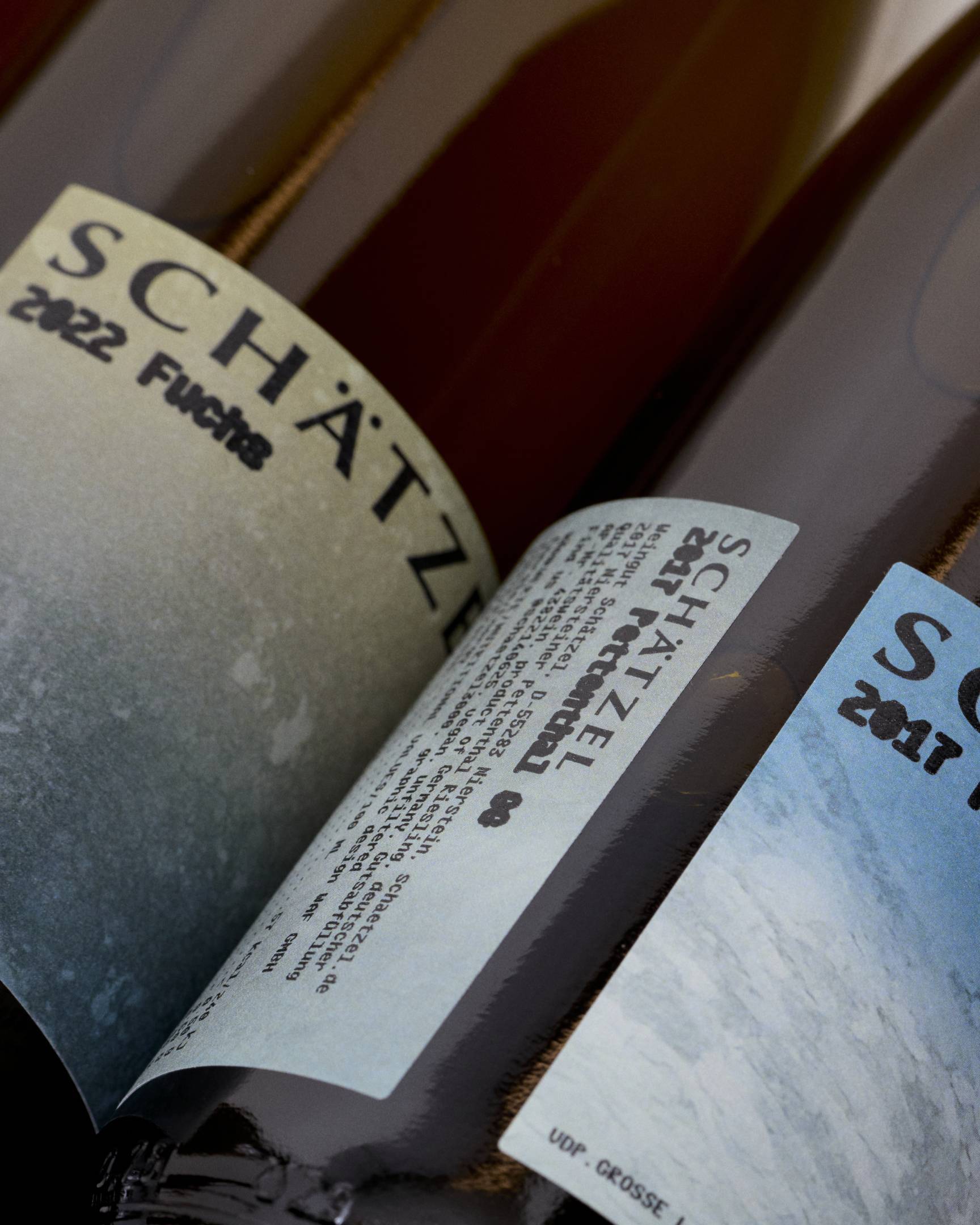
Fuchs Riesling, 2022, 11% vol.
From the Fuchsloch, a single parcel within the Hipping cru, with vines around 40 years old. The grapes are crushed by foot and pressed for 36 hours. The wine ferments in 600-litre barrels and ages for 35 months under flor. The nose shows apple, quince, pear with its skin, lanolin and liquorice. The palate is intense and silky, with refined acidity and a fine tannin.