Gautheron d'Anost: Burgundy starting again from Dijon
On Monday 23 November Bastien Gautheron came to see us for a Wild Vigneron masterclass. He told us everything: where his vines are, how he presses, how much carbon dioxide he leaves in the wine, why in Gevrey blackcurrant changes face between barrel and bottle. Here is what he said, in our own words.
A name that is not a vineyard
Gautheron is his mother's family name. Anost is a small village in the Morvan, deep in the Burgundy forests, where there are no vines. Bastien put it on the label as a tribute to that side of the family, and to a simple idea: in Burgundy, wine is not everything. Then there is Italy: his grandmother was Italian, and he says he learned taste in her kitchen, understanding what makes a dish, or a glass, balanced.

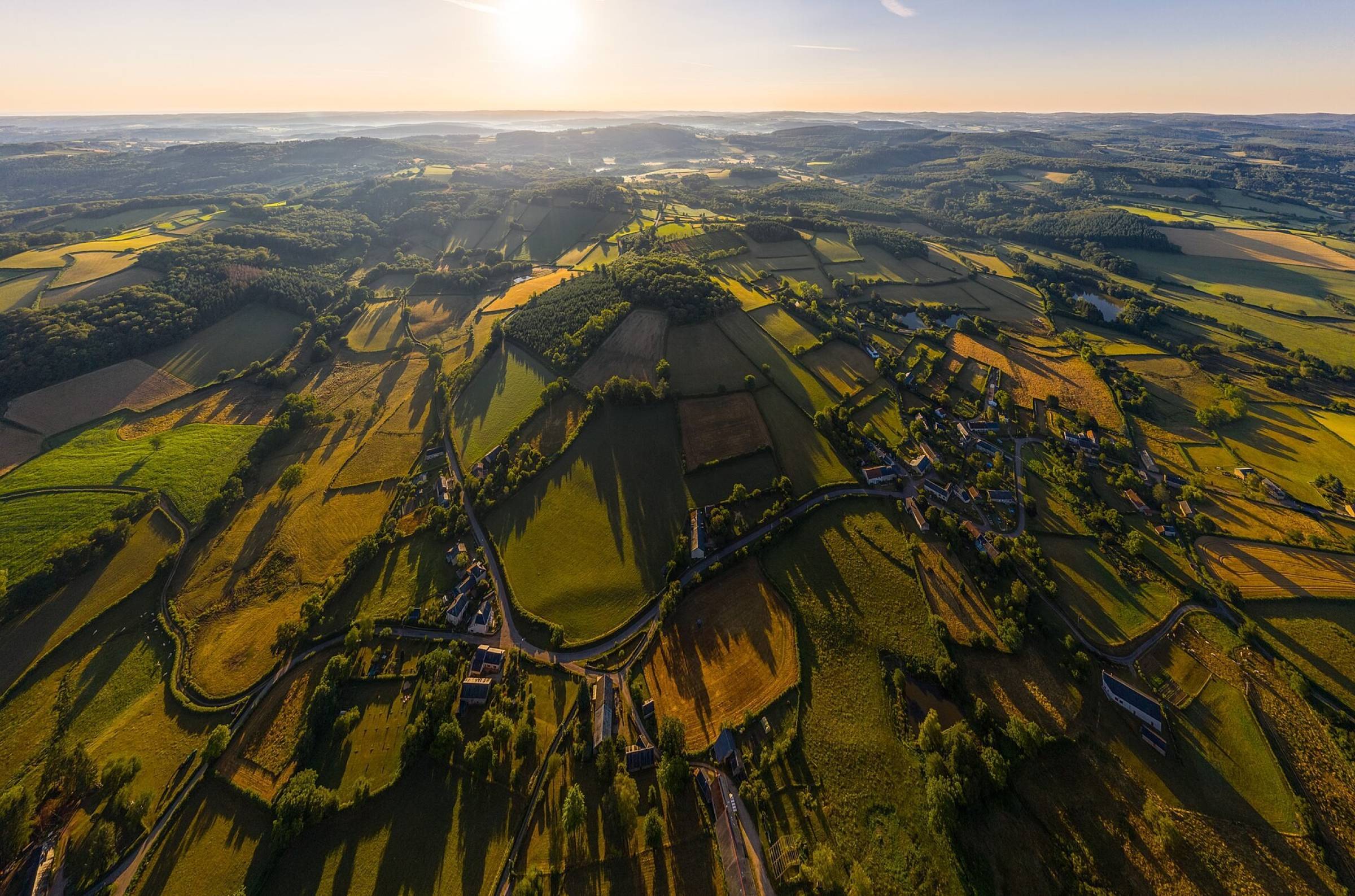
The Morvan, the forest side of Burgundy where the name Anost comes from. Photo: Benh LIEU SONG, Wikimedia Commons, CC BY-SA 2.0.
The first winegrower in Dijon
The project started in 2020, with Daphne. Bastien is the first winegrower to set up in Dijon, a city that for centuries was surrounded by vines later swallowed by the suburbs. For five years he made wine as a guest, sharing cellars with friends in Meursault and Marsannay: the new Burgundy generation travels between villages and shares ideas. Meanwhile he negotiated with the city for a cellar of his own in an old military gunpowder store, with walls built to withstand an explosion. In August, with more than 40 degrees outside, it was 15 inside. Since the 2025 vintage everything is made there.
Burgundy 2.0: massal selection
Above Dijon he is replanting about three and a half to four hectares, high up and with the warming climate in mind. With an association of growers he searches vineyards across Burgundy for single Aligoté, Chardonnay and Pinot Noir vines that cope better with drought and heat, and propagates them, choosing rootstocks with the same care. His Bourgogne Dijon Blanc includes plants from an old Chardonnay in Puligny-Montrachet 1er Cru La Garenne; his Aligoté includes a selection from Domaine Ponsot's old vines in Morey-Saint-Denis; his first Bourgogne Dijon Rouge, 2025, is one third an old small-berried massal selection and two thirds a newer, juicier and fresher one.
Aligoté, a chameleon
Bastien is one of the Aligoteurs, the growers bringing Aligoté back to the front after decades as a base for kir. Its strength is acidity: ripe Chardonnay loses it quickly, Aligoté keeps it. «It is a chameleon», he says: it takes whatever you give it in the cellar. He treats it like Chardonnay: whole-bunch pressing, plenty of fine lees.
In the cellar: fewer things, at the right moment

Everything is pressed whole bunch in an old press; the pressed bunches act as a filter, so the juice comes out clean without cold settling. He then lets it oxidise slightly before fermentation: fermentation cleans it, and the wine becomes more resistant to oxidation later, which also means less sulphur. Very little new oak, only lightly heated rather than toasted, for a touch of bitterness that carries the aromatics. He keeps more fermentation CO2 than most, for freshness and protection: give the wine thirty seconds of air. Reds see around 30% whole bunch, about 40% in Bourgogne Dijon. Recycled glass, recycled paper labels, corks from an organically farmed Portuguese forest.
The vineyards

Bourgogne Dijon Blanc. Two plots planted in 2015 and 2017: one on the limestone plateau above the city, about forty centimetres of soil over rock, for tension; one a little lower with more clay, for volume.
Ladoix 1er Cru Les Gréchons. Two hundred metres from Corton-Charlemagne, on the same soil. Grapes for one barrel of Corton-Charlemagne cost 35-40 thousand euros; here, a third.
Marsannay Au Quartier. His most structured and demanding plot, in the south of Marsannay towards Fixin: acidity can drop in two or three days and the grapes sunburn easily.
Gevrey-Chambertin Combe du Bas. The bottom of the valley: cool air flows down from the hill at night, sediment soils hold water, the vine is never stressed. In barrel it smells of blackcurrant buds; after six months in bottle, of blackcurrant fruit.
2024 and 2025
2024 was very hard, with early mildew pressure: 14,000 bottles against 21,000 in 2023. In 2025 the Côte de Beaune was picked before the rain, with concentrated grapes, while the Côte de Nuits, a week later, took a lot of rain and gave softer, juicier wines: the opposite of the usual.
Where to start

Bastien's Aligoté: fresh and taut, to drink now.
→ Bourgogne Aligoté Le Bien Urbain

Pinot Noir with character: his hardest plot to tame.

The serious white: Corton-Charlemagne soil, at a fraction of the price.

Bastien's favourite: the valley floor and blackcurrant purity.
→ Gevrey-Chambertin Combe du Bas

The source: the vineyard behind his Dijon Chardonnay. Last bottles.