Chardonnay's sibling, lost in kir, saved by Bouzeron. The story of Aligoté, the bottles that fetch thousands at auction and the ones from our growers to open tonight.
Aligoté has won climate change
In the '70s and '80s Aligoté was the white you planted where Chardonnay wasn't worth the trouble. High yields, steel tank, sold after six months, often ending up in a kir with cassis. Today it's the white our growers mention most often. They explain why themselves — and under each story we put the bottle, so you can check.
Chardonnay's sibling, born of the same parents
DNA analysis settled it: Aligoté is a natural cross of Pinot Noir and Gouais Blanc, the same parents as Chardonnay and Gamay. Same family, opposite temperament. Chardonnay copes with high yields and lets oak shape it; Aligoté doesn't. Overcrop it and it turns thin and sharp; keep yields low and it gives tension, salt, citrus, herbs. It has been in Burgundy since at least the eighteenth century: in 1780 it appears in records as "Plant de Trois".
Aligoté Doré and Aligoté Vert
Not all Aligoté is the same. Growers talk about two types: Vert, vigorous with big berries, the high-yield kir grape; and Doré, smaller, tighter bunches, more concentration and perfume. In Bouzeron the rules call for Doré. When a label or a grower mentions old Aligoté Doré vines, you are looking at Aligoté made to last.
Kir, the bottom of the slopes and the fall
Until the nineteenth century Aligoté grew in the best places too. At Corton-Charlemagne, today a Chardonnay grand cru, the parcels were Aligoté and Pinot Blanc until Louis Latour replanted the lot with Chardonnay in 1891. After phylloxera Burgundy replanted with the varieties that paid best, and Aligoté slid to the foot of the slopes and the flatlands. In 1937 it got its appellation, Bourgogne Aligoté, but its fame came from a mixed drink: Canon Félix Kir, post-war mayor of Dijon, served "blanc-cassis" at receptions, Aligoté with blackcurrant liqueur. Kir made the city famous and spread the idea that the wine alone wasn't enough.
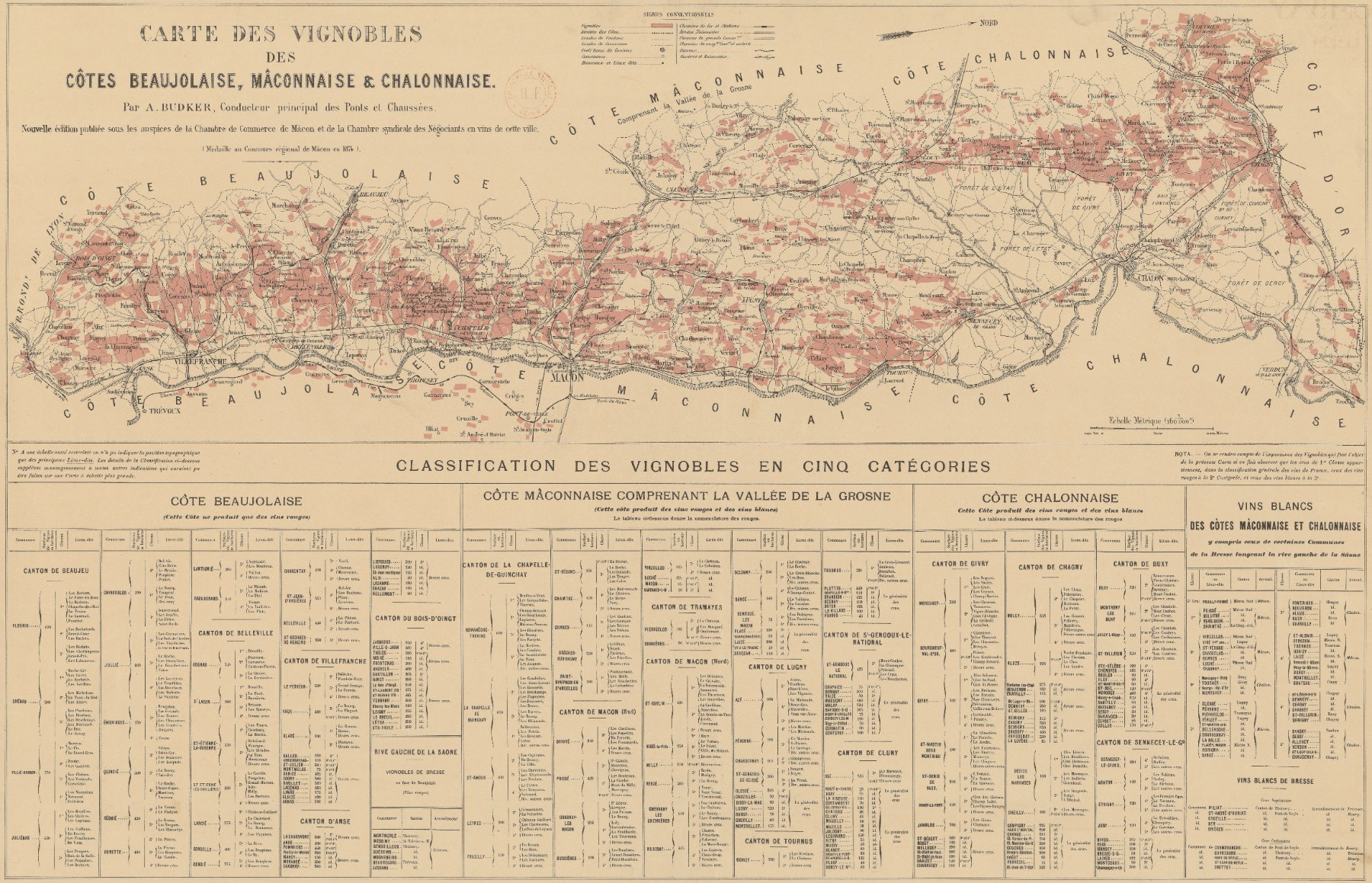
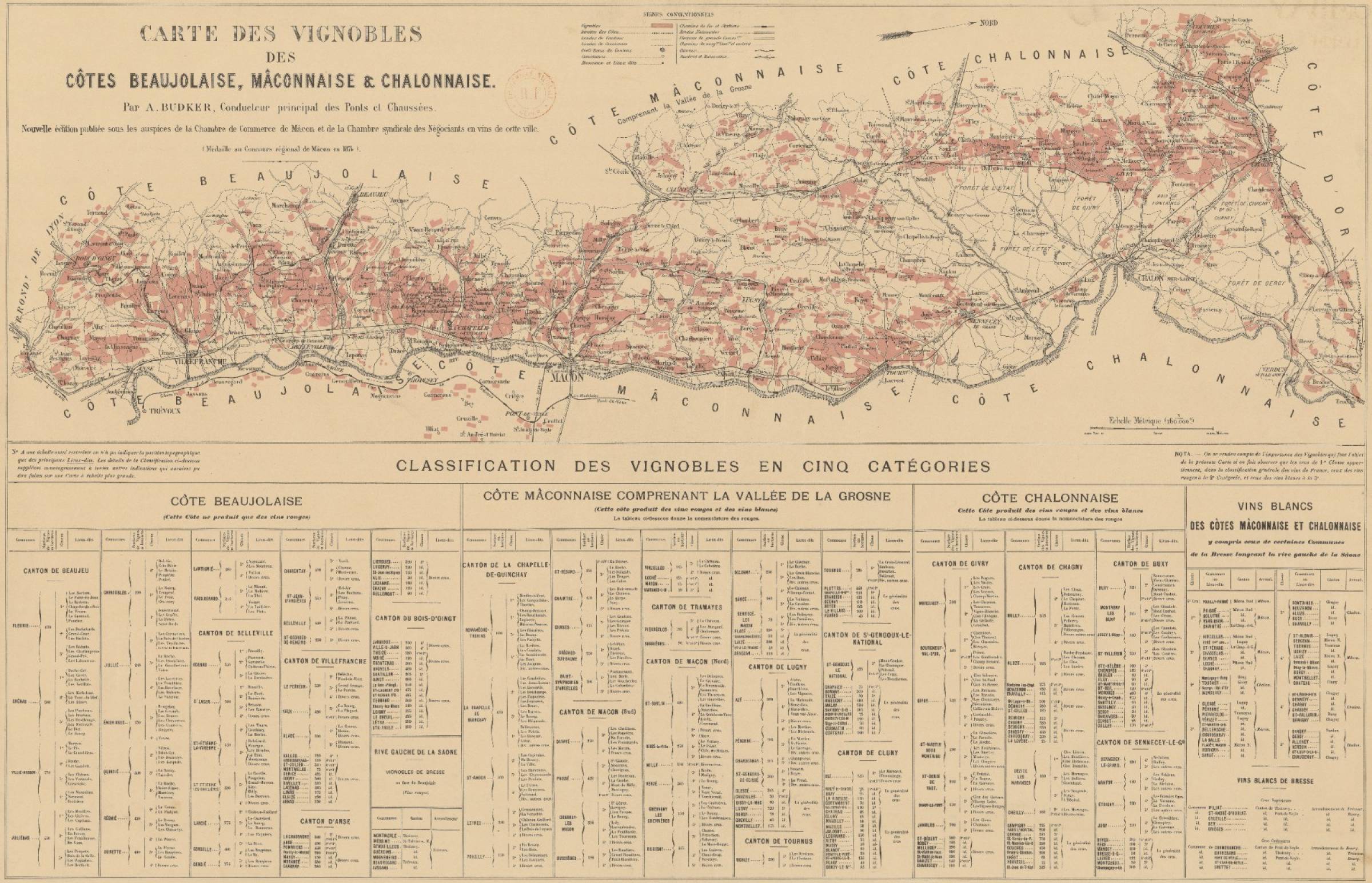
A. Budker's 1901 vineyard map of the Côtes Chalonnaise, Mâconnaise and Beaujolaise: southern Burgundy in the years when Aligoté was sliding down to the flatlands. Public domain, via Wikimedia Commons.
Bouzeron: the village that chose Aligoté
The comeback starts in the 1970s with Aubert de Villaine, co-director of Domaine de la Romanée-Conti, who buys an estate in Bouzeron, in the Côte Chalonnaise, and believes in it. In 1979 came the designation "Bourgogne Aligoté de Bouzeron"; in 1998 the Bouzeron appellation, the only village in Burgundy dedicated to Aligoté. Around sixty hectares between 270 and 350 metres, with lower yields than Bourgogne Aligoté. In 2018, over dinner at Boisrouge restaurant in Flagey-Échezeaux, chef Philippe Delacourcelle and a group of growers founded Les Aligoteurs: membership only through a blind tasting, and the aim is to get colleagues to plant it rather than pull it out.
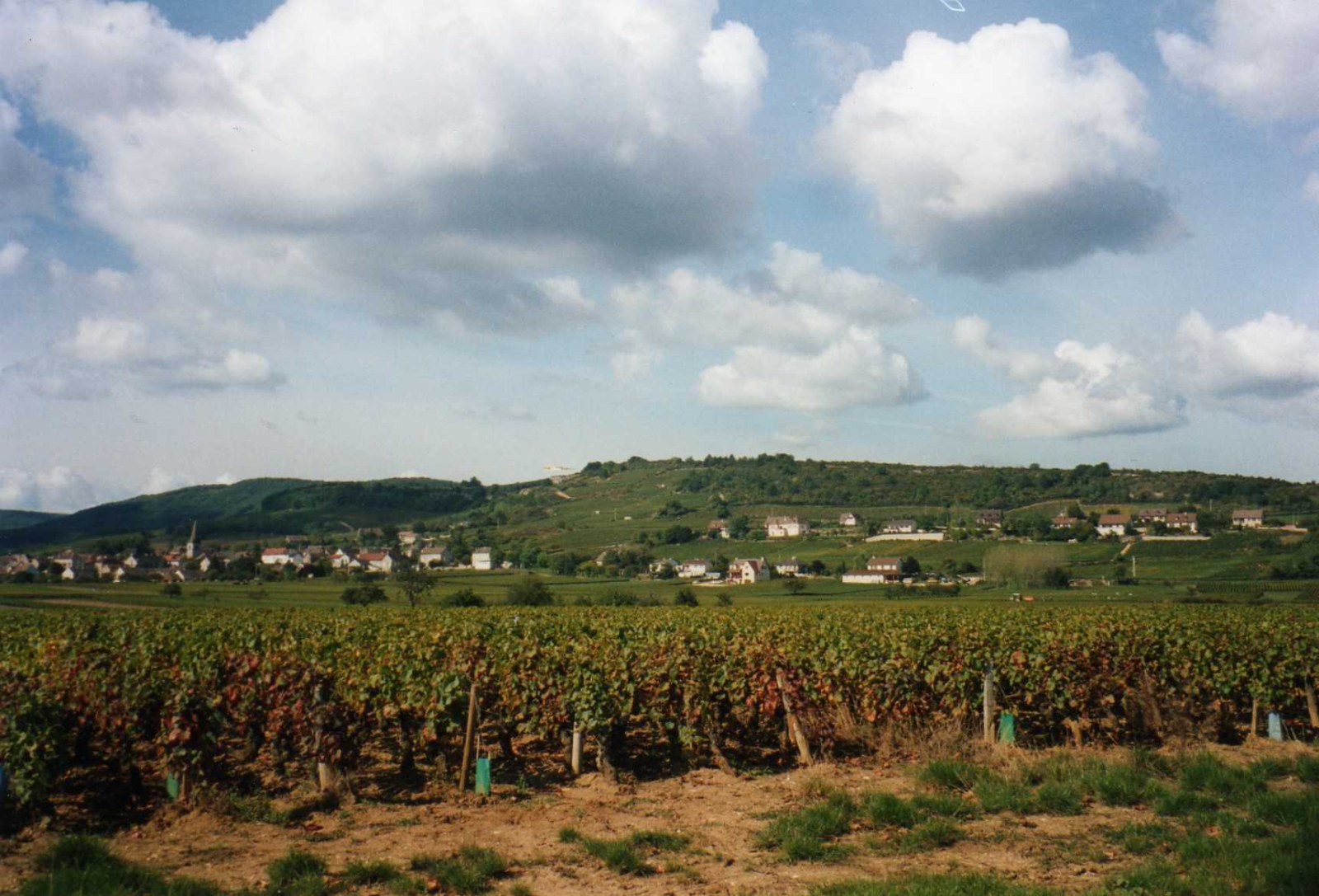
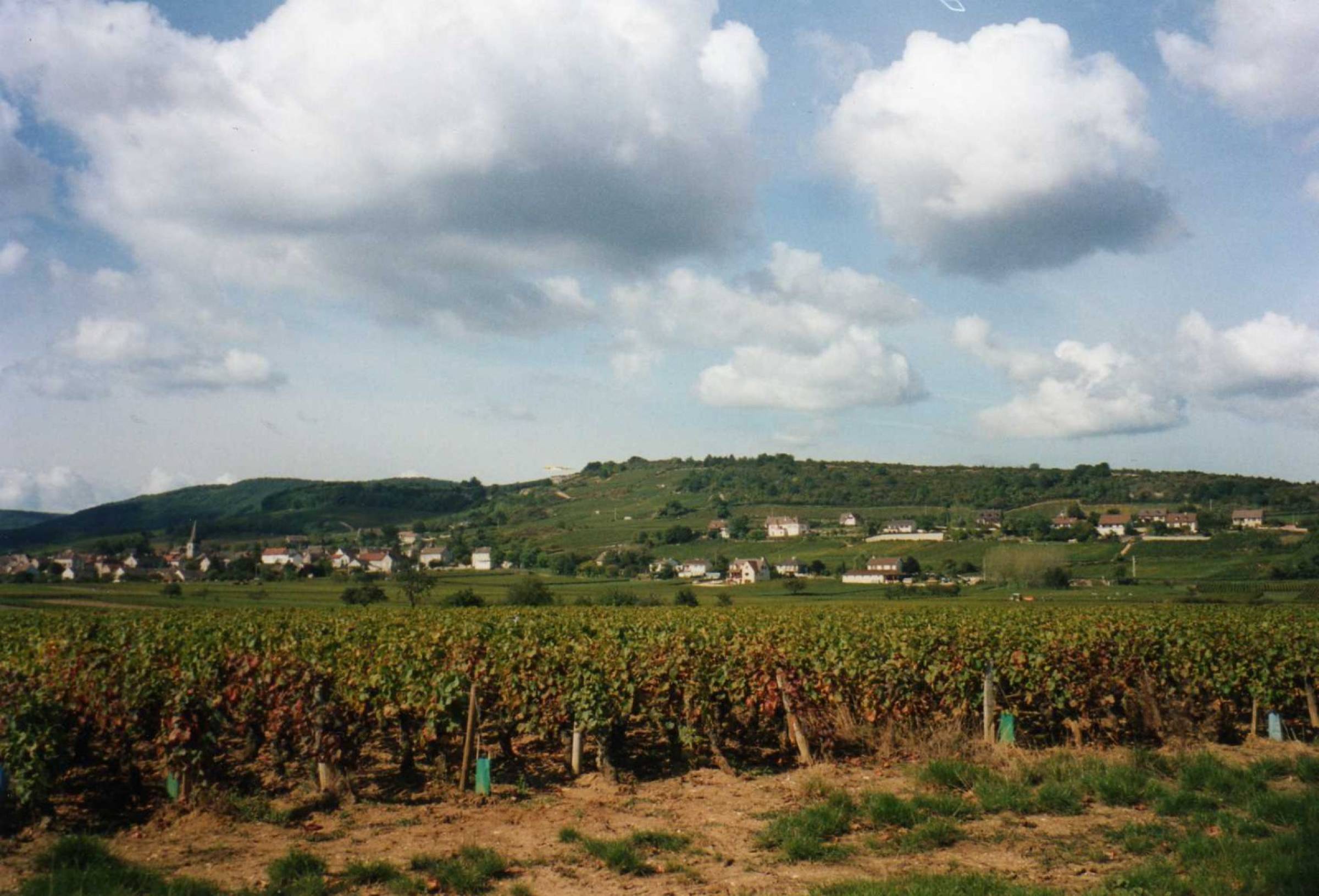
Côte Chalonnaise vineyards, the côte Bouzeron belongs to. Photo: Mpmpmp, CC BY-SA 3.0, via Wikimedia Commons.
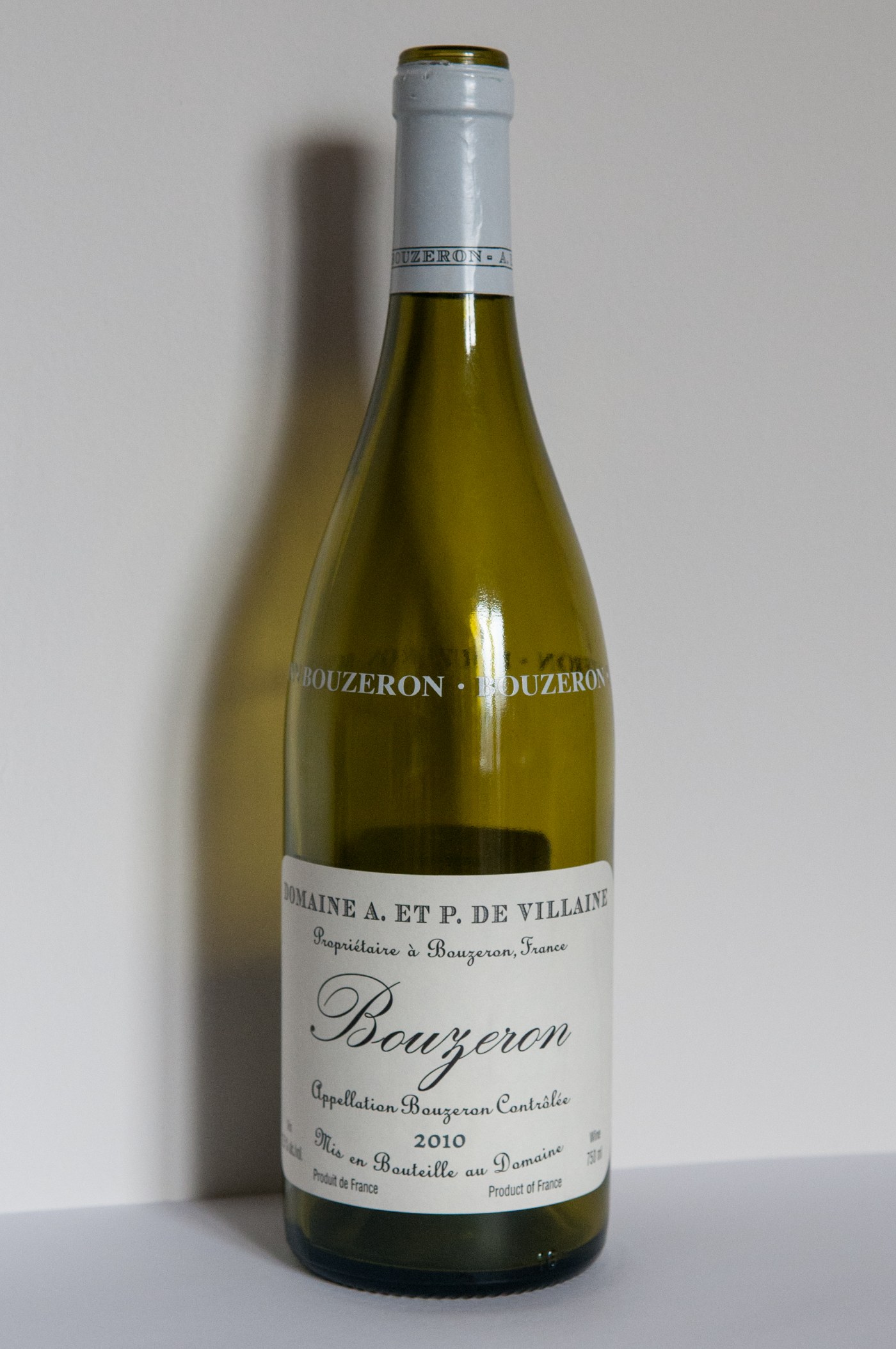
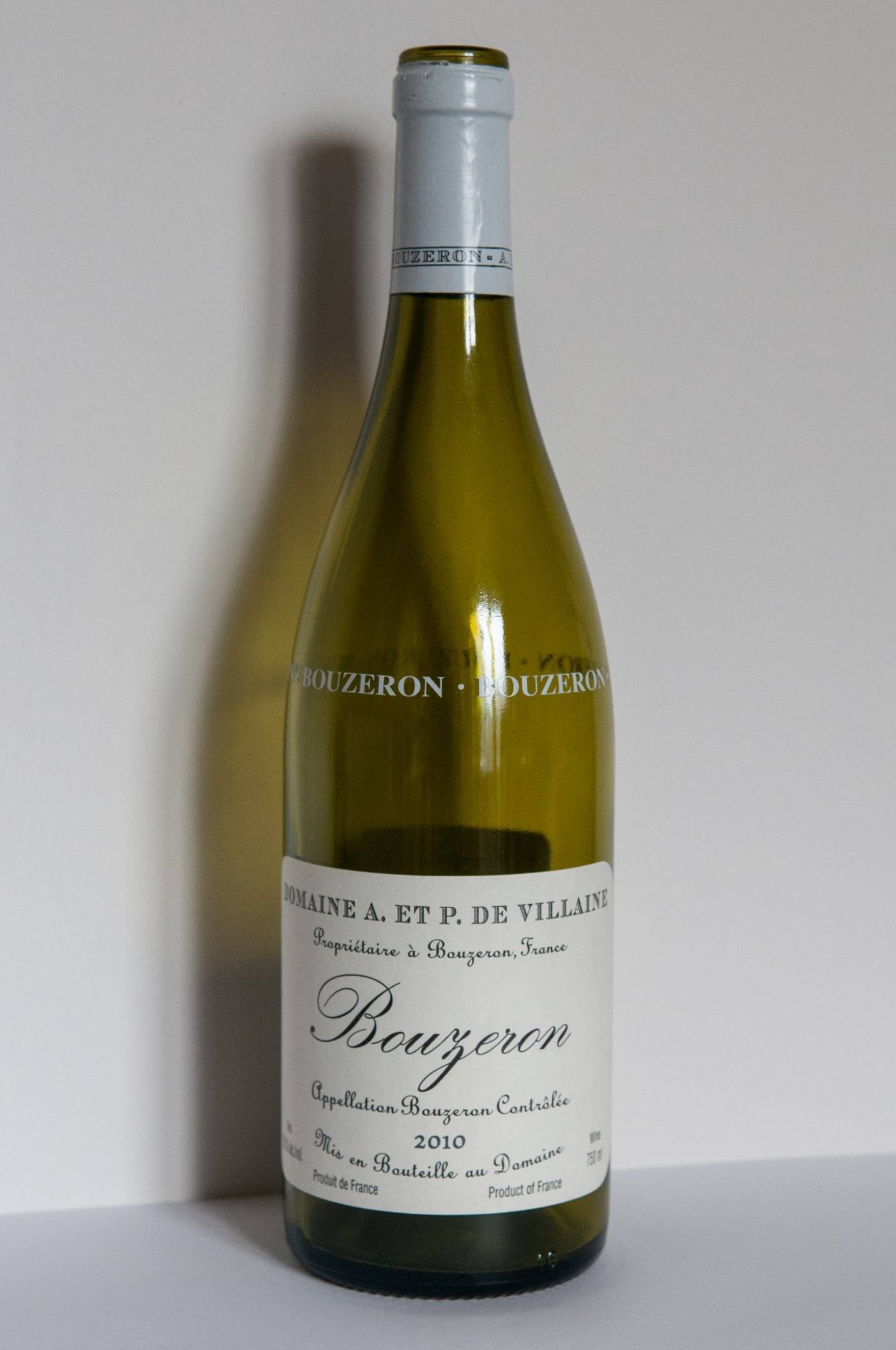
Aubert and Pamela de Villaine's Bouzeron, 2010 vintage. Photo: Anna & Michal, CC BY 2.0, via Wikimedia Commons.
Case studies: the most expensive Aligotés ever
Domaine d'Auvenay, Bourgogne Aligoté Sous Châtelet. Lalou Bize-Leroy's personal estate. The label says "Bourgogne", the lowest rung of the pyramid, yet at auction a bottle changes hands for €1,600 to €3,000. The same grape that ended up in kir, farmed biodynamically at tiny yields.
Domaine Ponsot, Morey-Saint-Denis 1er Cru Clos des Monts Luisants. After phylloxera, in 1911, William Ponsot replanted his white parcel with Aligoté instead of Chardonnay. Those vines are still there and give over 80% of the wine. It is the only premier cru in Burgundy made from 100% Aligoté: one hectare, about 4,500 bottles a year, and blind almost nobody guesses the grape.
Coche-Dury and Arnaud Ente. Two Meursault names: even their Aligoté, on the secondary market, sells at the price of a great village white.
The lesson is simple: when a great grower treats Aligoté the way they treat Chardonnay, with old vines, small crops and patience, the wine ages and climbs. That is the path of the growers below, at what is still an entry-level price.
The acidity Chardonnay is losing
With heat at harvest, acidity drops in a matter of days. Aligoté naturally has plenty. Andrew of Le Grappin puts it like this: with good viticulture and the right yields, an Aligoté today has the acidity a Chardonnay had twenty years ago. Tom of ÔMA adds that in Burgundy some are starting to add acid to Chardonnay, unthinkable a few decades ago. Aligoté doesn't need it. And it still costs a fraction of a village Chardonnay.
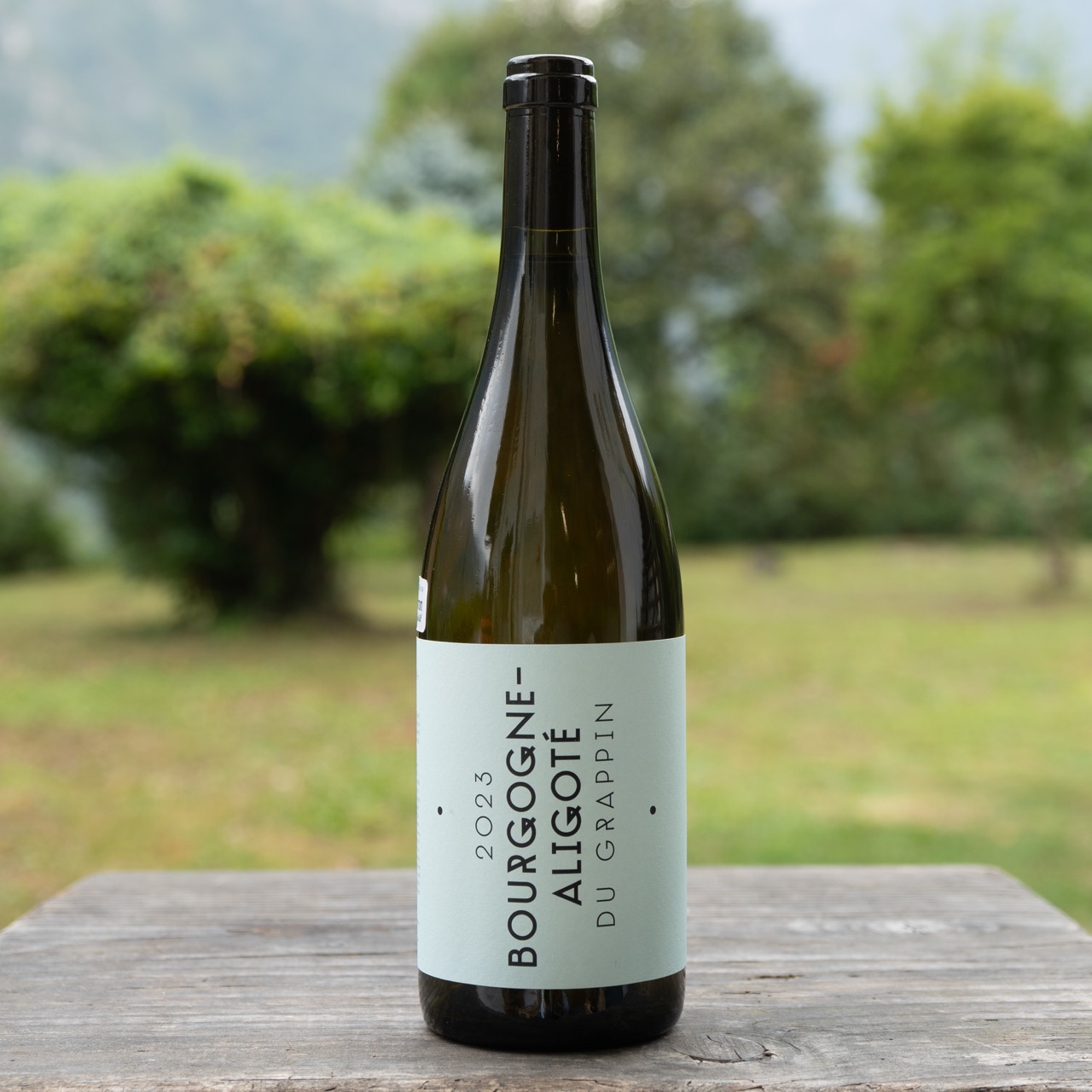
Le Grappin: a 50-year-old vineyard facing Chassagne
Their Aligoté comes from a roughly 50-year-old vineyard across the road from Chassagne-Montrachet, at 11.5% vol. Foot treading, a vertical press, must straight into old barrels: a slightly bitter, almost herbal finish. In one vintage with an extremely slow fermentation it spent two years in barrel — for an entry-level wine.
→ Bourgogne Aligoté 2023 — Le Grappin
ÔMA: two Aligotés, two hands
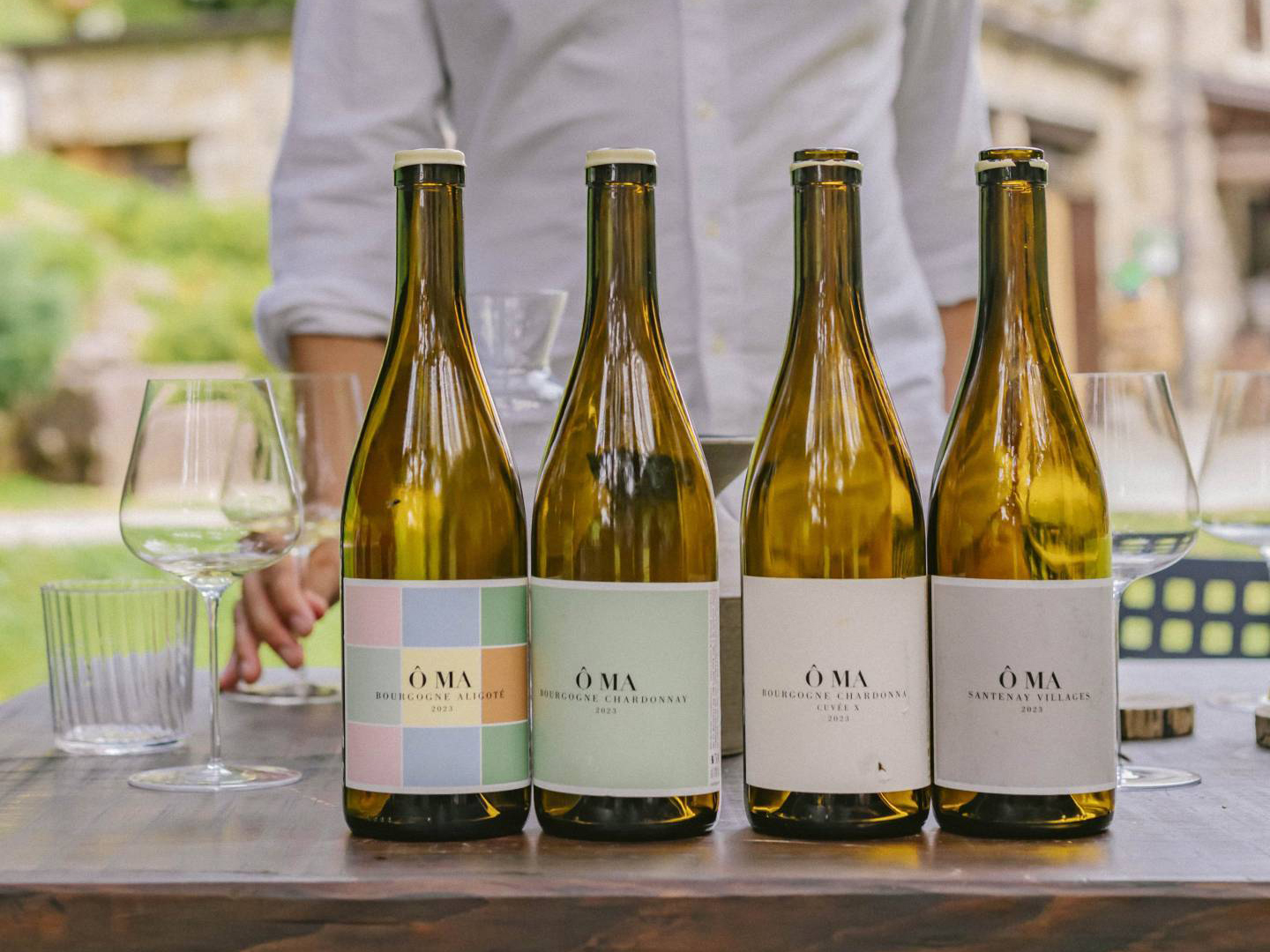
Tom makes a classic Aligoté from the south of the Côte Chalonnaise, up high: citrus, green apple, grapefruit. And a Bouzeron, the only village in Burgundy where only Aligoté is made: more sun, more substance — wax, peach, honeysuckle, a quarter of new oak. "It's not an aperitif Aligoté," says Tom. It's the white to put on the table in place of a Chardonnay that costs twice as much.
→ Bourgogne Aligoté — ÔMA
→ Bouzeron Les Tournelles 2024 — ÔMA
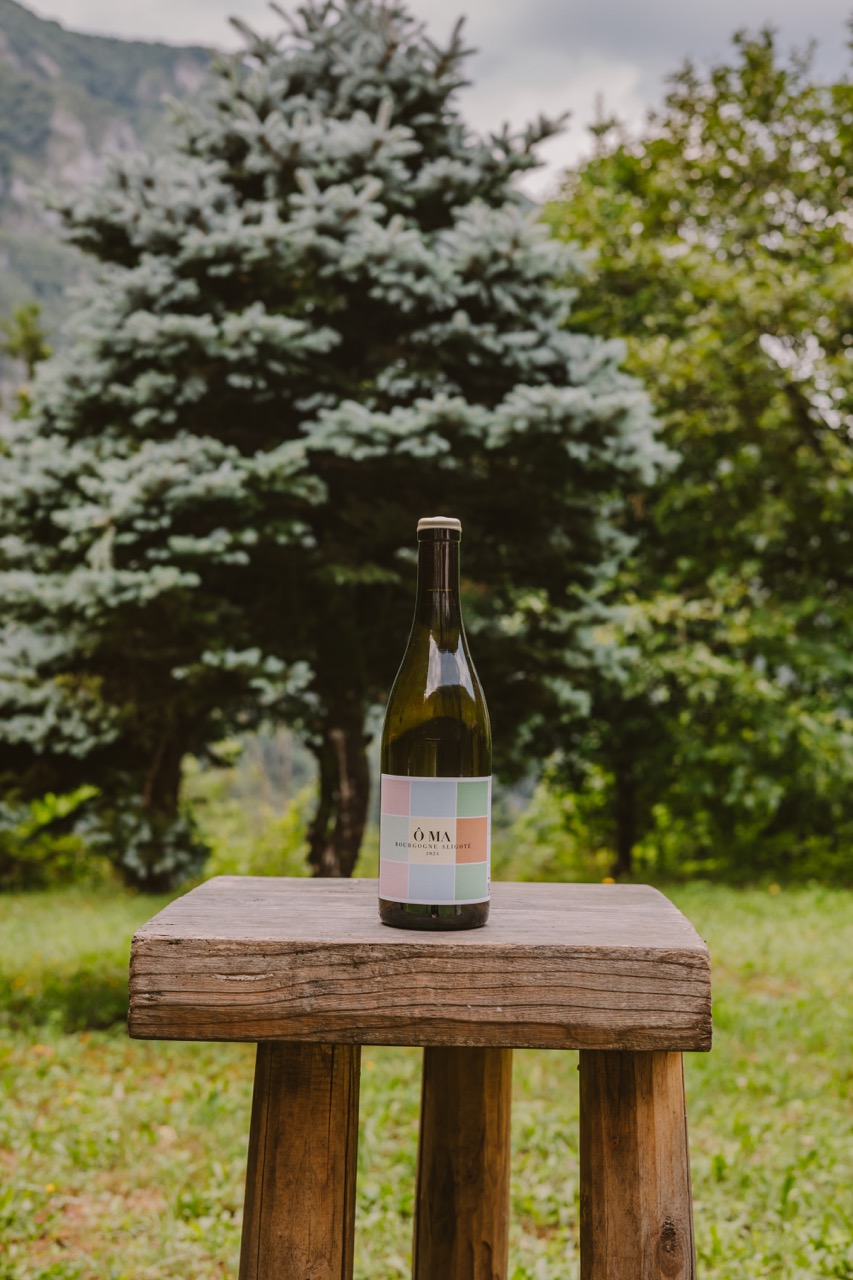
Chapel: "a salted lemonade"
In the Beaujolais, Chapel makes a single white and it's an Aligoté from 50-60-year-old organic vines. Michele describes it as "a salted lemonade": the wine to open cold, with anchovies or something fried, when you want to understand why this grape is coming back.
→ Bourgogne Aligoté 2025 — Domaine Chapel
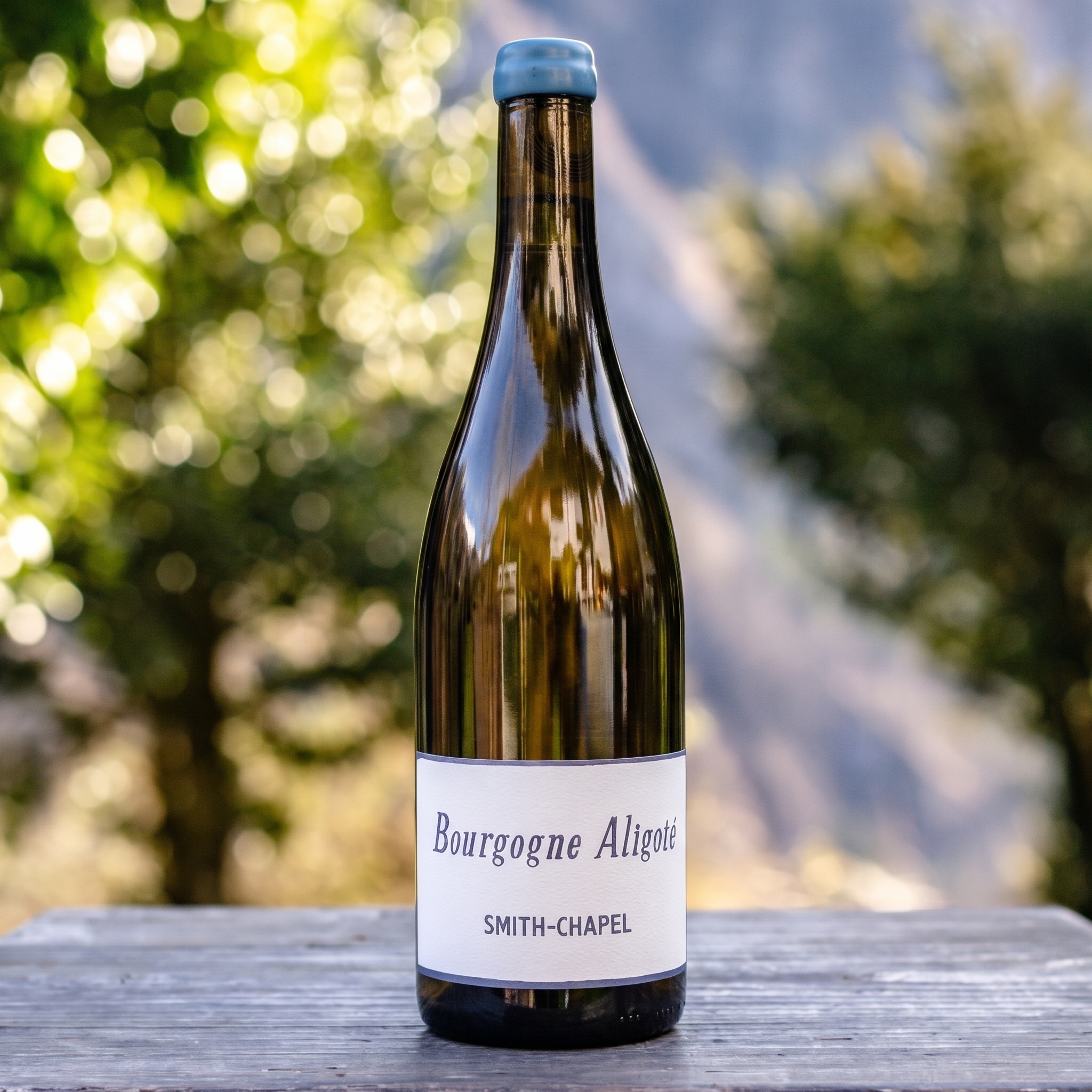
Gautheron: the high parcels of Anost
From 2025 Thibault Gautheron adds two narrow, high parcels to his Aligoté, more than a hundred metres above the village: good ripeness and plenty of tension. His Bien Urbain is the "urban" Aligoté of Dijon, his Bouzeron the terroir one.
→ Bourgogne Aligoté Le Bien Urbain — Gautheron
→ Bouzeron — Gautheron
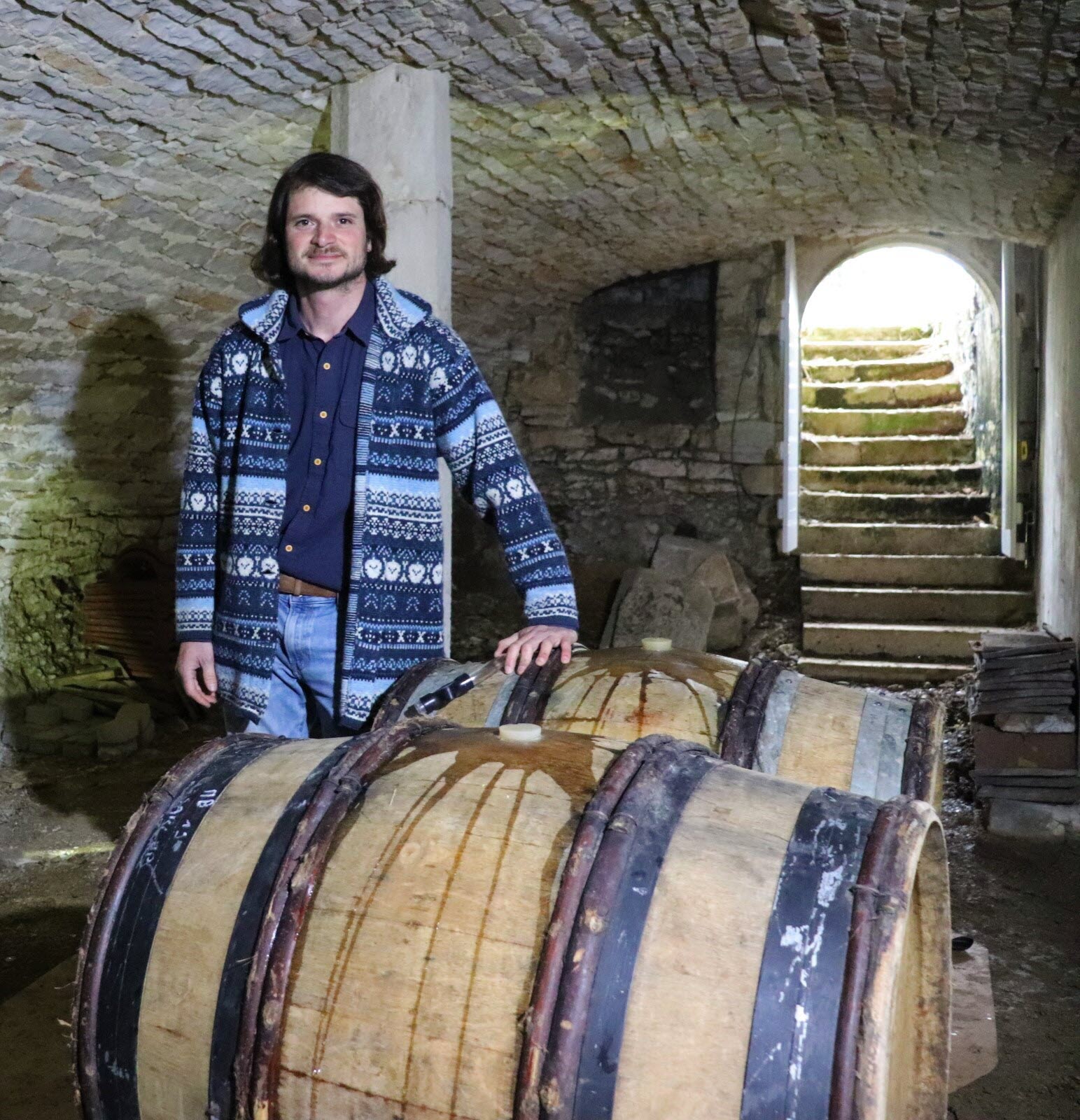
La Terre des Tilles: the northernmost Aligoté of the Côte d'Or
Alcide Perrin spent ten years in international law in Paris, then went back to Til-Châtel, the northernmost point of the Côte d'Or, to make wine. His Aligoté is the freshest, most direct one on this page: the white to keep in the fridge all week.
→ Bourgogne Aligoté 2024 — La Terre des Tilles
Maison Alussia and Clément Dumont: Côte de Beaune Aligoté
Maison Alussia farms organic and biodynamic vines in Savigny-lès-Beaune, some of them 50 years old. Clément Dumont trained with Philippe Bouzereau in Meursault, teaches tasting at the Beaune wine school and has made his own wine in Chassagne-Montrachet since 2022: his En Busigny is a single-parcel Aligoté, to see how much it changes from one vineyard to the next.
→ Aligoté 2023 — Maison Alussia
→ Bourgogne Aligoté En Busigny — Clément Dumont
Aligoté: frequently asked questions
What kind of wine is Aligoté? A dry white Burgundy, fresh and saline, from a sibling of Chardonnay. Citrus, green apple, herbs, a hint of salt.
How is it different from Chardonnay? More acidity, less fat, almost never new oak. Chardonnay is round, Aligoté is taut.
Bourgogne Aligoté or Bouzeron? Bourgogne Aligoté is the regional appellation, from all over Burgundy. Bouzeron is the only village dedicated to Aligoté: lower yields, more substance.
What does it go with? Anchovies, fried food, shellfish, fish in butter, goat's cheese, cured meats. And of course kir: Aligoté and blackcurrant liqueur.
Can it age? When it is made well, yes: Ponsot and d'Auvenay have proved it for decades. A good Bouzeron holds five years and more.
What is the most expensive Aligoté in the world? Domaine d'Auvenay's Bourgogne Aligoté Sous Châtelet, Lalou Bize-Leroy's estate: €1,600 to €3,000 a bottle at auction.
Where to start
- First time with Aligoté → Chapel 2025, the "salted lemonade", with anchovies or something fried.
- The everyday white → La Terre des Tilles.
- On the table instead of a Chardonnay → ÔMA's Bouzeron Les Tournelles, with fish in butter, goat's cheese, roast chicken.
- To understand the grape in one evening → Chapel and Le Grappin side by side: same grape, two different Burgundies.
- To see how it ages → two Bouzerons: one now, one in five years. It's what Ponsot and d'Auvenay teach, at a fraction of the price.
Almost never as an aperitif: these are whites for the table, for restaurants, to keep open. The day village Chardonnay costs three times as much, you'll already know where to look.
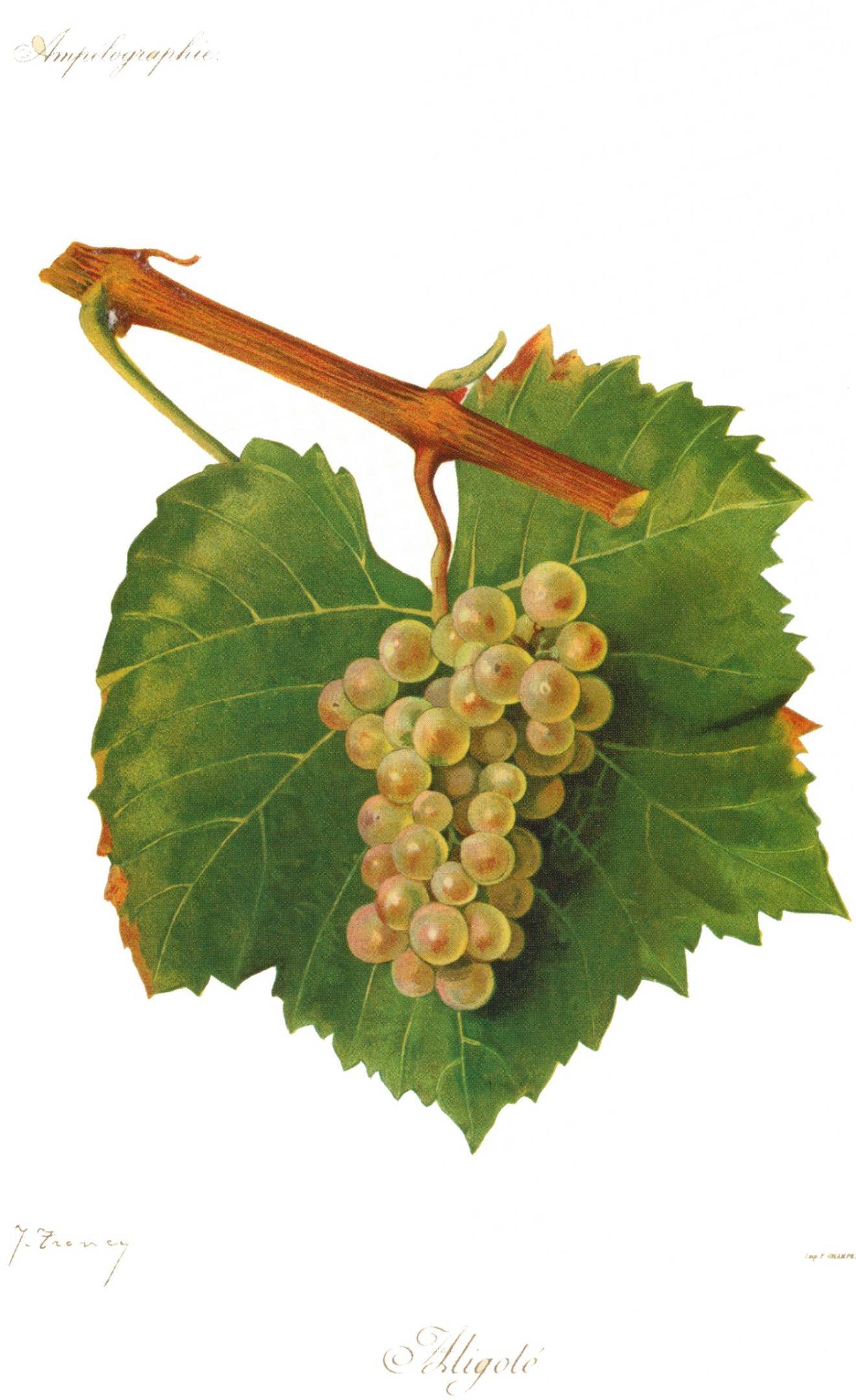
Cover: Aligoté in Pierre Viala and Victor Vermorel's Ampélographie (1901-1910), public domain.