
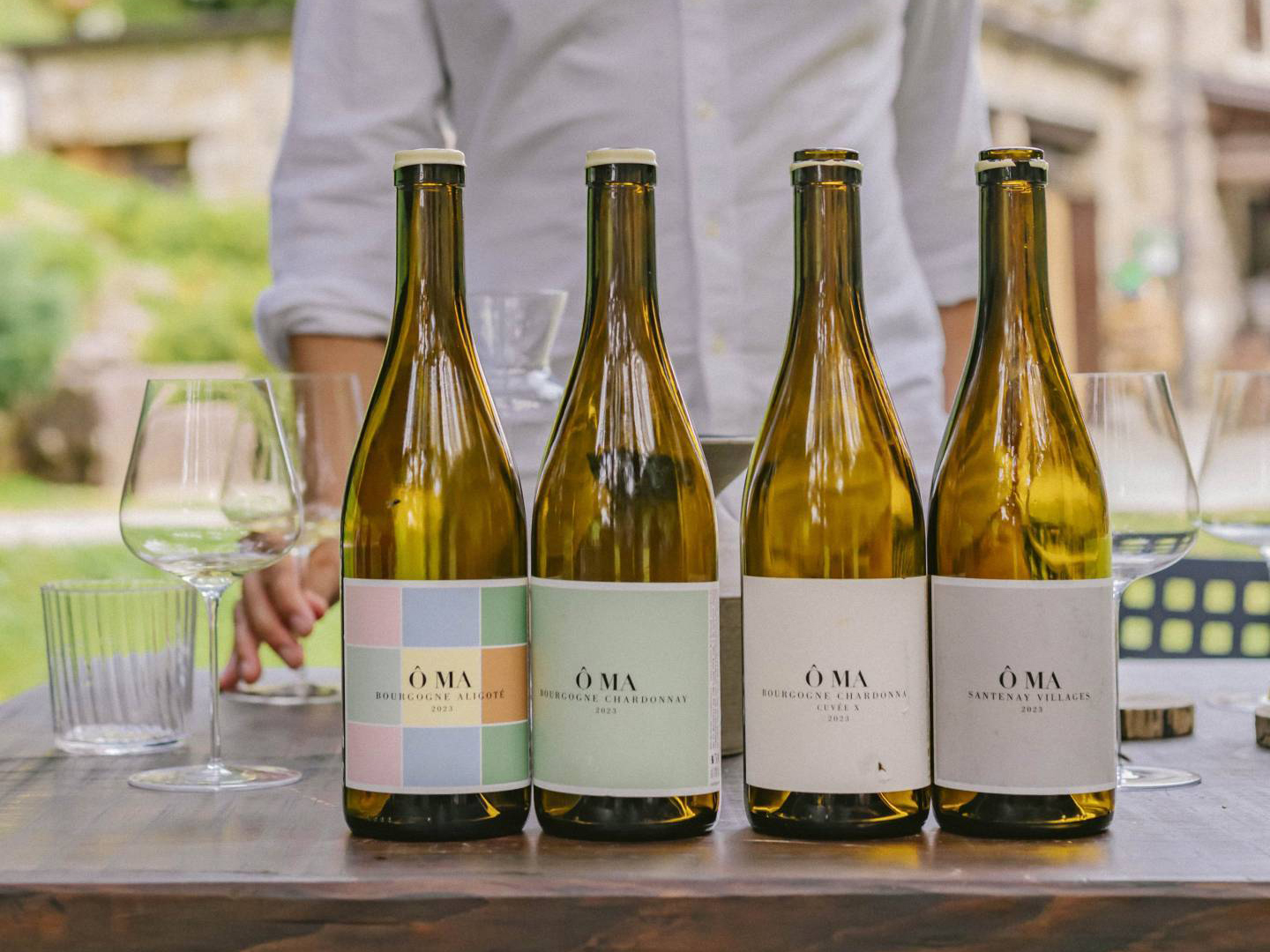
Tom Williams was a chef in London. Today in Santenay he makes Aligoté and Bouzeron that are not aperitif wines.
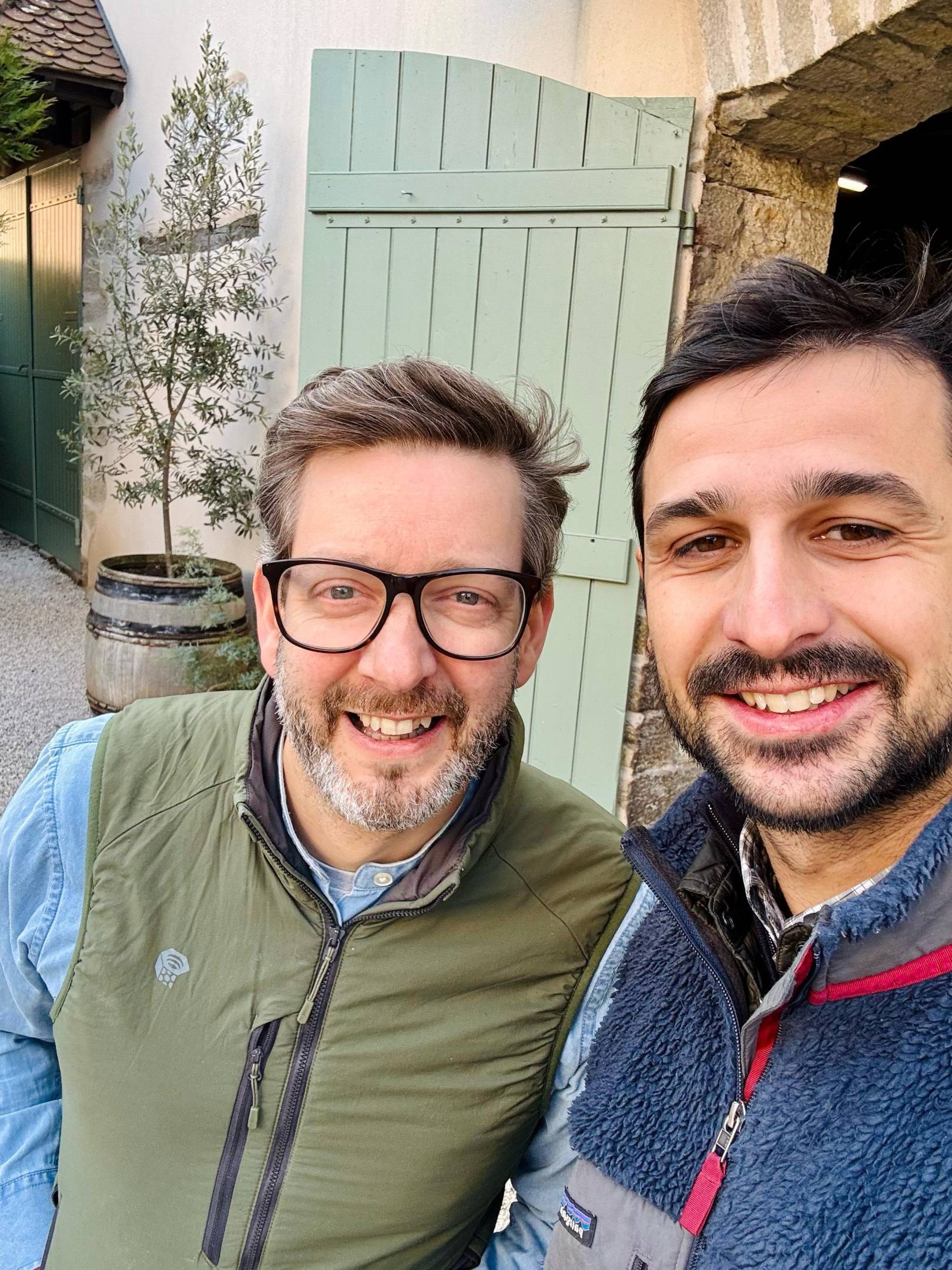
ÔMA: "oh my", and an Aligoté to take seriously
Tom Williams is English. As a child, on holidays in France, his parents didn't take him to museums but to wine cellars. His first love for wine came at eight, with a sweet wine from Monbazillac. After school he cooked in London, then sold wine in the north of England, then studied oenology. Harvests in England, California, Oregon. Then Burgundy, working the vines and driving tractors for Domaine de Montille.
Why ÔMA
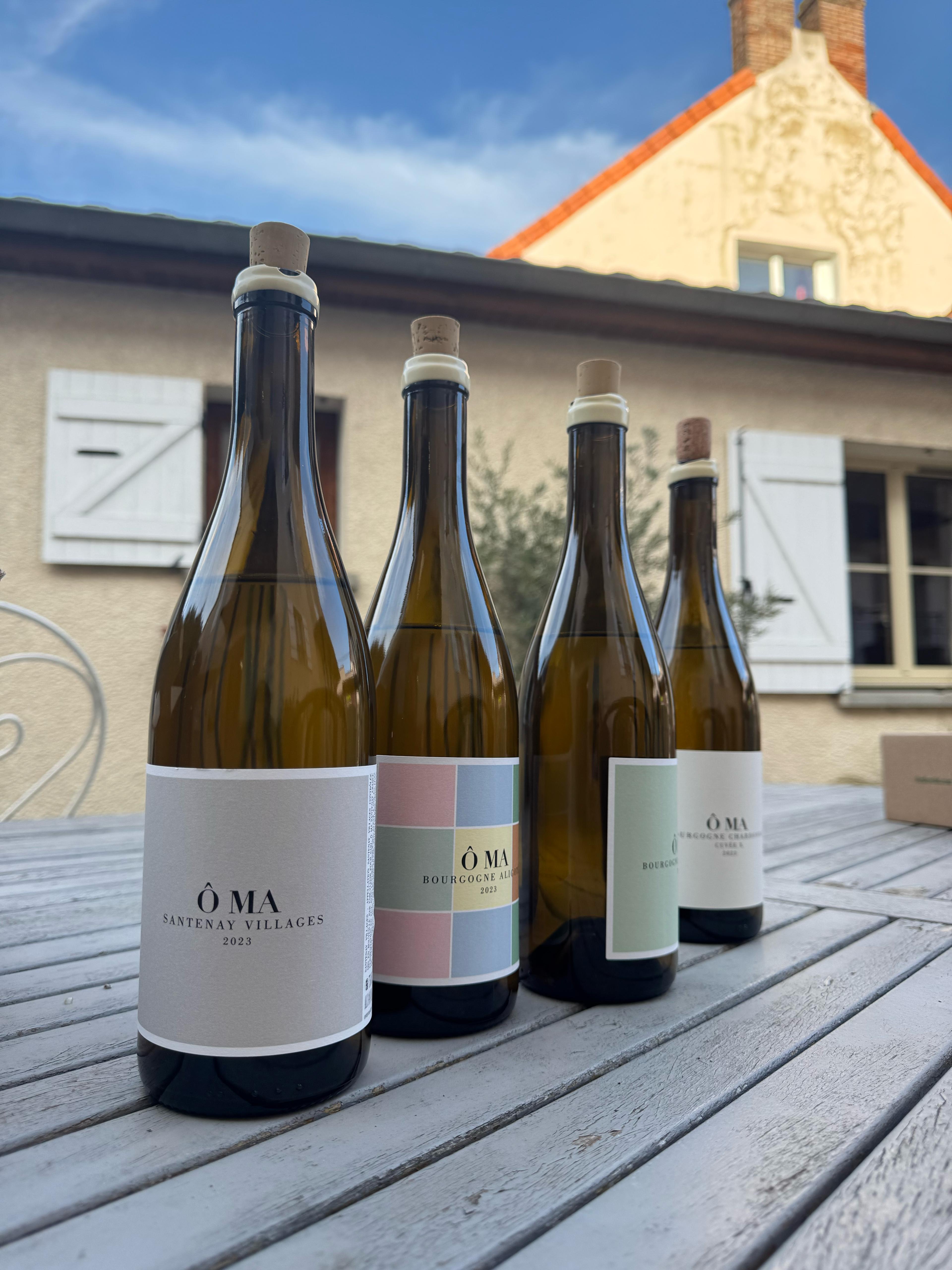
The name isn't a surname and says nothing about the moon or terroir. Steph, his wife, studied art in Toronto and draws all the labels. On one of her inspiration boards there was a famous painting of a woman saying "oh my". Hence ÔMA. Minimal labels, pastel colours: Tom says that when he tastes a wine he sees a colour. For him the Bouzeron is the slate blue of the sky above the limestone vineyard.
A négociant who chooses the grapes
ÔMA is a micro-négoce in Santenay: no vineyards of their own, grapes bought from organic growers Tom knows well, asking for lower yields. The heart is the Côte Chalonnaise, little known in Italy but with limestone very similar to the Côte de Beaune's. The appellations are the ones many people skip: Aligoté, Bouzeron, Hautes-Côtes, Santenay.
Two Aligotés, two hands
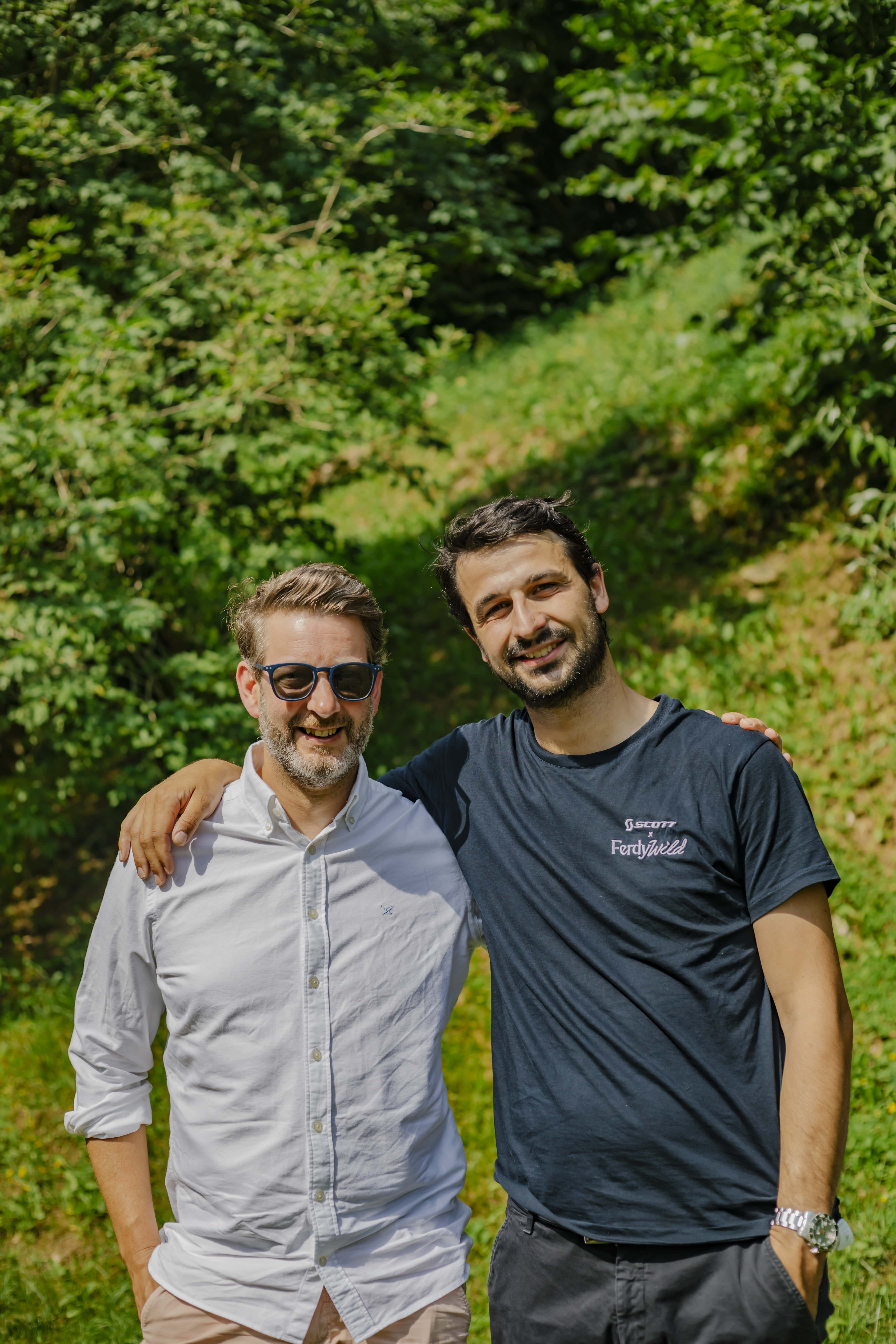
The Bourgogne Aligoté comes from the south of the Côte Chalonnaise, up high: citrus, green apple, grapefruit, classic acidity. The Bouzeron, the only village in Burgundy where only Aligoté is made, comes from the north, a few minutes from their home. More sun, more substance: wax, peach, honeysuckle, a quarter of new oak. "It's not an aperitif Aligoté," says Tom. For us it's a wine for the table, for restaurants.
→ Bourgogne Aligoté — ÔMA
→ Bouzeron Les Tournelles 2024 — ÔMA
In the cellar they work without corrections: indigenous yeasts, no added acid or sugar, barrel fermentation with must that isn't too clean, because the lees give body and texture. The idea is to take the best of natural wine while staying precise. And to let each vintage speak: rainy 2024 is slender and intimate, warm 2025 is intense and smoky.
Where to start
- To meet it all at once → ÔMA Tasting Box.
- The white for the table → Bouzeron Les Tournelles 2024, the Aligoté "that is not for aperitifs".
- The Côte Chalonnaise in the glass → Hautes-Côtes de Beaune Blanc 2024.