
For decades it was the kir grape. Today it is the white Burgundy that keeps its acidity. Four growers explain why.
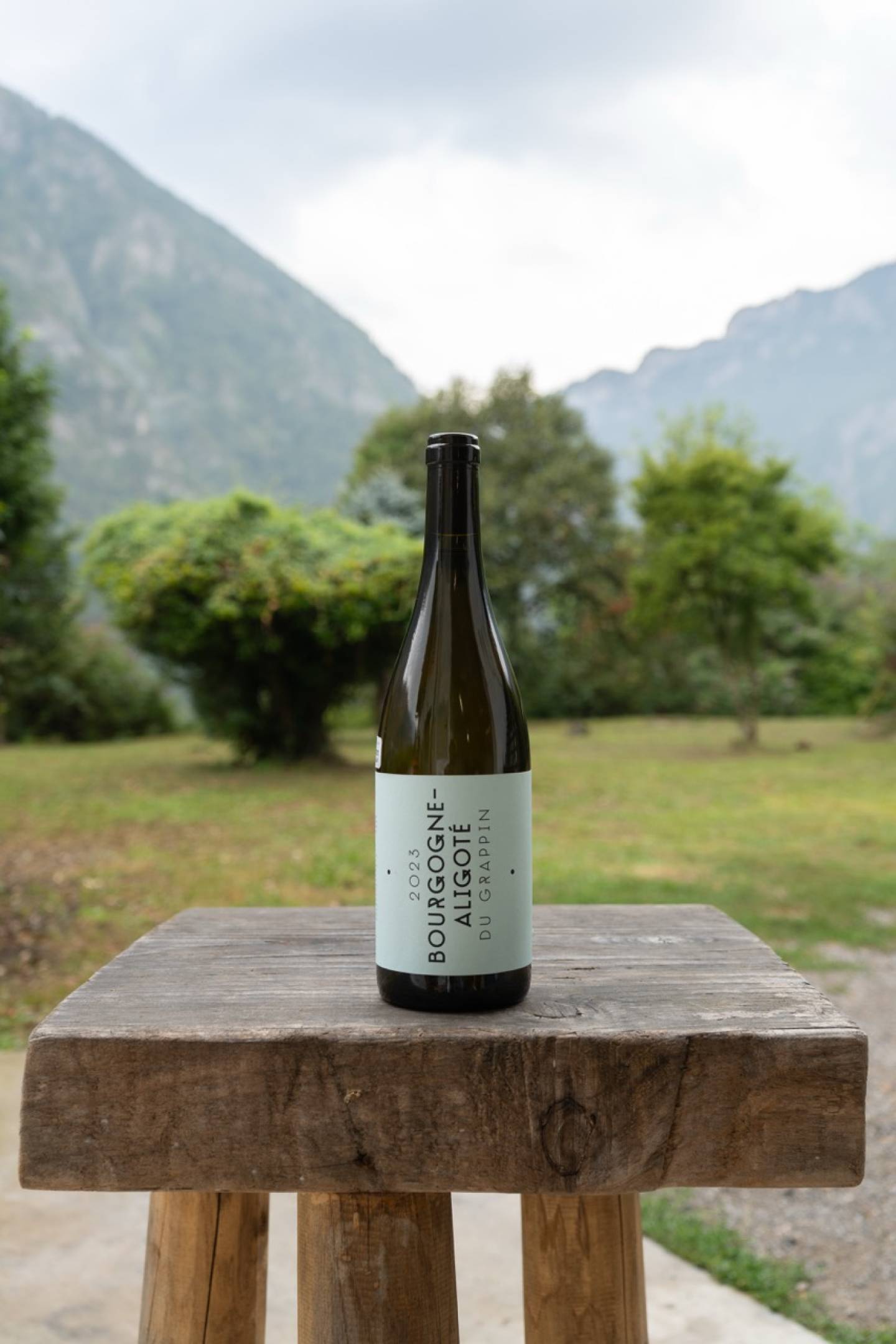
Aligoté has won climate change
In the '70s and '80s Aligoté was the white you planted where Chardonnay wasn't worth the trouble. High yields, steel tank, sold after six months, often ending up in a kir with cassis. Today it's the white our growers mention most often. They explain why themselves — and under each story we put the bottle, so you can check.
The acidity Chardonnay is losing
With heat at harvest, acidity drops in a matter of days. Aligoté naturally has plenty. Andrew of Le Grappin puts it like this: with good viticulture and the right yields, an Aligoté today has the acidity a Chardonnay had twenty years ago. Tom of ÔMA adds that in Burgundy some are starting to add acid to Chardonnay, unthinkable a few decades ago. Aligoté doesn't need it. And it still costs a fraction of a village Chardonnay.
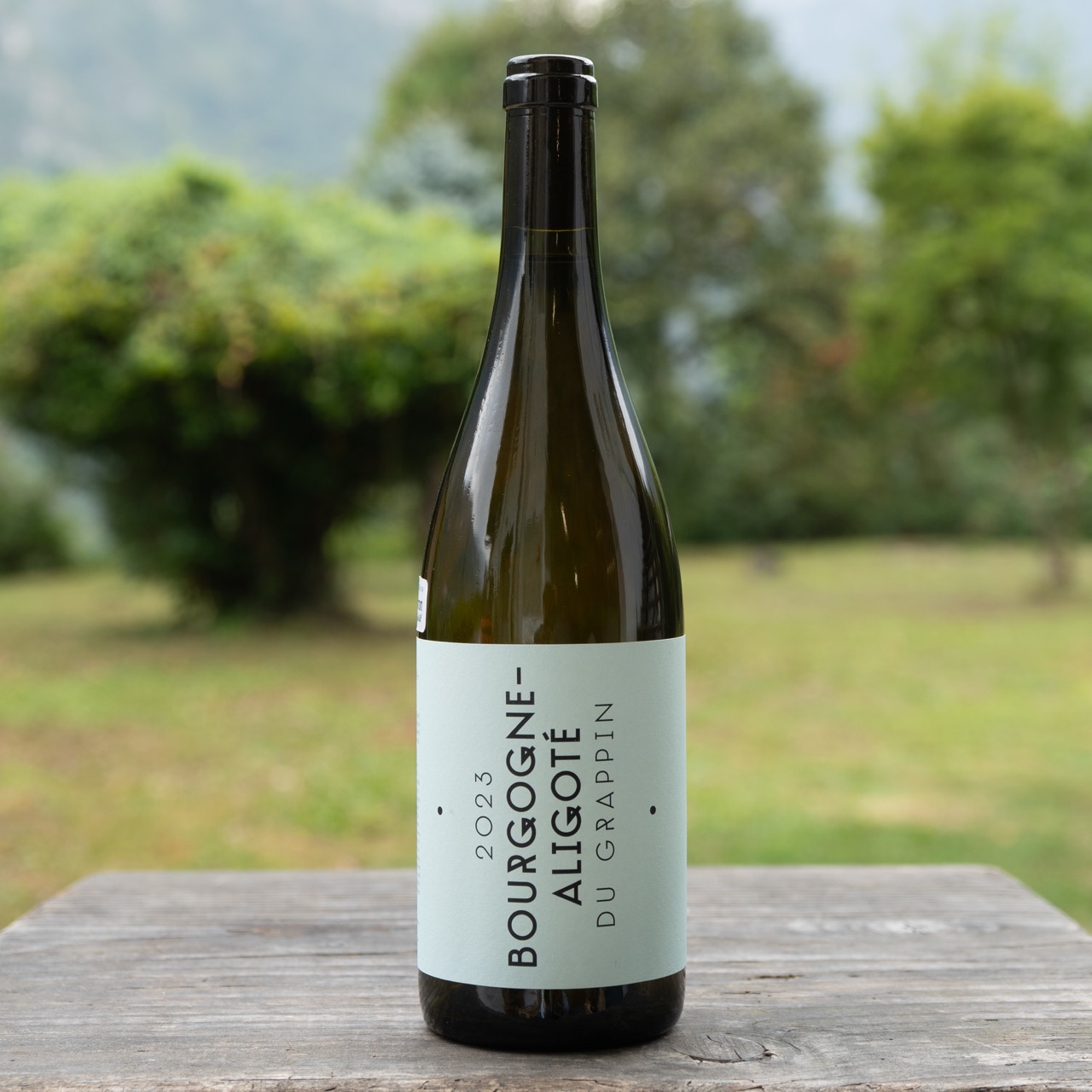
Le Grappin: a 50-year-old vineyard facing Chassagne
Their Aligoté comes from a roughly 50-year-old vineyard across the road from Chassagne-Montrachet, at 11.5% vol. Foot treading, a vertical press, must straight into old barrels: a slightly bitter, almost herbal finish. In one vintage with an extremely slow fermentation it spent two years in barrel — for an entry-level wine. There's also a macerated version: the Aligoté SKIN, for anyone curious to see what happens when you leave it on the skins.
→ Bourgogne Aligoté 2023 — Le Grappin
→ Bourgogne Aligoté SKIN 2022 — Le Grappin
ÔMA: two Aligotés, two hands
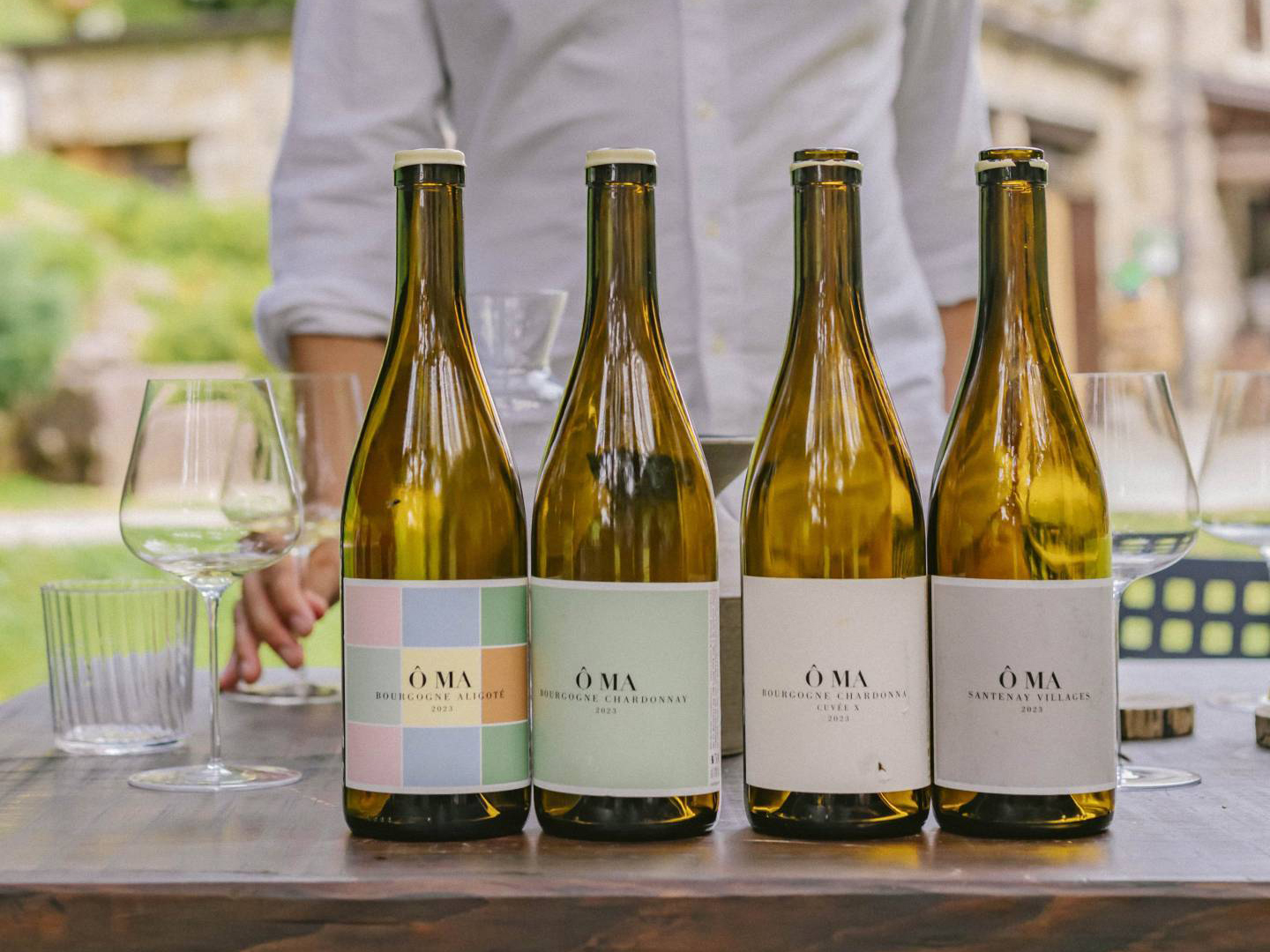
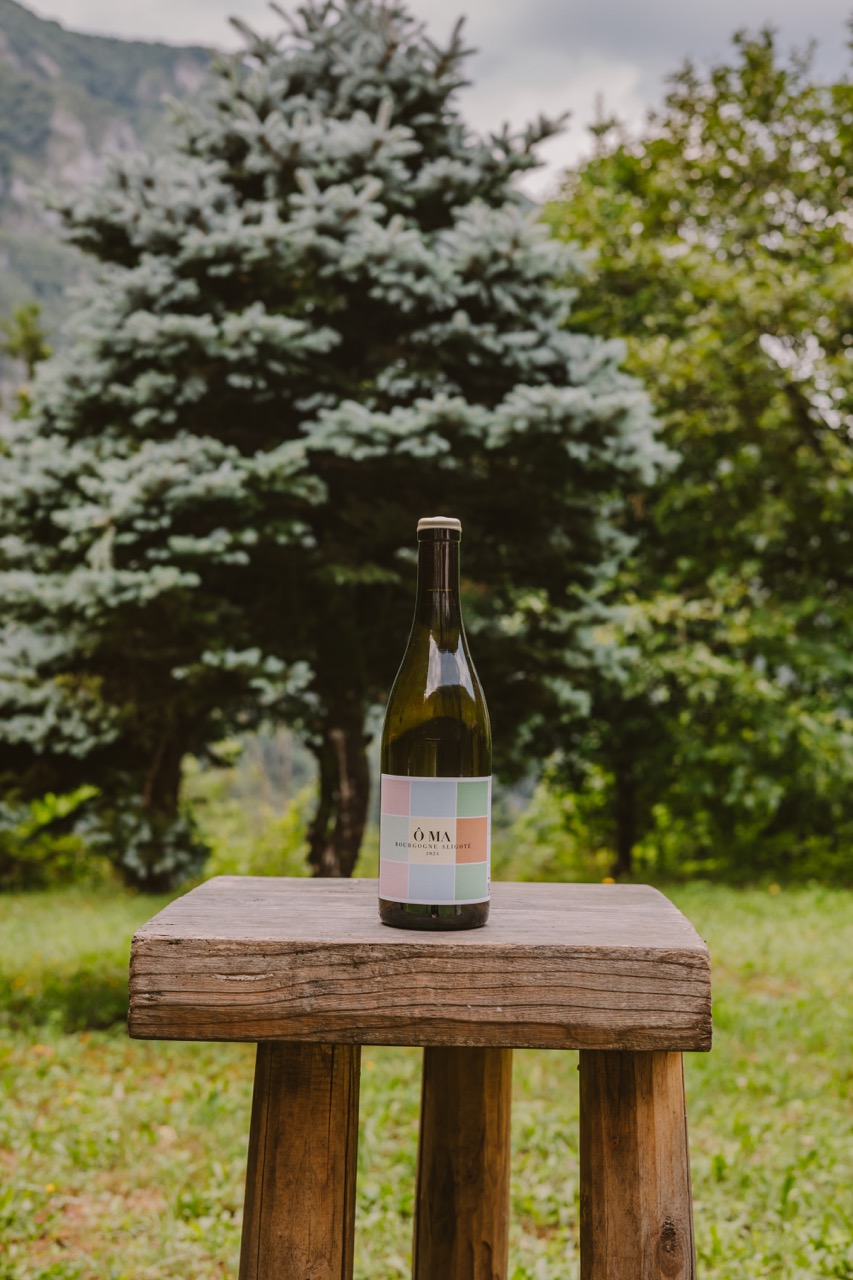
Tom makes a classic Aligoté from the south of the Côte Chalonnaise, up high: citrus, green apple, grapefruit. And a Bouzeron, the only village in Burgundy where only Aligoté is made: more sun, more substance — wax, peach, honeysuckle, a quarter of new oak. "It's not an aperitif Aligoté," says Tom. It's the white to put on the table in place of a Chardonnay that costs twice as much.
→ Bourgogne Aligoté — ÔMA
→ Bouzeron Les Tournelles 2024 — ÔMA
Chapel: "a salted lemonade"
In the Beaujolais, Chapel makes a single white and it's an Aligoté from 50-60-year-old organic vines. Michele describes it as "a salted lemonade": the wine to open cold, with anchovies or something fried, when you want to understand why this grape is coming back.
→ Bourgogne Aligoté 2025 — Domaine Chapel
Gautheron: the high parcels of Anost
From 2025 Thibault Gautheron adds two narrow, high parcels to his Aligoté, more than a hundred metres above the village: good ripeness and plenty of tension. His Bien Urbain is the "urban" Aligoté of Dijon, his Bouzeron the terroir one.
→ Bourgogne Aligoté Le Bien Urbain — Gautheron
→ Bouzeron — Gautheron
Where to start
- First time with Aligoté → Chapel 2025, the "salted lemonade".
- On the table instead of a Chardonnay → ÔMA's Bouzeron Les Tournelles.
- For orange wine drinkers → Le Grappin's Aligoté SKIN.
Almost never as an aperitif: these are whites for the table, for restaurants, to keep open. The day village Chardonnay costs three times as much, you'll already know where to look.