
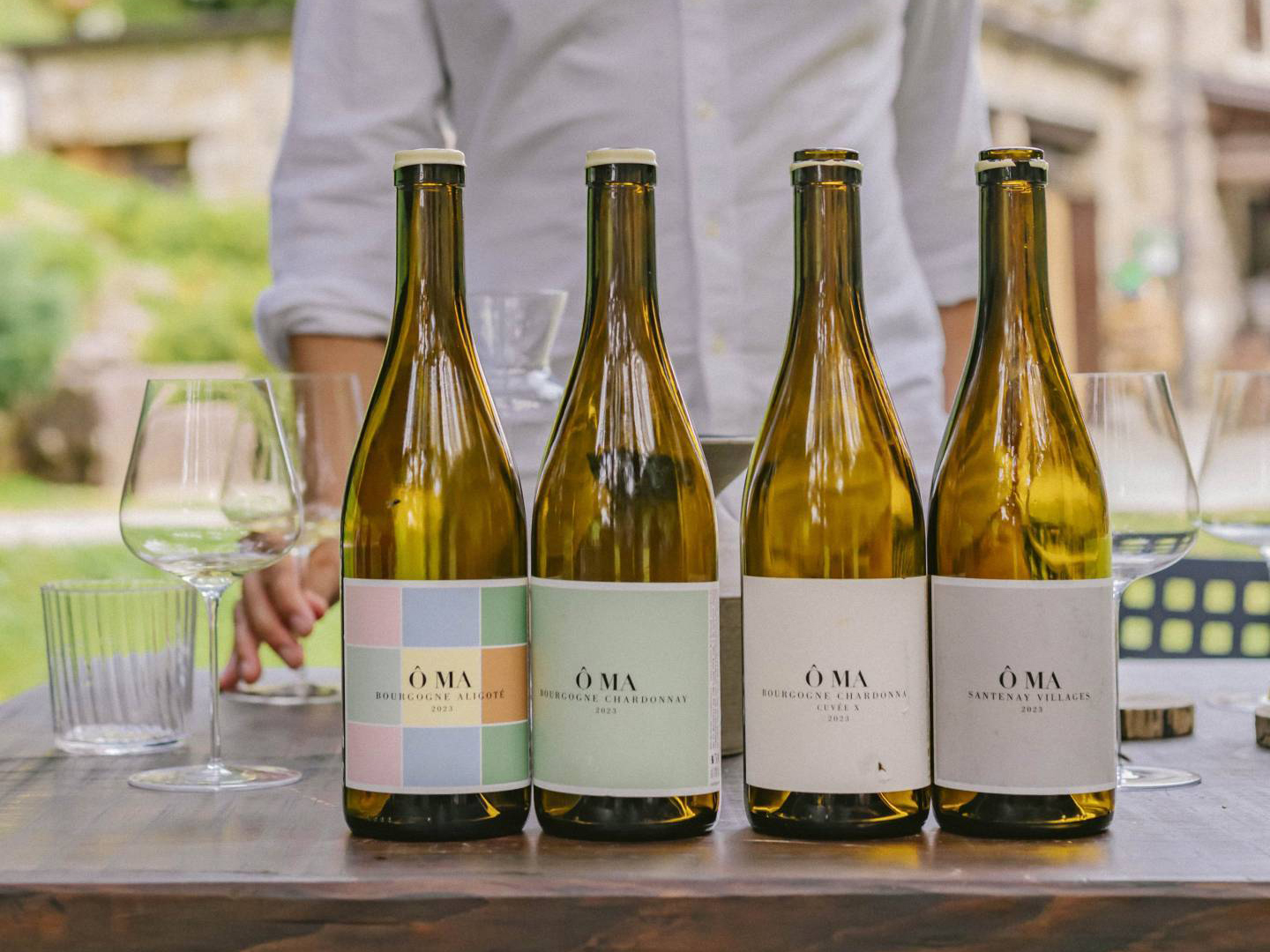
Jon Purcell's first sulphur-free whites all turned ropy, thick as olive oil. Today that disaster is his method.
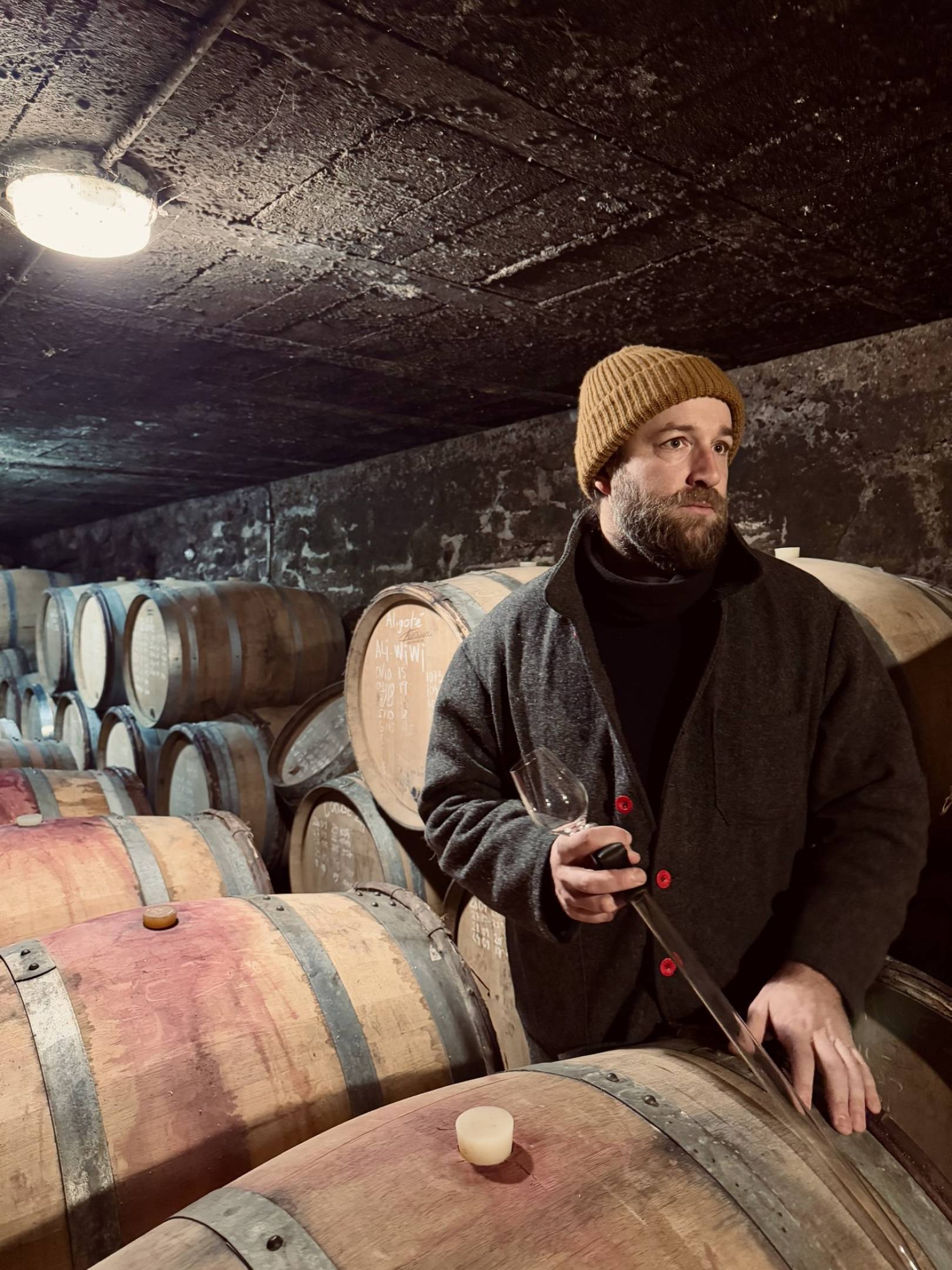
Vin Noé: the year the whites turned to oil
Making whites without sulphur, in Burgundy, is one of the hardest things there is. Jon Purcell learned it the worst way: in his first vintage all his barrels of white turned "ropy", stringy, dense as olive oil. La graisse, the disease of wine that goes viscous. "I cried," he says. "I thought it was over. The money was gone."
A cellar given away at two in the morning
Before the whites, there's the story of how the domaine was born. At a party, at two in the morning, a worn-out vigneron — a great believer in biodynamics, the same man who decades earlier had planted the Puligny vineyard — told him: "if you want, I'll leave you the cellar and the vines". Jon woke up the next day thinking it was a drunken joke. "No no, it's all done," came the reply. "We've signed the papers, it's yours." It was 2020: inside were parcels like the Saint-Aubin premier cru and the Puligny-Montrachet. The following year Jon quit his job, and for five years now he has lived on this alone.
The disaster that became a method
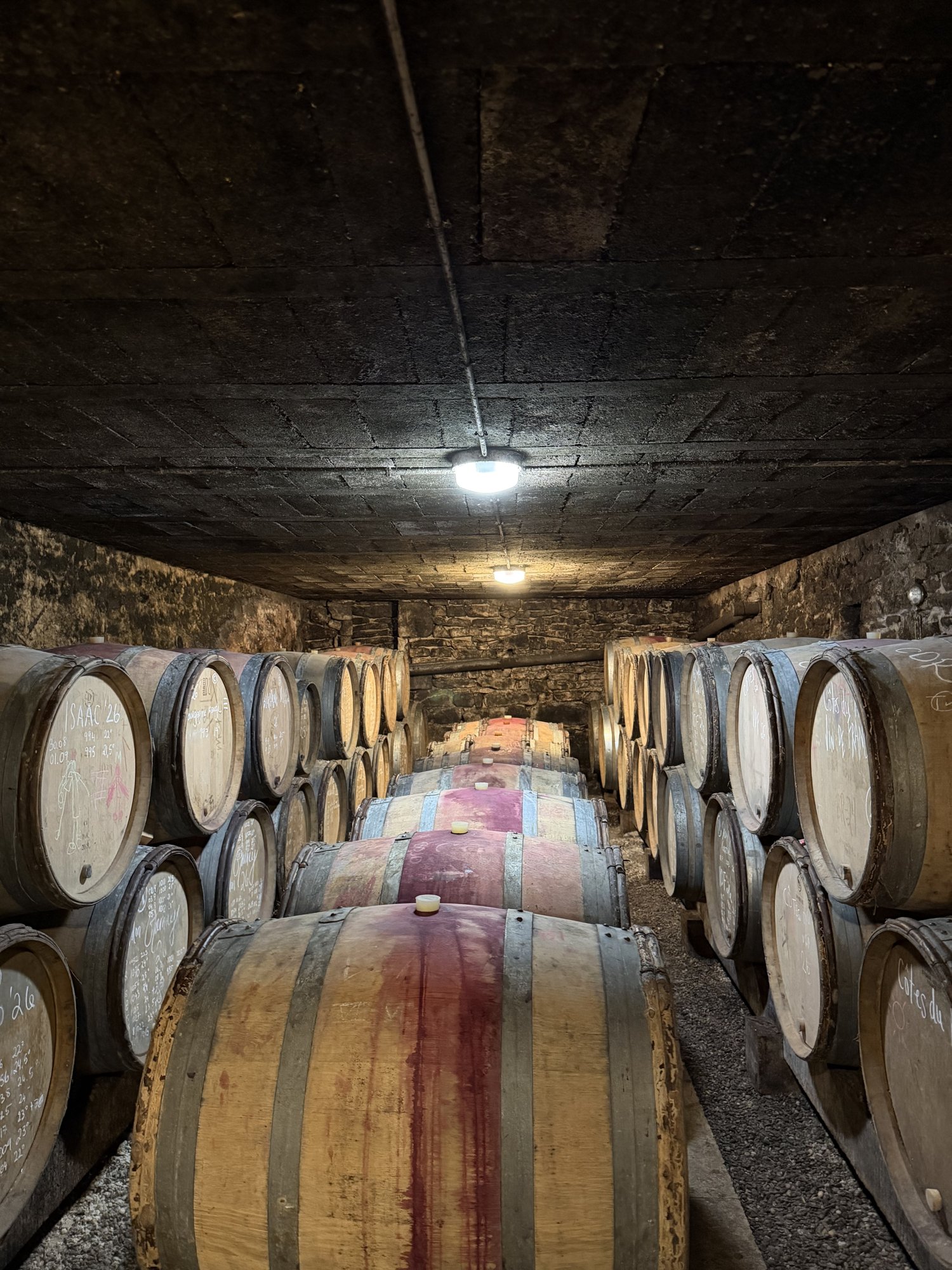
Then something happened: the oily phase, left alone, passed by itself. Today it's his method. All of Vin Noé's whites go through that phase in barrel, and he waits for it to leave on its own: that's why the élevage lasts at least 14 months. And the barrels aren't topped up: Jon fills them once before Christmas and then doesn't open them for three or four months. No barrel tastings, nobody in the cellar. Out of it comes that balance between oxidation and reduction, a little Jura-like, that gives his whites a texture that resembles no one else's.
"You have to believe the wine will get there"
The flip side is patience. Jon says that sometimes, after a year and a half in barrel, he tastes a wine and can't make sense of it. "You have to be able to tell yourself: it's cold, it's a bad day, let's taste again. And you do it again until one day the wine is there, and then you bottle it." The Puligny-Montrachet, from a high parcel on white marl, is his most difficult wine: two years in wood, and then more time in bottle.
→ Superposition Puligny-Montrachet Le Trezin
→ Shadows Saint-Aubin 1er Cru La Combe
2024, the year of the fungi
In 2024 Jon treated the vines 22 times against downy mildew; the year before, 9 passes had been enough. In Burgundy 2024 yielded less than half of 2023. And yet he likes cool vintages: "the natural balance of the grape is better in cold years. And when there's more water there are more fungi: yeast is a fungus." In the vat he adds nothing: more humidity, better fermentations. The 2024 reds are light, fruity, ready to drink — and they keep moving in the glass.
Pattaya is a dog
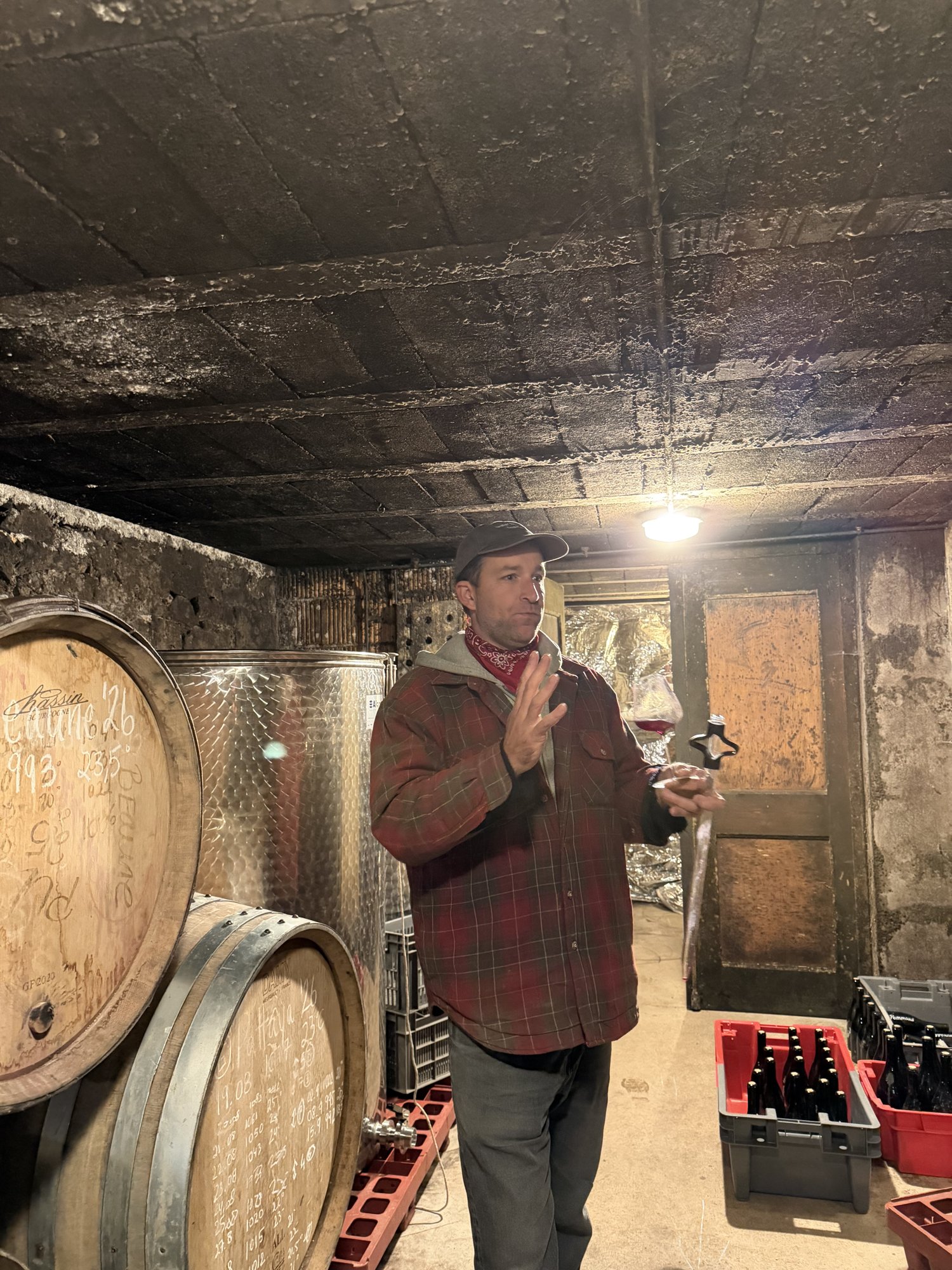
One thing needs clearing up: Pattaya, Jon's Mâcon, has nothing to do with Thailand. It's the dog's name. And the Mâconnais, Jon says, is Burgundy's most misunderstood territory: geologically it looks more to the Jura than to the Côte d'Or, and in his whites you can taste that slightly oxidative, salty vein.
→ Pattaya Bourgogne Chardonnay
Where to start
- Jon's first white → Alibi #5 Bourgogne Aligoté.
- The Jura-like texture → Pattaya, the Mâcon with the dog's name.
- The great white → Superposition Puligny-Montrachet, from the white-marl vineyard.