Panettoni Wild
Two panettoni that begin in June, in the woods and on the meadows, long before Christmas
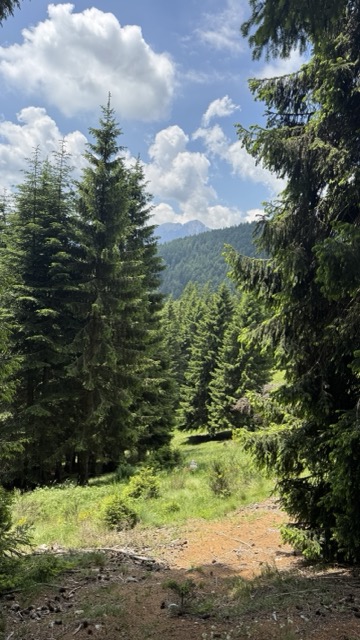
Late May, early June. The red spruces put out their new buds: pale green, tender, smelling of resin.
They only last a few days. Then they harden and turn into branches.
That’s when we go up into the woods all together, as a family, and pick them by hand. By the end we have several quintals. That’s where our Christmas panettone begins.
First, the woods
The red spruce buds become an essential oil. It’s the scent you notice as soon as you open the box of our red spruce Panettone Wild.
In the dough, along with the spruce, go our own honey from the high pastures and powdered angelica root, also ours. All three come from the mountain where we live, and we gather every one of them ourselves.
A panettone that smells of the woods: it’s how we’ve always described it, and we’ve never found a better way.
Then, the hay
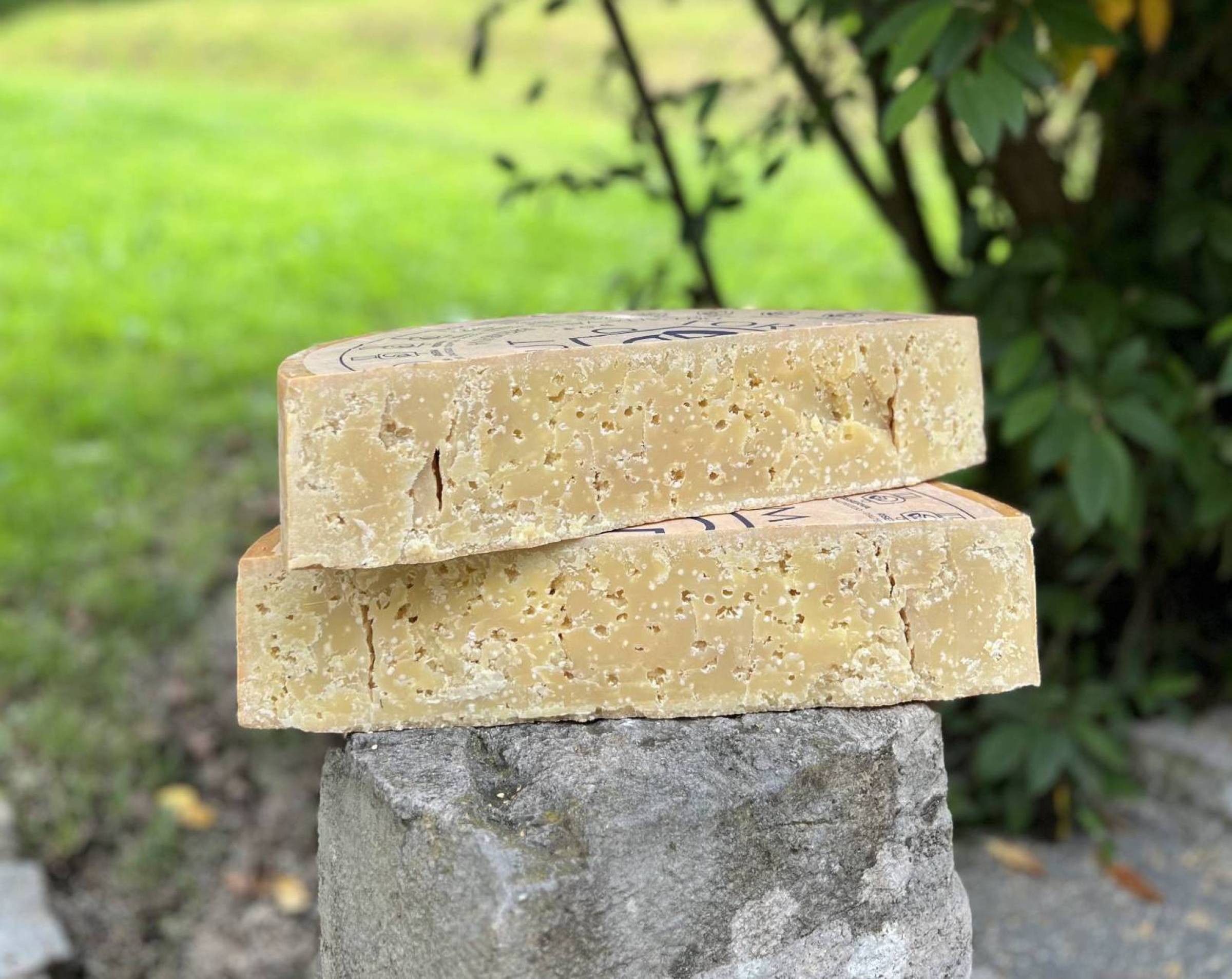
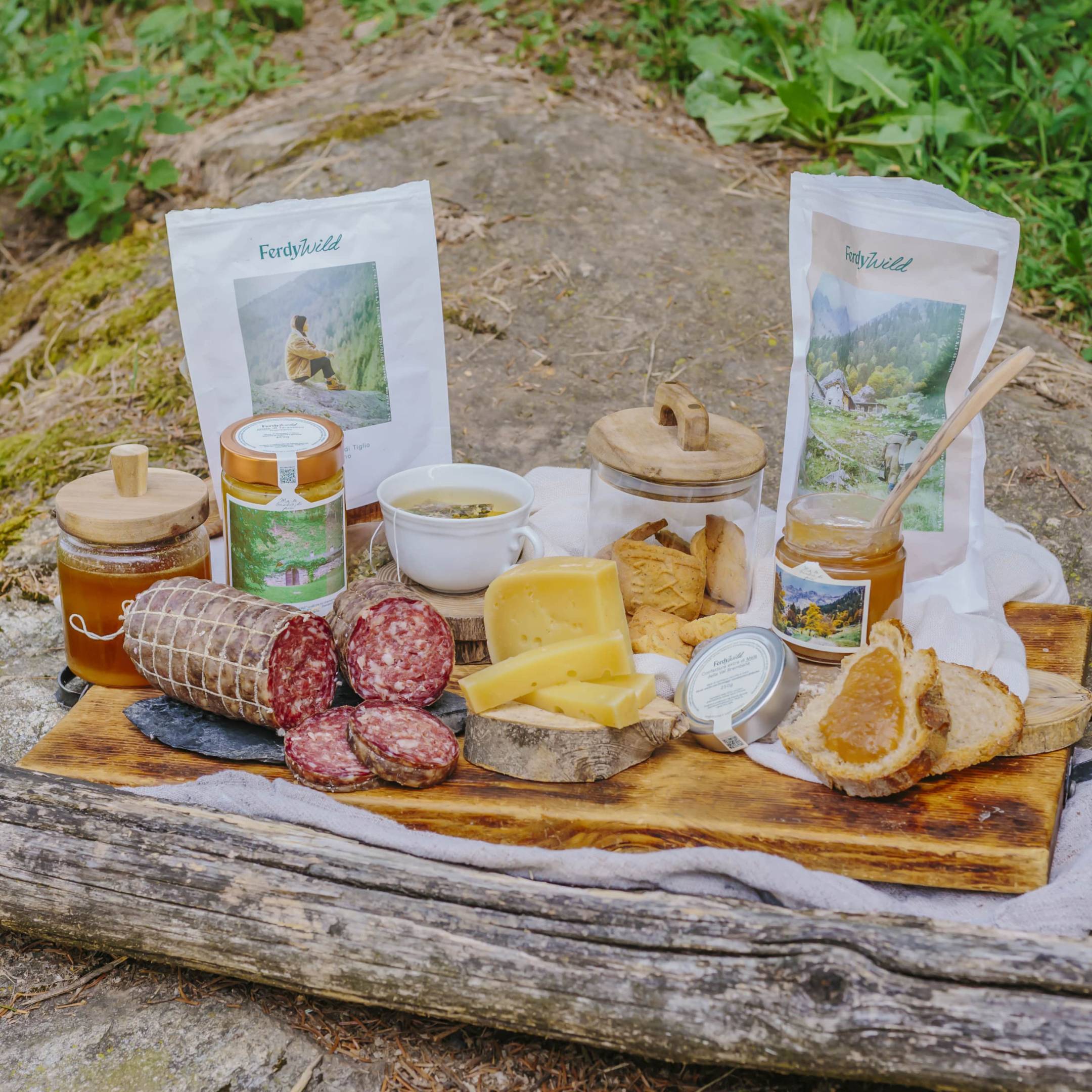
In summer we cut hay a ranza, with a hand scythe, on our meadows and up at the alpine pasture. It’s the same hay that fills the barn with its scent in winter, and that some of our cheeses age in.
Part of that hay goes to the pastry chef we work with. With sugar and cocoa nibs it becomes caramelised hay, and ends up inside a dark chocolate. That chocolate goes into our second panettone.
Why a panettone
We’re a mountain family, not a pastry shop. But at Christmas we wanted to give something that tasted of this place. Not just any cake with our name on it, but one made with what we gather ourselves.
The two flavours were Nicolò’s idea: one tastes of the woods, the other of the meadow. For the dough we turned to a master pastry chef who works with sourdough starter, type 1 flour, egg yolks and butter, and no preservatives.
The two Panettoni Wild
Red spruce
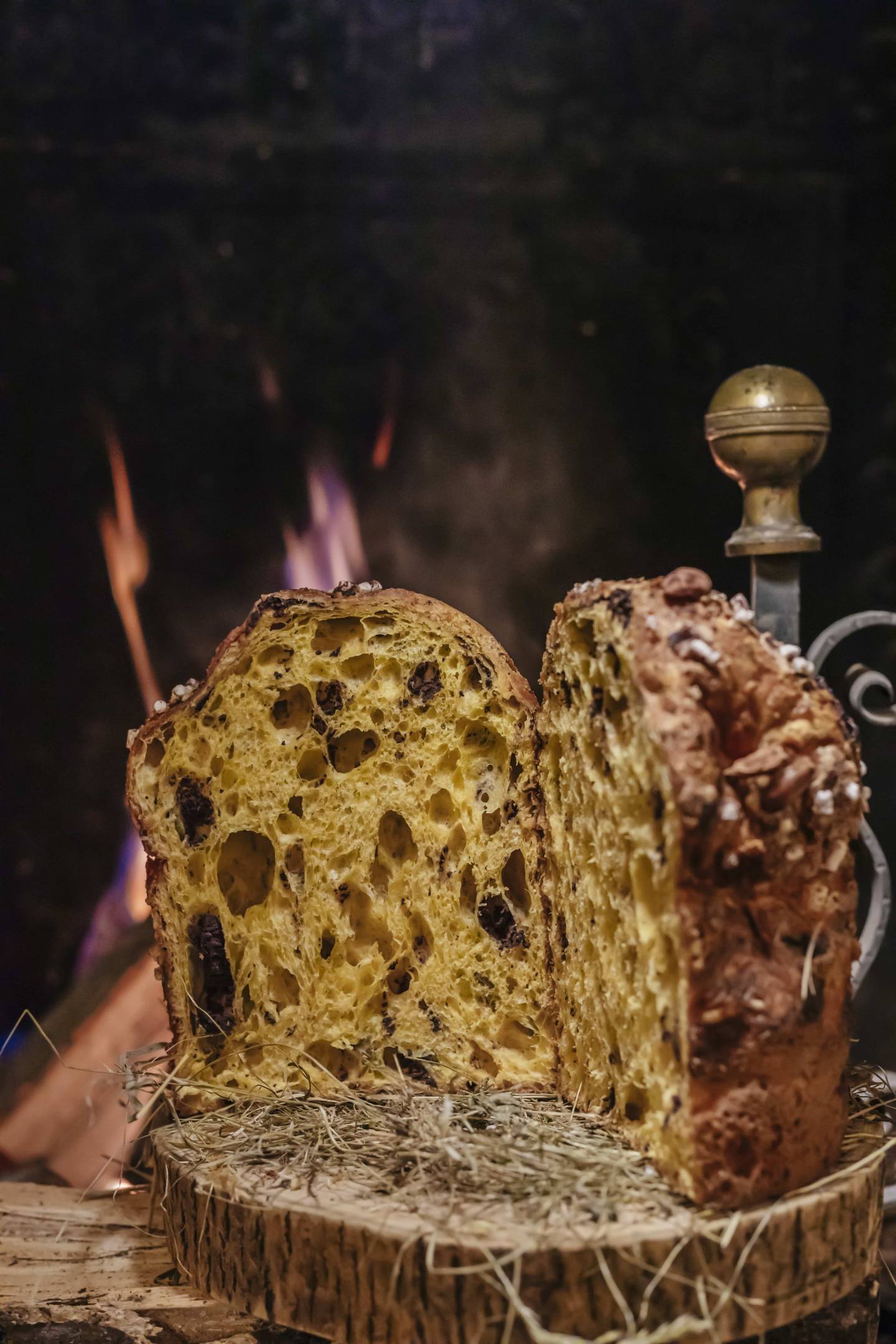
When you open it, wait a moment before you cut it. The first scent is the woods in June: resin, needles, the air under the spruces after a summer storm. That’s the essential oil from the red spruce buds we picked by hand months ago, one by one.
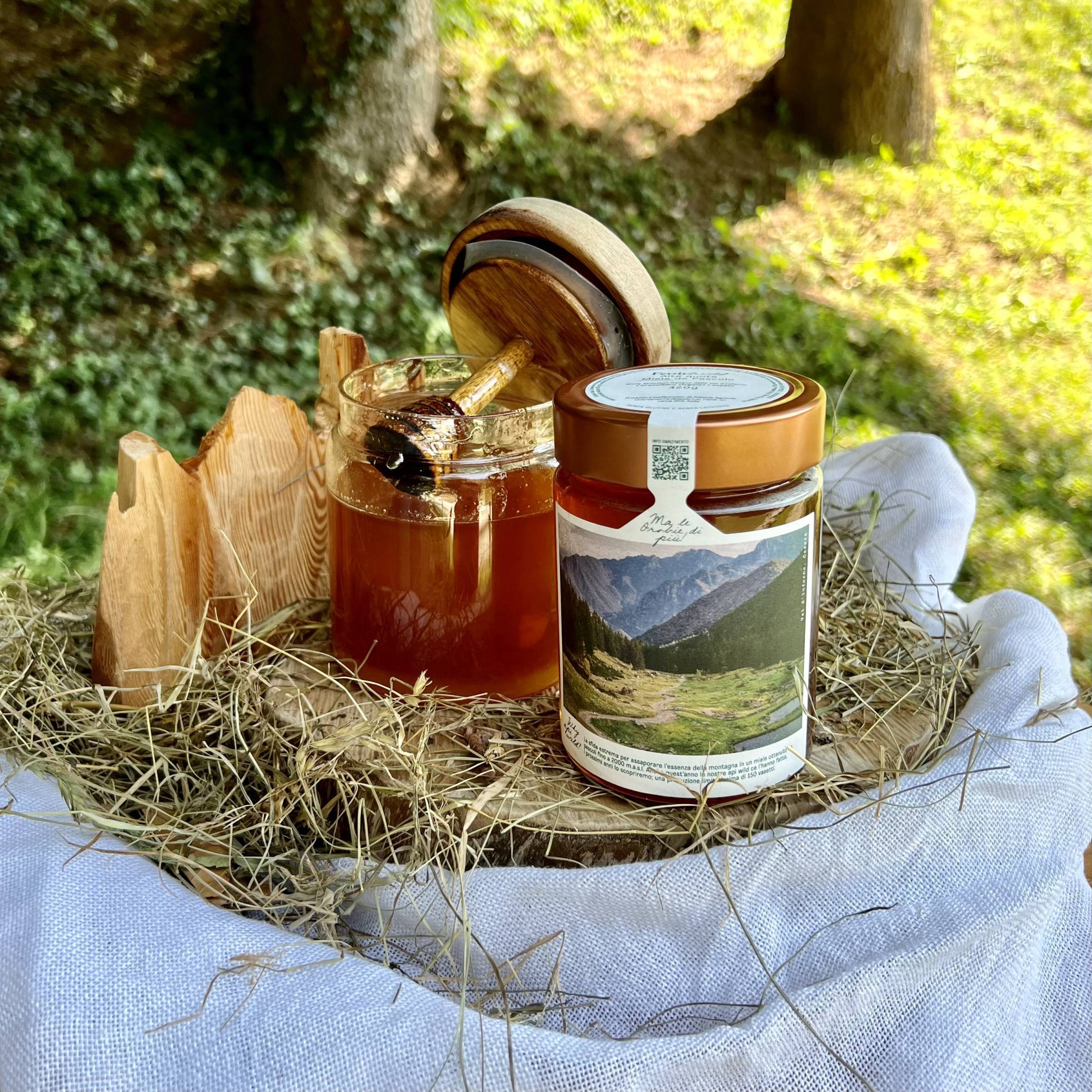
Then there’s the honey, our own high-pasture honey. The bees make it from the flowers on the same meadows where the cows graze in summer. In the panettone it doesn’t come through as plain sweetness: it adds roundness and leaves a floral finish.
Then the angelica, a mountain plant whose root we gather and grind into powder. It’s the note you don’t expect: slightly bitter, almost spicy, and it holds everything else in balance.
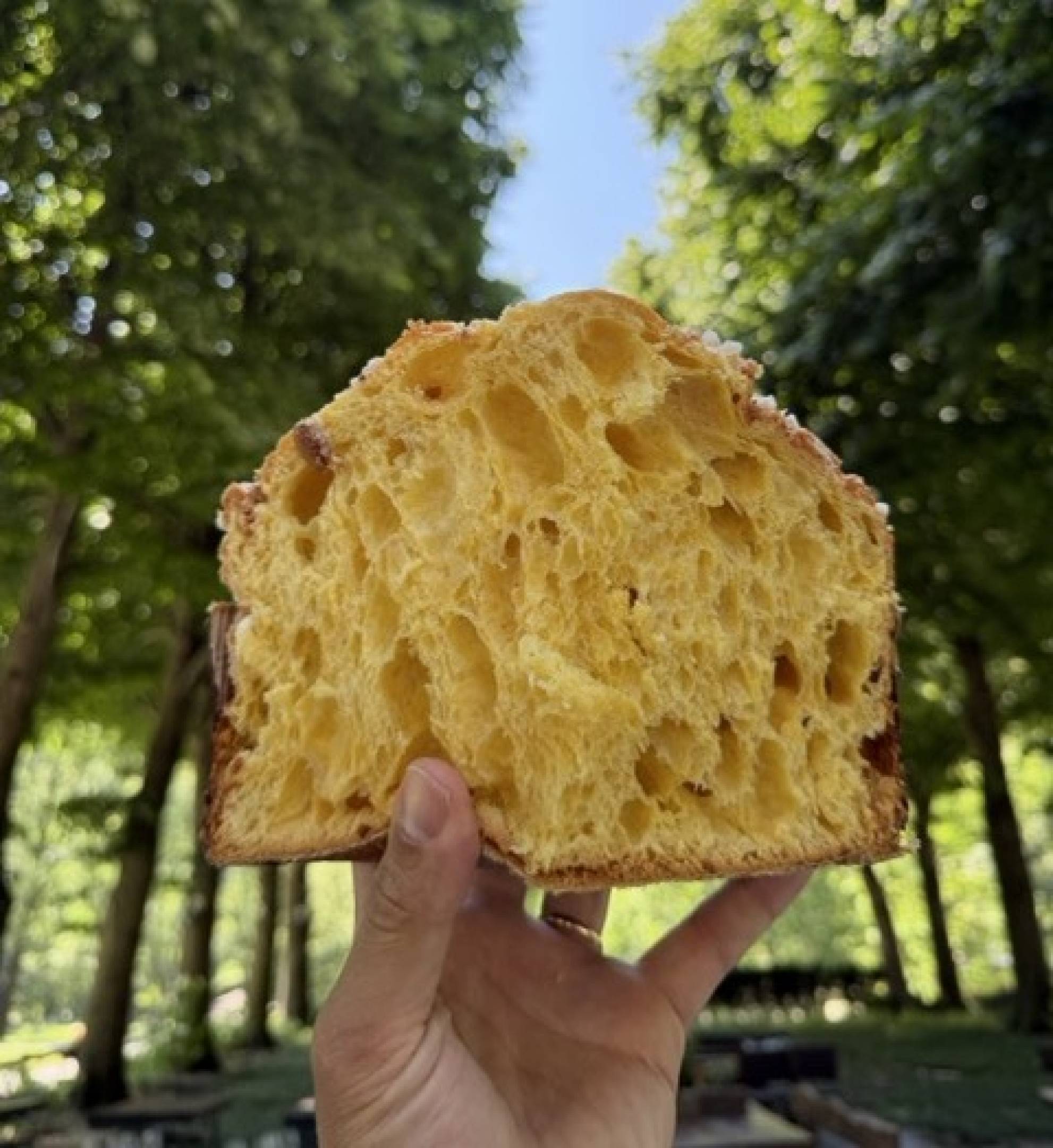
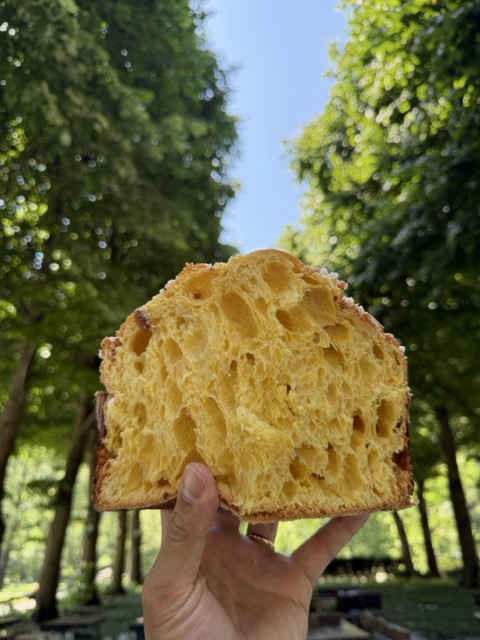
The dough is what it should be: sourdough starter, type 1 flour, plenty of egg yolks and butter, and no preservatives. Pull it apart with your hands and it tears into long, deep-yellow, soft strands.
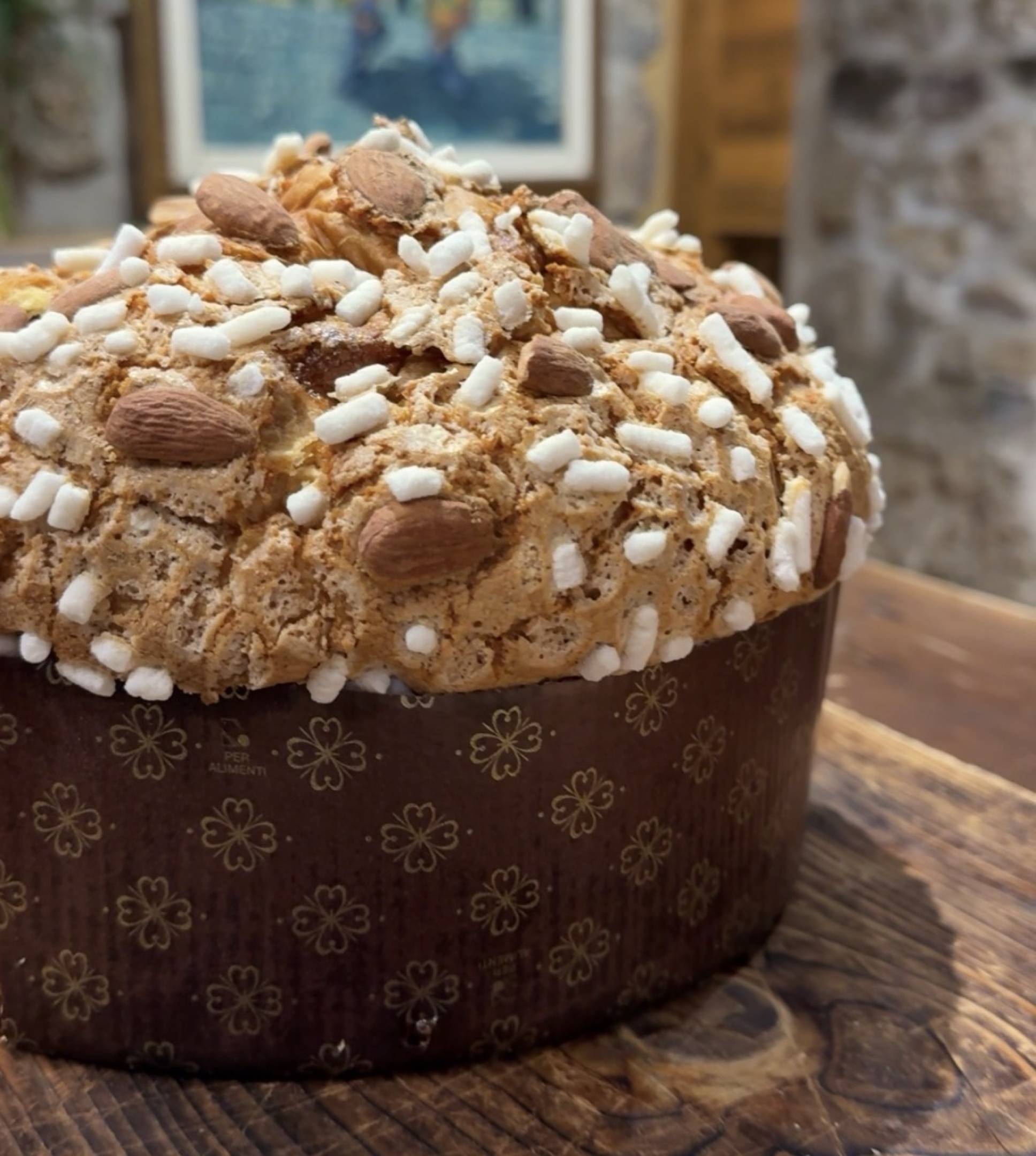
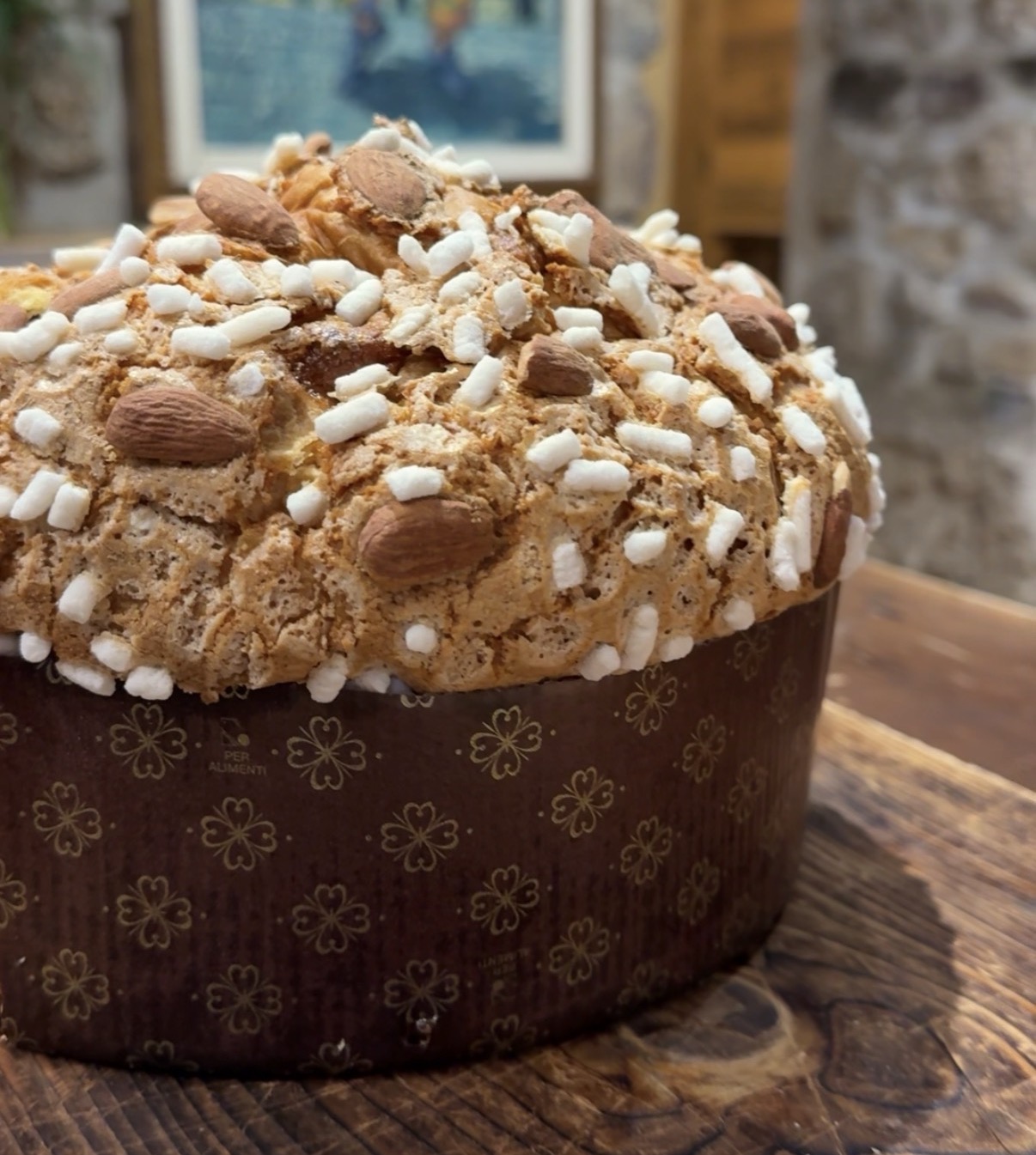
On top is a crust of glaze with whole almonds, apricot kernels and sugar nibs that crackles under the knife. It’s a lowpanettone weighing 1 kg, so every slice gets more crust. That’s on purpose.
This is Christmas the way we feel it: not cinnamon and orange, but the woods behind our house.
How to eat it: at room temperature, so the spruce scent can open up. For breakfast with a coffee, or after dinner with a piece of aged cheese. If any is left over, the next morning warm a slice in a pan with a thin layer of butter.
Chocolate with caramelised hay
This is summer’s panettone, for eating in December.
We cut the hay a ranza on our meadows and up at the alpine pasture, when the grass is tall and full of flowers. We leave it to dry in the sun, turn it, and gather it in. Anyone who has walked past a mountain hut in August knows that smell: sweet, warm, a little like chamomile and a little like honey.
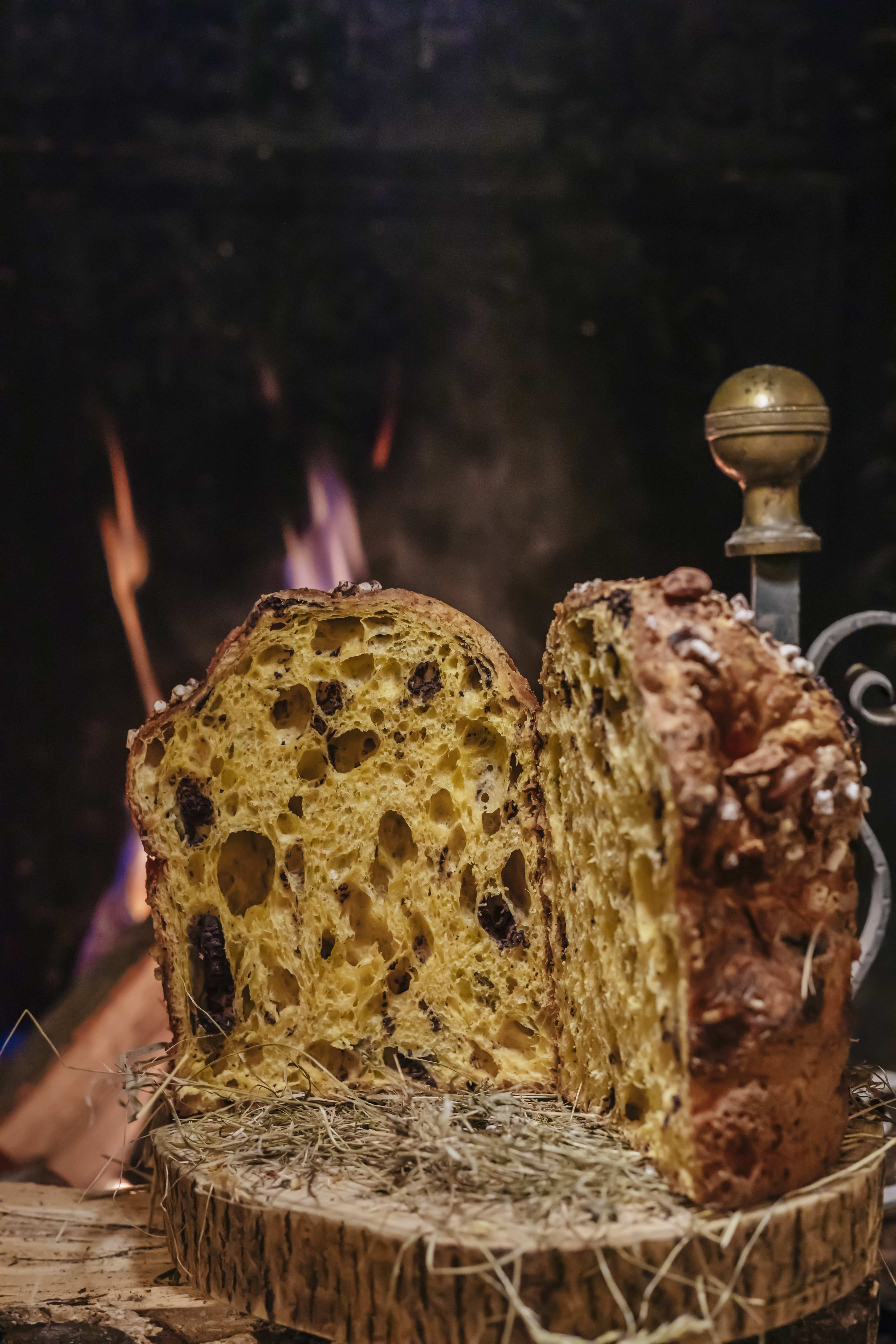
That hay, caramelised with sugar and cocoa nibs, is combined with 70% dark chocolate. Caramelised hay makes up 15% of the dough, and there’s cocoa in the dough too. The result is a chocolate with a toasted, almost caramel note, and the scent of the meadow that comes through last.
No candied fruit, no raisins. It’s for anyone who always leaves the candied peel on the side of the plate at Christmas, and for anyone who wants chocolate, just not the usual kind.
The base is the same as the red spruce one: sourdough starter, type 1 flour, egg yolks, butter and our honey. This one is tall, though, about 750 g, with its dome covered in almond and apricot-kernel glaze. Inside, the chocolate melts as soon as the slice warms up.
We carry hay with us all year round: in the barn, in our cheeses, and now here too.
How to eat it: warm it for a few minutes by the fire or in a switched-off oven until the chocolate softens. Have it with a glass of sweet wine, or with a mug of hot milk, the way it was done in the mountain huts.
If you order now, keep it somewhere cool: with no preservatives, panettone needs to stay below 14 °C.
Practical information
- Availability: online now in the Ferdy Wild shop
- Red spruce Panettone Wild: 1 kg, €44.50
- Chocolate and caramelised hay Panettone Wild: about 750 g, €41.50
- Mini panettoni in both flavours: 150 g, €8.50
- Shared ingredients: type 1 flour, butter, egg yolk, sugar, high-mountain honey, sourdough starter, salt; glaze with almonds, sugar, egg white and apricot kernels
- Allergens: gluten, eggs, milk, nuts. The bakery also handles nuts.
- Storage: below 14 °C, best eaten within 45 days of production
- Shipping: express courier, delivered in 24/48 hours, €6.90, free on orders over €99. You can schedule delivery up to 60 days after ordering, handy if it’s a gift.
- Gift wrapping (box, ribbon and card): €3.50